
A closer look
Osmanthus offers a particularly intimate way into Chinese autumn: through scent rather than spectacle. Its flowers are small enough to miss among the leaves, yet the plant can become the thing by which an entire setting is remembered. The association with Mid-Autumn is not a rule followed by every household. It is a meeting of seasonal flowering, cultivated gardens, food and artistic attention, expressed differently in different places.
Start with a useful distinction. Osmanthus is a real plant with a particular growing range, not simply a poetic name for any fragrant blossom. Cultural meanings accumulate around that botanical presence; they do not replace it. Looking closely at the flower, at a historical image and at dried blossoms on a kitchen shelf gives us three different kinds of evidence. Together they make a richer introduction than a list of symbols could.
A small flower, a larger presence
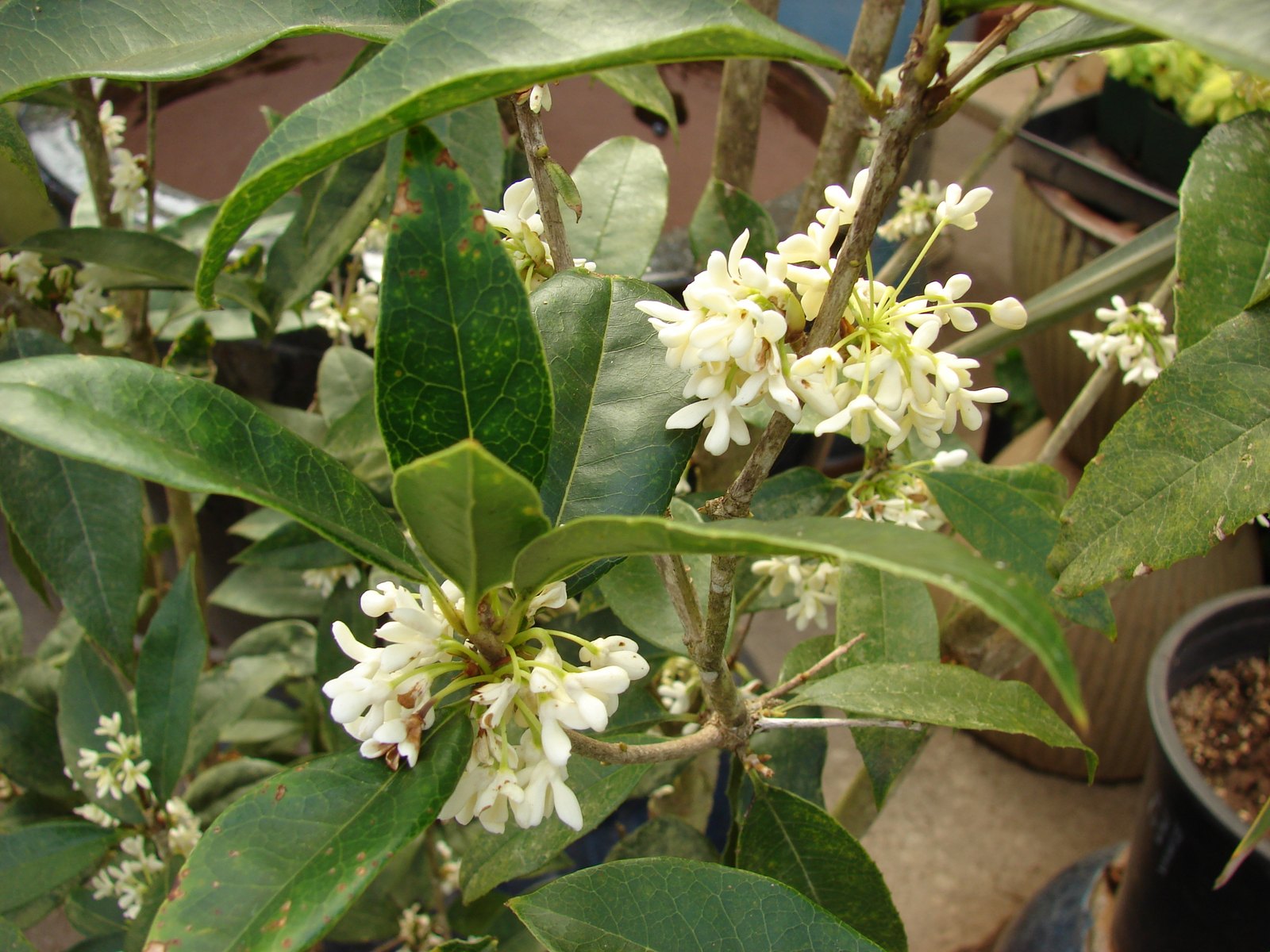
Kew's botanical account of Osmanthus fragrans identifies an evergreen shrub or tree native across a range extending from the Himalaya toward southern Japan and Indochina. The flowers are small, strongly scented and borne in clusters. They may be creamy white or orange; flowering varies with the plant and its conditions. A festival date cannot guarantee a tree will bloom on cue.
That last point changes how we read seasonal imagery. An autumn flower does not operate like a printed calendar. Weather, place and cultivation matter. When a photograph of the species is taken outside China, it can help us recognize the plant, but it cannot demonstrate a Chinese festival custom. Our botanical photograph serves exactly that limited purpose: examine the relationship between glossy leaves and pale clusters before asking the image to carry a cultural story.
There is also a lesson here for looking at gardens. A visually modest plant can organize attention without dominating a view. Instead of asking which object will make the most dramatic photograph, ask what changes your awareness of the space. Fragrance makes that question especially interesting because it cannot be contained within the frame. The source might be beside you, behind a wall or already passed on the path.
How do you paint something invisible?
In its exhibition on Qing court flower painting, the National Palace Museum discusses Jiang Tingxi's Osmanthus Flowers. The museum describes washes without enclosing outlines and a deliberate interval between branches. An inscription includes Kangxi's poem about looking at the moon during Mid-Autumn. Here the seasonal connection is documented within a particular artwork, not inferred merely because a flower appears in an old painting.
This is a useful invitation to think about what a picture cannot deliver. No brushstroke emits fragrance. A painter instead arranges the conditions for recollection: a recognisable branch, a rhythm of leaves, flowers sufficiently distinct to be noticed. The viewer supplies another sensory register. We can read the image as an encounter between what is present on the surface and what must be imagined, rather than as an unsuccessful substitute for the living plant.
Do not treat the imperial inscription as the voice of everyone who lived in Qing China. It belongs to a specific courtly setting. That limitation makes the example more interesting, not less. A carefully tended plant, an inscription and a painted branch show how one setting gave form to seasonal attention. The artwork offers a historical case to examine; it is not a certificate of timeless national feeling.
The botanical image asks a different question
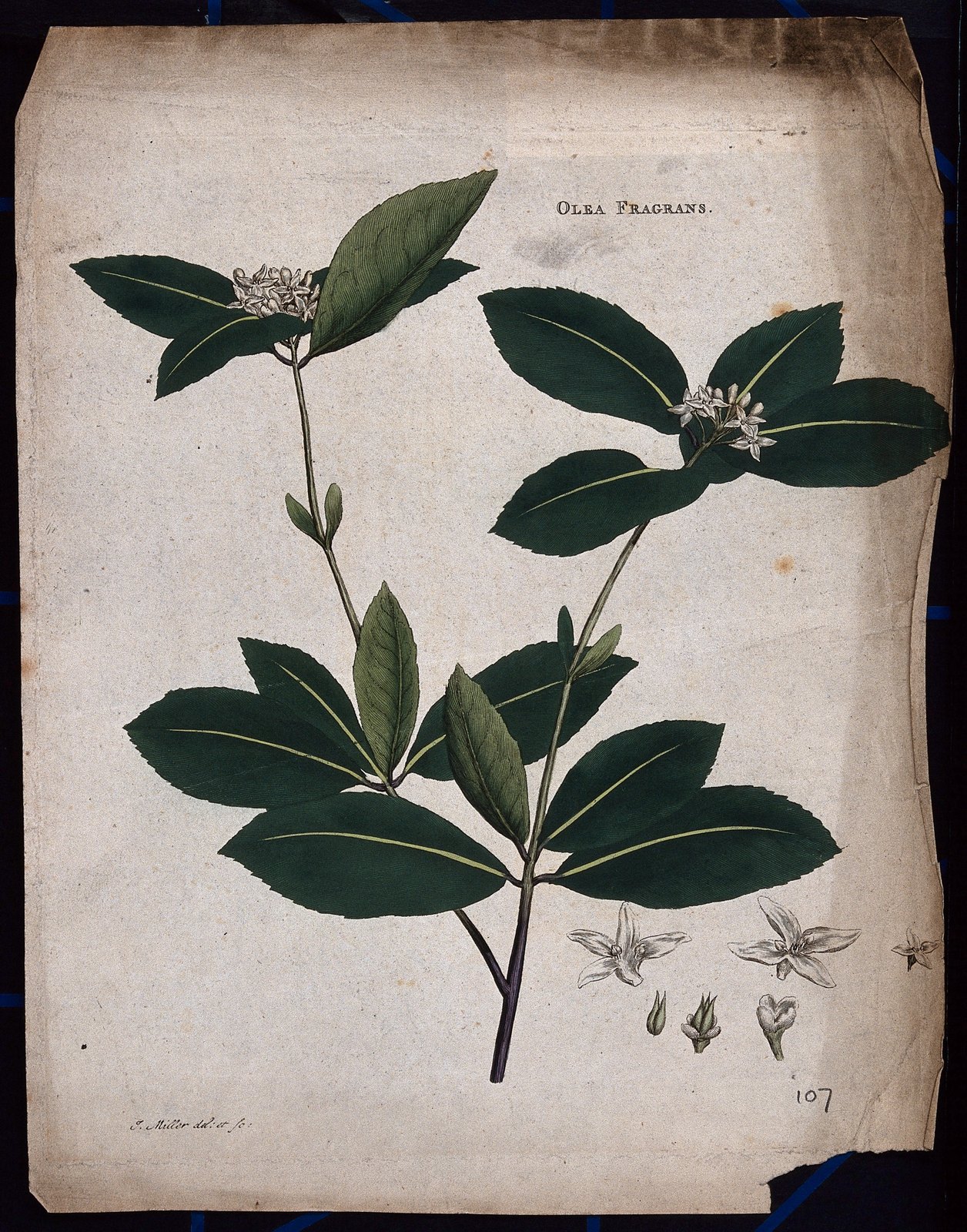
The coloured etching reproduced here, preserved by the Wellcome Collection, is attributed to J. Miller and dated around 1771. It sets out a flowering stem and separate floral details. It is a European botanical representation of the plant, not Jiang Tingxi's painting and not an illustration of a Chinese festival. Keeping those distinctions visible is part of learning to read images responsibly.
Compare its visual task with that of a seasonal painting. A botanical illustration helps a viewer identify and distinguish. Parts are separated so their structure becomes legible. A cultural artwork may put greater weight on the relation between branch, inscription and surrounding space. Neither image is merely decorative, but they are not interchangeable. Before interpreting a picture, it helps to ask what kind of looking its maker was trying to enable.
Try covering the small analytical details in the etching, then uncovering them. The image changes from a pleasing branch into something closer to an argument about a plant. This simple exercise also changes how a museum label reads. Medium, date and maker stop being administrative extras: they tell you why this particular arrangement of leaves exists and which questions it can reasonably answer.
From the branch to the kitchen
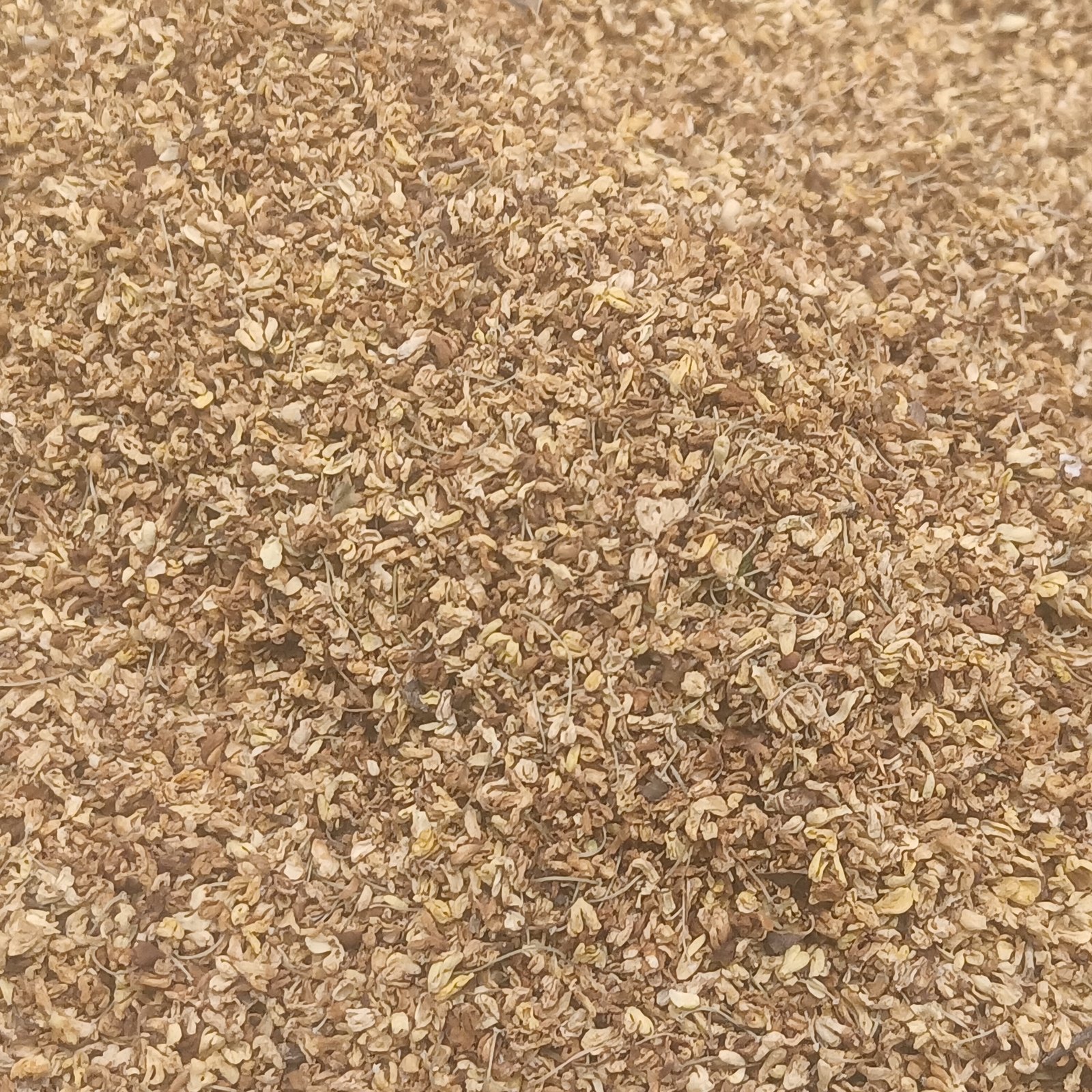
Kew records the use of osmanthus flowers to flavour tea, wine and sweets. Dried blossoms therefore provide another useful image: not a ready-made ritual, but an ingredient separated from the living branch. Their small scale asks for close attention. In a food photograph, the flower may appear as a scattering of points rather than the main mass of the dish.
It is worth resisting the temptation to call every preparation “the traditional Mid-Autumn dessert.” A flavouring can cross recipes and occasions. One person may encounter osmanthus through a drink, another through a sweet, another through a garden rather than food at all. The photograph of dried blossoms does not tell us how often any of these experiences occurs. It shows material available for use, not a survey of people's habits.
For a first encounter, choose a clearly labelled food product from a reliable maker instead of picking an unfamiliar ornamental plant. Read the ingredient list and let the actual preparation, rather than its name alone, guide your expectations. A flower-flavoured sweet is still a particular cook's or producer's composition. It need not stand for an entire culinary culture to be worth your attention.
An autumn association, not a universal script
Osmanthus helps expand the Mid-Autumn story beyond its most immediately visible objects. A festival can be encountered through atmosphere as well as through a mooncake or lantern. That does not mean everyone shares the same sensory memories. It means a cultural introduction can leave room for experiences that are difficult to photograph and impossible to standardize.
Continue with the seasonal attention of the twenty-four solar terms, or consider how a Suzhou garden organizes a visitor's view. The useful connection is not that all these things express one secret code. They offer different ways to notice relationships between bodies, environments and time. Osmanthus contributes something precise: the possibility that a very small flower can change how a whole place feels.
Join the conversation
What did this make you notice?
Is there a scent that marks a season for you more clearly than any date or photograph?