
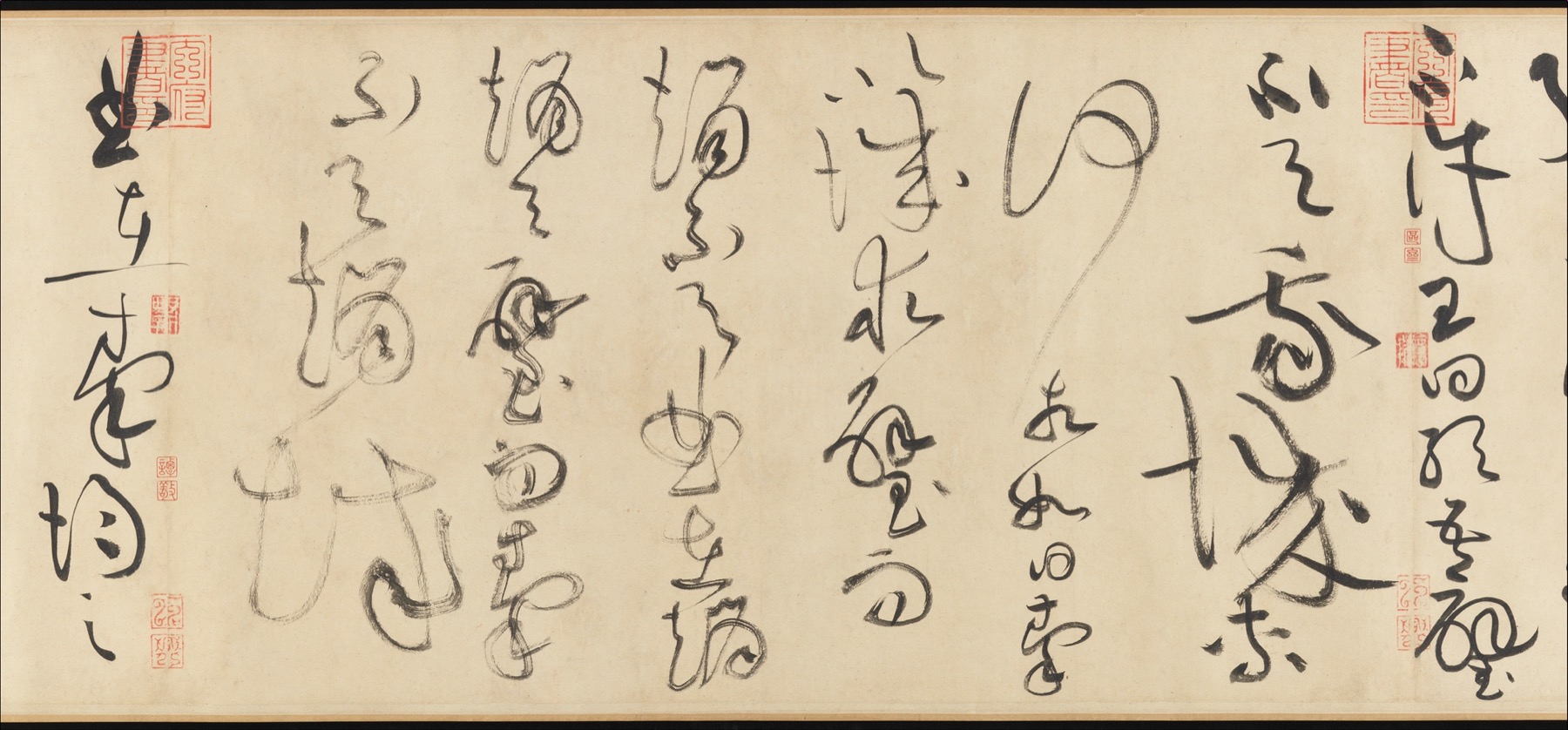
Writing and image meet
For a reader unfamiliar with Chinese, calligraphy may first appear as abstract design. For a literate reader, the words remain present. The art lives in this double condition: a character carries language while its execution records a physical event. A line thickens because the brush presses; it narrows when the tip rises; a pool of dark ink may signal hesitation, emphasis or a deliberate pause.
This is not beautiful handwriting in the narrow sense. Legibility, convention and personal expression interact differently across scripts and situations. A formal inscription, an intimate letter and a wildly cursive scroll ask for different kinds of attention.
The brush remembers the body
A flexible hair brush responds to angle, speed, moisture and pressure. It can produce a precise point, a swelling turn or a dry line broken by the texture of paper. The trace reveals more than the shape of a character. It lets us reconstruct, imperfectly, how a hand accelerated, rotated or stopped. The Metropolitan Museum describes the brush as an extension of the writer’s arm and body.
Posture matters because a stroke begins before it touches the page. Breath, wrist, elbow and shoulder organize the gesture. That is why copying a master is not merely reproducing an outline. The student tries to understand an order of movement.
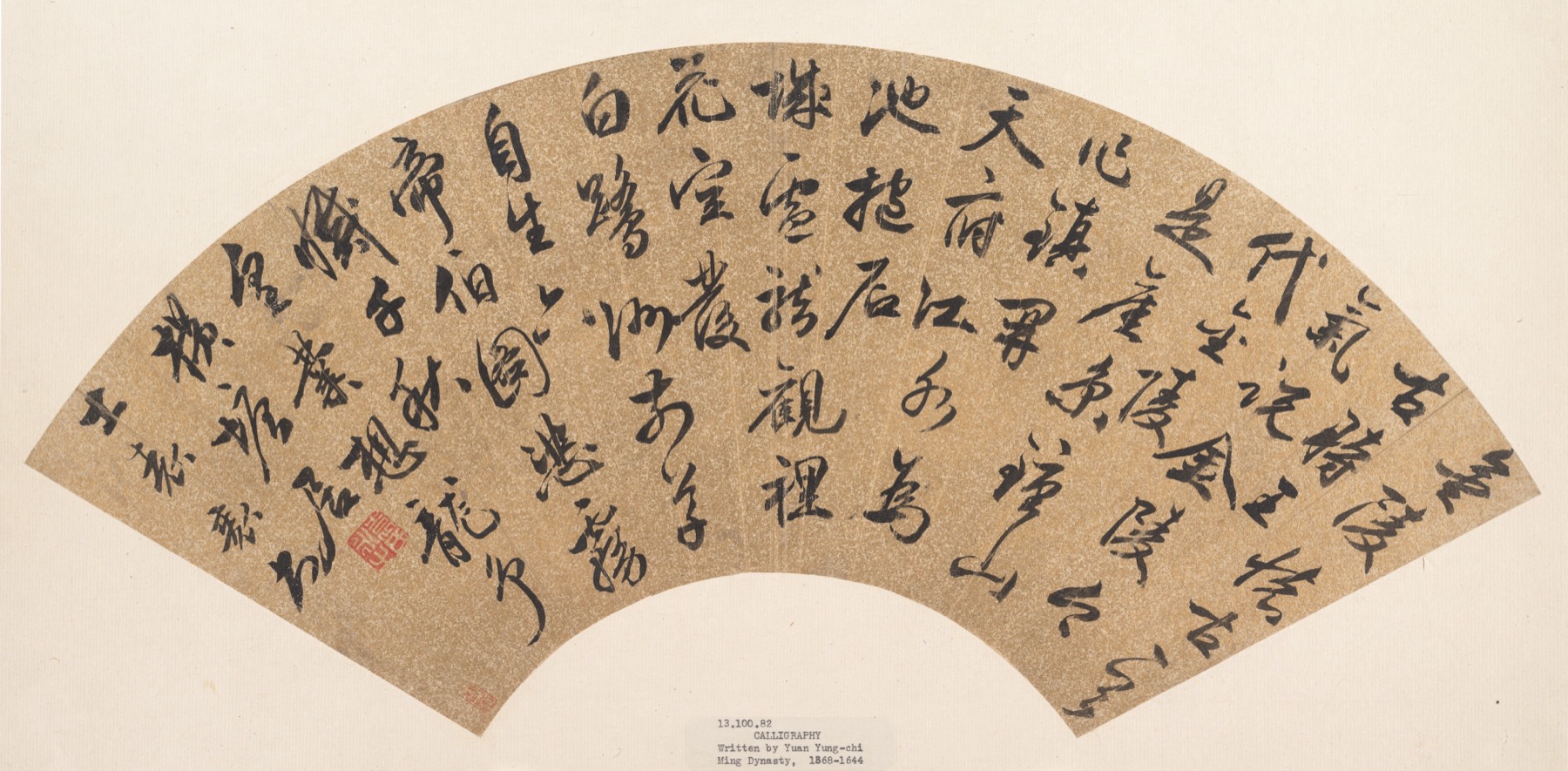
Five scripts, not five personalities
Seal, clerical, regular, running and cursive scripts are often introduced as a neat sequence. In practice they continued to coexist. Seal script carries associations with ancient inscriptions and seals; clerical script emphasizes broad, structured strokes; regular script articulates components clearly; running script connects movements more freely; cursive may abbreviate forms until characters flow together.
Avoid turning these into personality tests. A writer chooses a script according to purpose, audience, historical reference and desired energy. Individuality appears within learned structures. Freedom becomes visible because the viewer senses the discipline from which it departs.
A scroll accumulates time
Historical works may include poems, signatures, seals and colophons written by later owners or admirers. The surface becomes a social object travelling through collections. A red seal is not simply decoration; it may document possession, appreciation or imperial inspection. Later writing can frame the original work and sometimes complicate its attribution.
A handscroll also structures viewing through time. It is traditionally opened section by section rather than displayed all at once. The reader’s hand determines the pace. Digital reproductions make access easier, but a full-screen image can conceal this choreography of revealing and concealing.
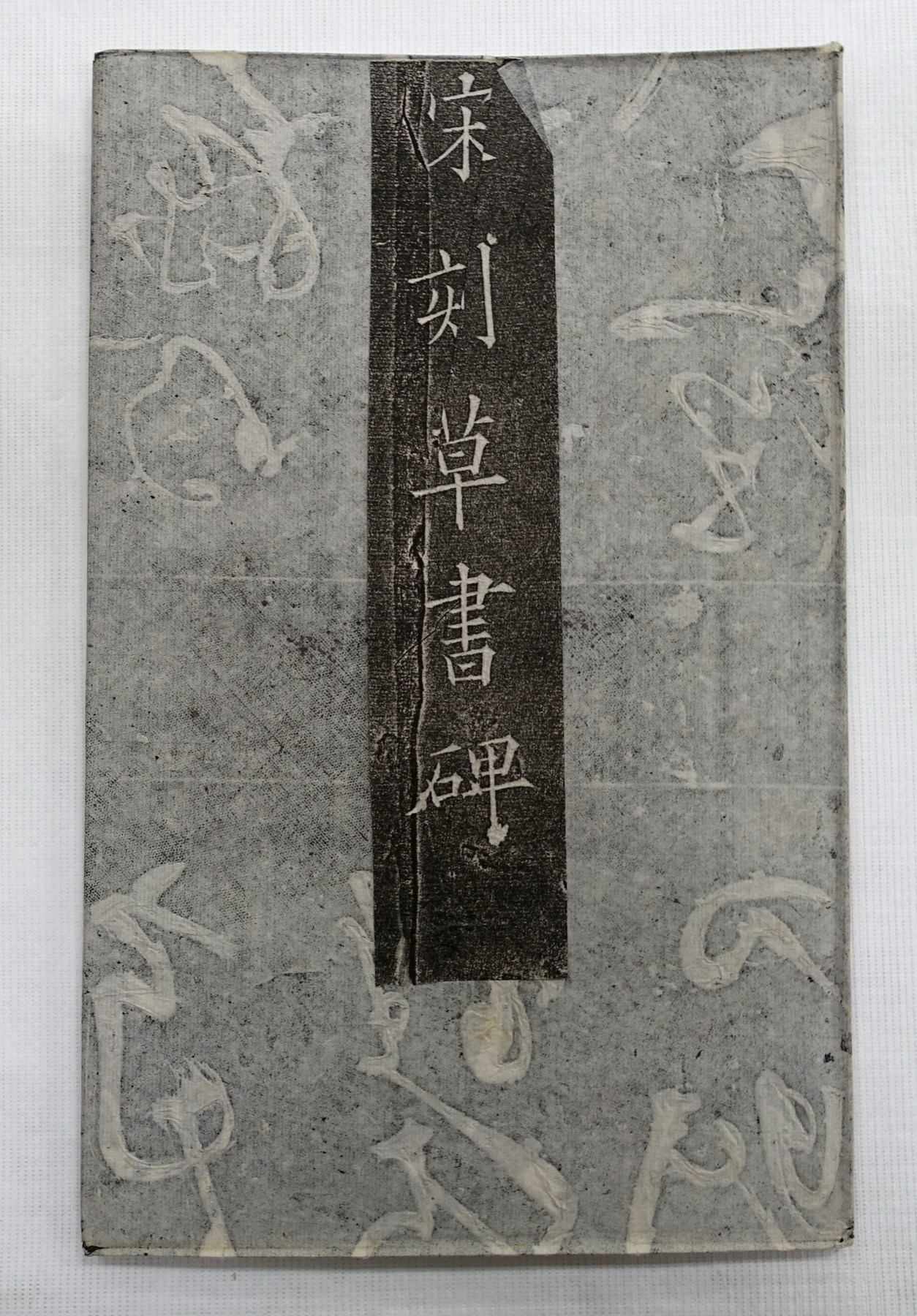
Look before translating
Begin at the first visible stroke. Follow changes in darkness and width. Look for repeated components and for places where the brush seems to lift. Are the characters contained in imagined squares, or do they lean and collide? Only then read a translation and the museum’s description. Meaning and motion will begin to correct each other.
Not reading Chinese is a limitation, but it need not become an excuse for calling the work mysterious. Labels, translations and script histories provide context. Your eye can still learn to recognize material decisions. Calligraphy invites humility without requiring silence.
Join the conversation
What did this make you notice?
Can you find one stroke whose speed you feel in your own hand?