
A cliff becomes an archive
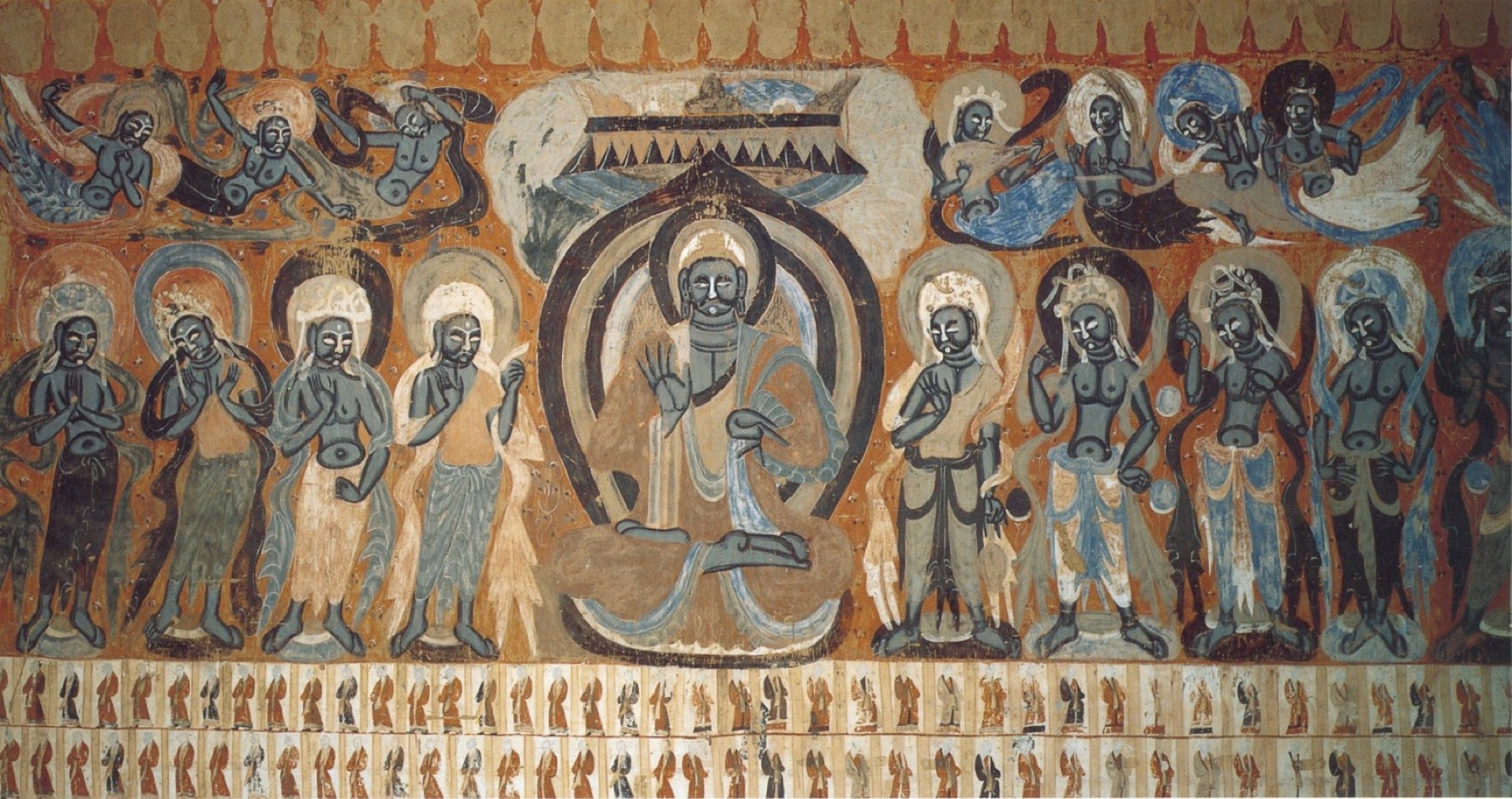
Southeast of the Dunhuang oasis, hundreds of caves were cut into a cliff from the fourth to the fourteenth century. The Mogao complex preserves 492 decorated cave sanctuaries, about 45,000 square meters of murals and more than 2,000 painted sculptures, according to UNESCO. Numbers convey scale but not the sensory compression of entering a chamber where walls and ceiling participate in one painted world.
The caves were made for religious practice, patronage and remembrance, not as a modern gallery. Images of Buddhas, bodhisattvas, donors, musicians, dancers, journeys and paradises occupied architectural space. Their meanings depended on ritual, text and community as well as beauty.
Color travelled
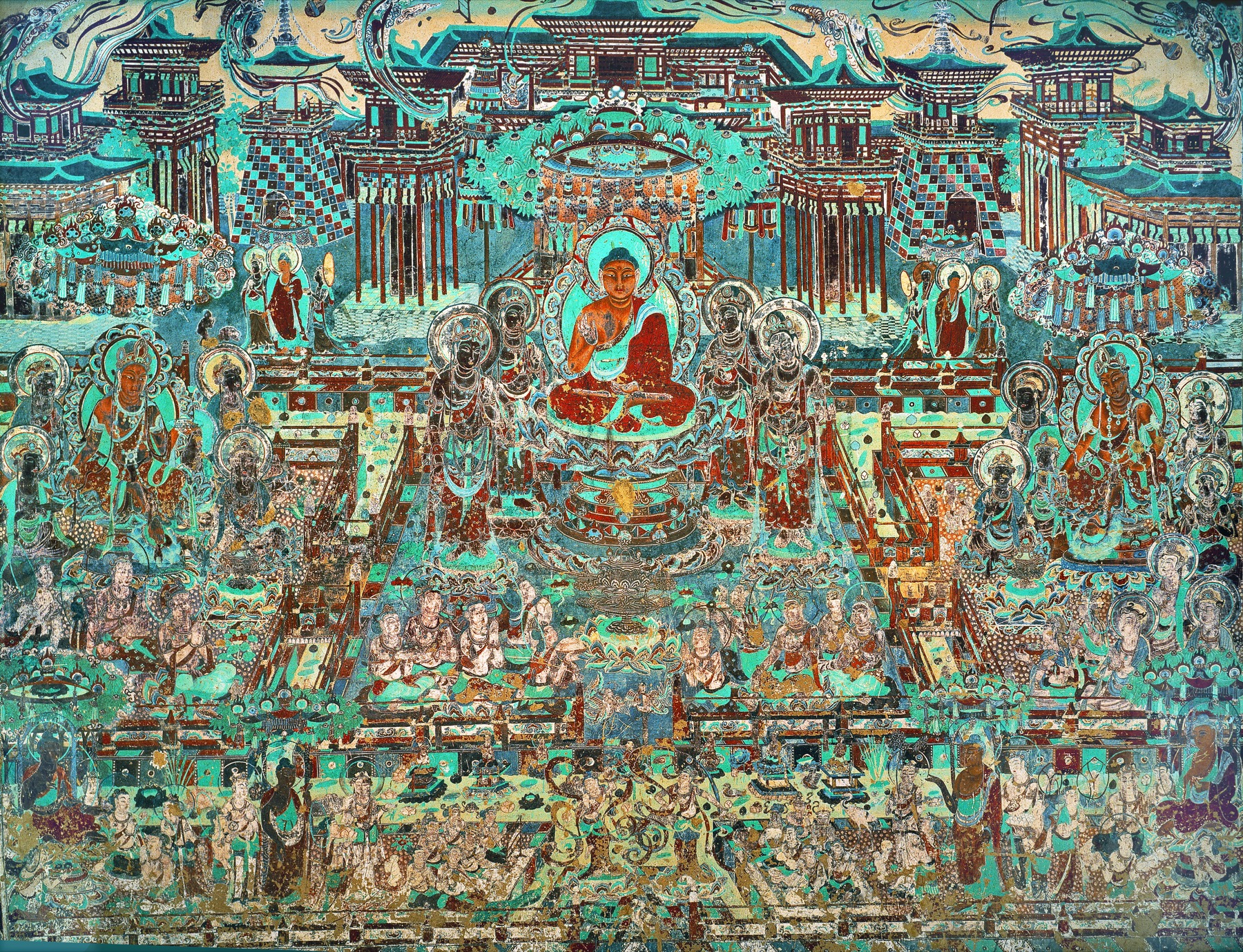
Dunhuang stood at a strategic crossroads of trade, belief and language. Artistic forms arrived from India, Central Asia, Tibet and the Chinese heartlands and were transformed locally. Drapery, halos, bodies, floral borders and architectural motifs reveal contact without collapsing into one uniform international style. The caves record exchange as a process of selection and reinvention.
Pigments travelled too, though not every color came from far away. Mineral and organic materials aged differently. Light, salt, humidity, smoke and chemical change altered the surfaces. The palette we see today is historical evidence, not a perfectly preserved original moment.
Why the flying figures seem weightless
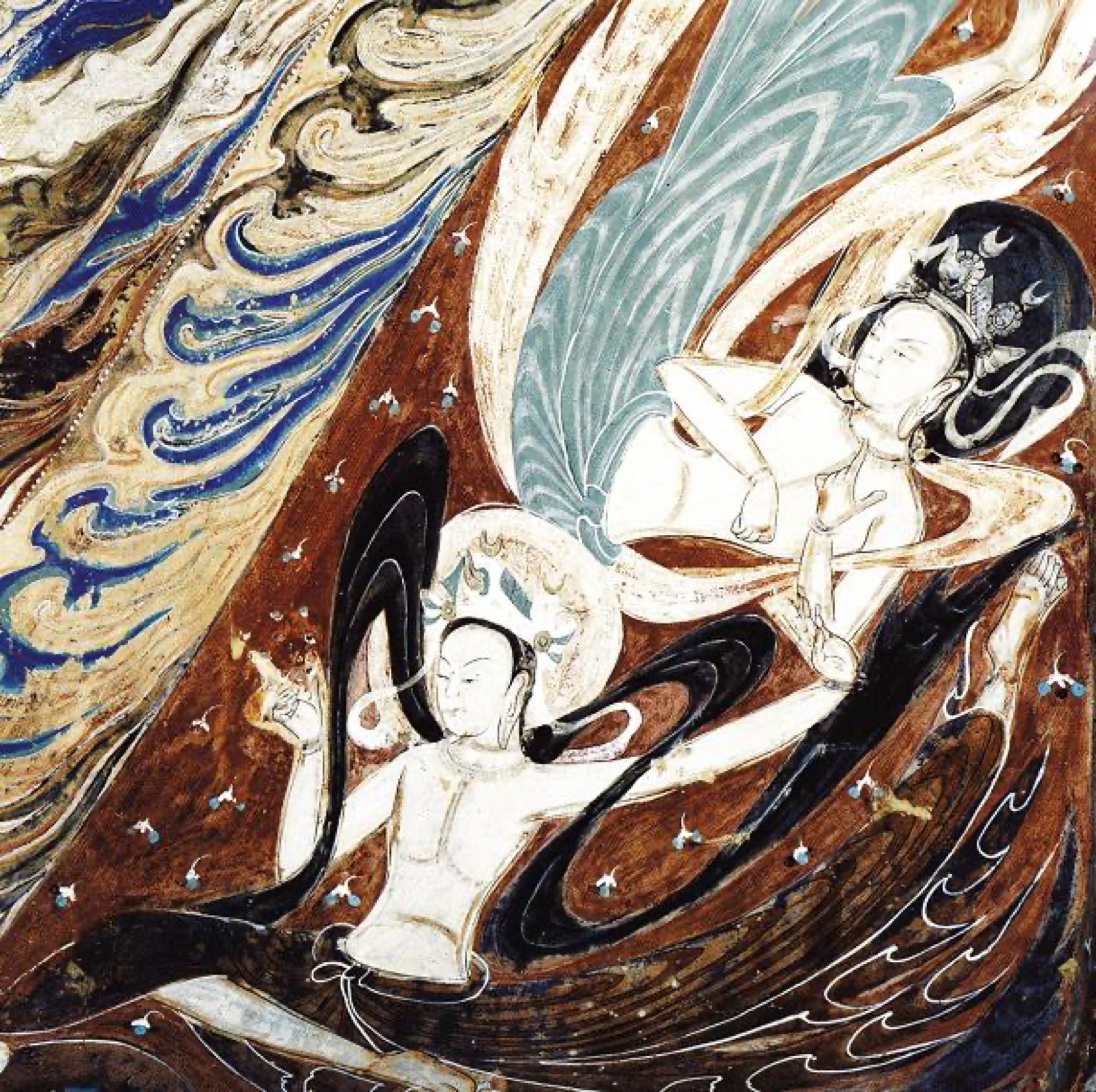
Among Dunhuang’s most beloved images are feitian, celestial beings often translated as “flying apsaras.” They may carry instruments, scatter flowers or stream through the air with long scarves. Their flight does not require painted wings. Curving ribbons, tilted torsos and repeated arcs give the eye a path, turning fabric into visible momentum.
Modern posters often isolate a single figure from its cave. That makes the silhouette easy to admire but removes the painted company around it. Return mentally to the wall: the figure belonged to a larger devotional and narrative field. Its grace was relational.
The Library Cave changed the story
The discovery around 1900 of a sealed chamber filled with manuscripts, paintings and printed material transformed the study of medieval China and Central Asia. Texts appeared in multiple languages and addressed religion, administration, literature and ordinary affairs. They confirmed that the Silk Roads moved ideas and documents as well as luxury goods.
Many objects left Dunhuang through foreign expeditions and are now dispersed among institutions. Digital collaboration allows fragments to be studied together, but access does not erase debates about removal, ownership and the unequal conditions under which collections were formed. Wonder and provenance must share the same page.
Visit by reducing your appetite
A fragile site cannot satisfy unlimited looking. Access rotates, photography is restricted and some celebrated caves may be closed. These limits protect surfaces that have already endured a millennium. Prepare by choosing one theme—musicians, clothing, donors, borders or color—and let that focus replace the desire to collect every chamber.
Dunhuang rewards a form of attention opposite to scrolling. One painted hand, one fold of a ribbon or one repaired patch can lead outward toward trade, devotion, conservation and history. The caves are not a single masterpiece. They are a long conversation written in mineral color across changing worlds.
Join the conversation
What did this make you notice?
Which detail would you choose as your path through Dunhuang: color, music, clothing, movement or writing?