
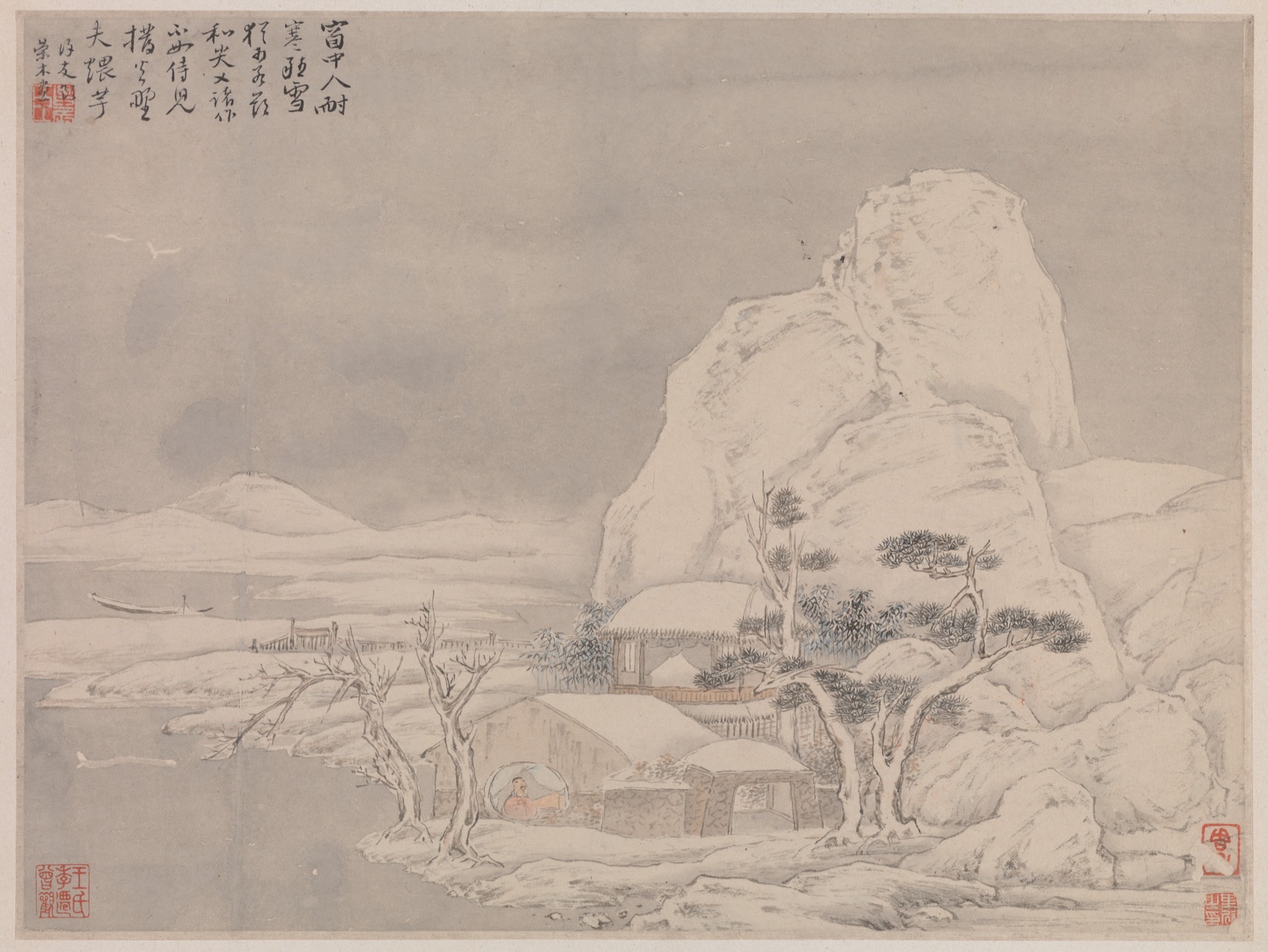
Empty does not mean unfinished
A first encounter with an ink landscape can feel unusually quiet. Mountains gather at one edge, a few roofs appear beneath trees, and large areas of silk or paper seem untouched. In many European painting traditions, such openness might be called background. Here it often does active work. The pale interval may become water without a painted shoreline, mist that separates one ridge from another, or air through which the eye must travel. The painter has not forgotten to fill the surface. The unmarked material is helping the world of the painting appear.
This is why “negative space” is useful only as a beginning. The phrase identifies what has not received ink, but it can make emptiness sound secondary to the marks around it. In a strong landscape, painted and unpainted areas depend on each other. Dense texture gives the open passage scale; the open passage lets a dark cliff feel remote. Meaning happens in the alternation.
A landscape for travelling with the eye
Chinese landscape painting is called shanshui—literally “mountain-water”—but it is rarely a neutral record of one view. A handscroll reveals itself gradually as it is unrolled. A hanging scroll may combine high, deep and level distances rather than obeying a single fixed viewpoint. The viewer moves mentally through paths, across bridges and toward tiny pavilions. Empty passages create the transitions. They prevent the journey from becoming one continuous wall of information.
Look for the human figure. It may be no larger than a brush dot, yet it offers a bodily measure. The mountain becomes immense because someone can walk beneath it. This is not necessarily a claim that people are insignificant. The small figure can also suggest a cultivated relationship with a world too large to possess.
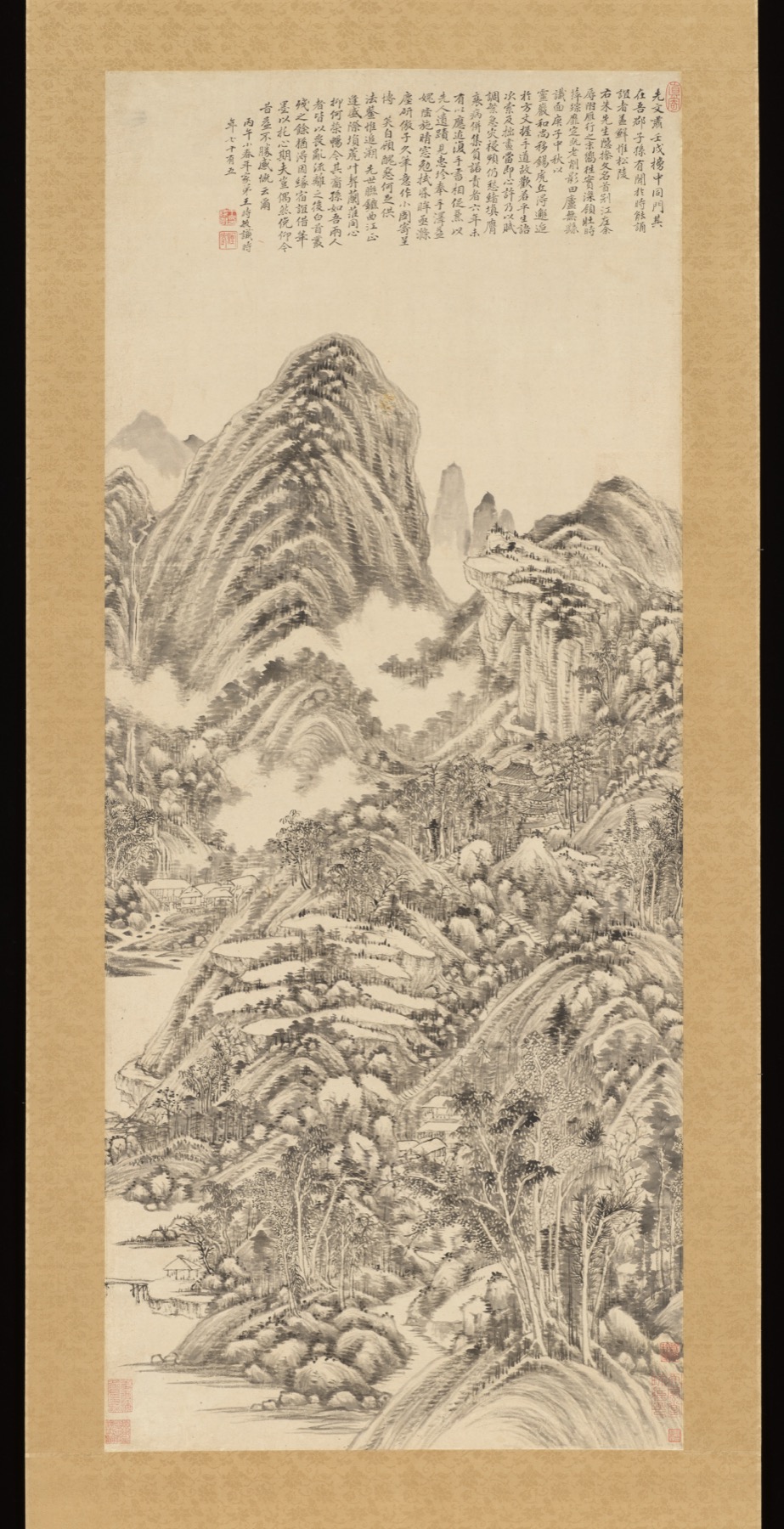
Mist is a structure
Mist seems soft, but compositionally it can behave like architecture. It opens a threshold between foreground and distance, hides the base of a peak, and allows separate masses to belong to one atmosphere. Ink wash may fade almost imperceptibly into bare silk. What the eye cannot fully locate becomes part of the pleasure: the landscape continues beyond the evidence supplied by the painter.
The empty area also gives time to the image. A dense cluster of trees asks for close attention; a pale stretch lets the gaze slow down. Alternating concentration and release creates rhythm, much as silence shapes a piece of music. The painting is therefore not only an image of space. It is an arrangement of attention.
Not one timeless Chinese rule
It is tempting to turn blankness into a universal statement about Chinese philosophy. That shortcut flattens a long and argumentative history of painting. Court artists, scholar-amateurs, professional painters and modern artists used space differently. Format, period, regional school, material and purpose all matter. A snowy landscape may leave paper bare to suggest weather; another work may use openness to stage reclusion or to quote an earlier master.
Begin with the specific object: who made it, when, in which format, and for whom? Then ask what the empty area actually does. Does it join or separate? Does it imply water, sky, fog or an unknowable distance? Close looking protects the image from becoming a decorative illustration of an abstract idea.
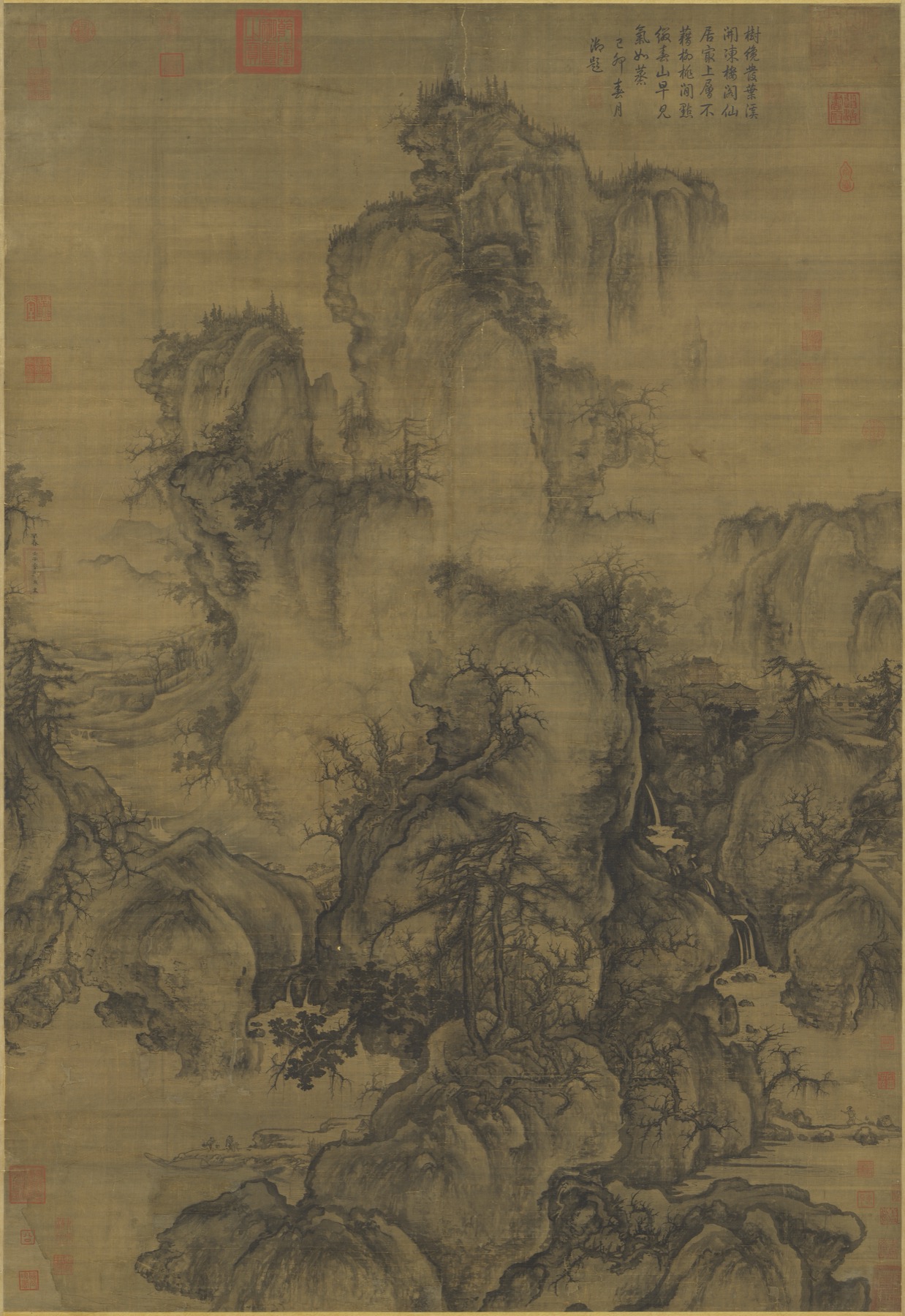
Try looking for one minute longer
Choose one open area and stay with it. Trace the ink at its edge. Notice whether the boundary is sharp, dry, wet or dissolving. Then follow the nearest path, boat or roof and imagine how you would reach it. The exercise changes blankness into an event between eye and surface. What seemed like nothing begins to hold weather, scale and possibility.
The most valuable lesson is portable. Chinese landscape painting reminds us that visual richness does not require every space to be occupied. An image can trust the viewer to complete a transition. In a culture of constant filling—screens, messages, explanations—that confidence in an interval feels unexpectedly contemporary.
Join the conversation
What did this make you notice?
When you look at an unpainted passage, what appears first to you: water, mist, distance or silence?