
A closer look
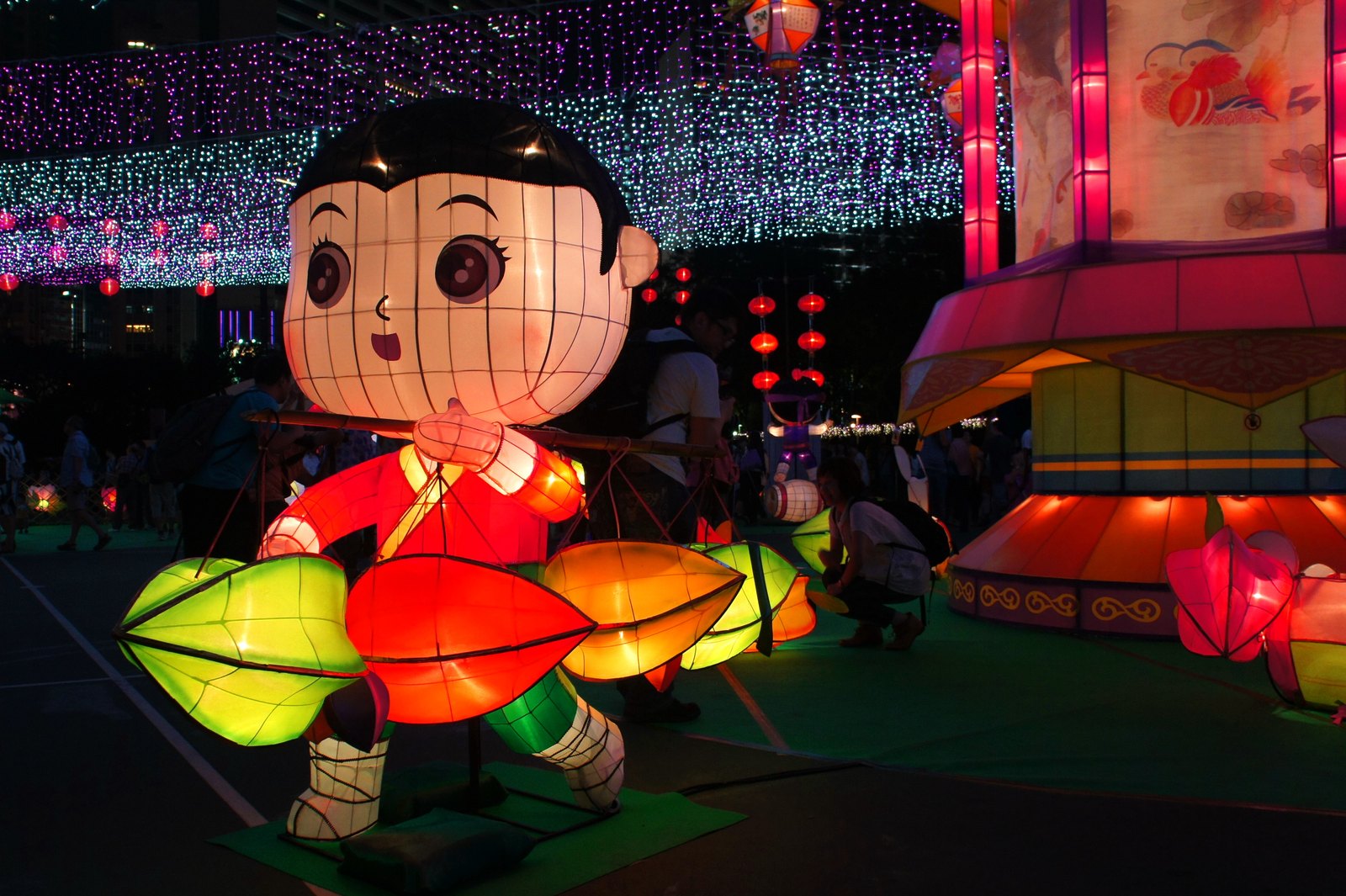
Lanterns belong to many people's picture of the Mid-Autumn Festival, but they do not occupy the same place in every celebration. Hong Kong provides a particularly rich example: crafted lanterns, public displays and neighborhood traditions make light part of the evening's shared experience. That does not make a lantern procession a requirement for every Chinese family, nor does it make every illuminated Chinese festival the same event.
The better question is not “What do Chinese people always do?” It is “What happens here, and who makes it happen?” Following that question through Hong Kong reveals an important distinction between an image of culture and a local practice. An illuminated object is easy to photograph. The craft, neighborhood and calendar behind it require a closer look.
Start by naming the occasion
Mid-Autumn and the Lantern Festival are different festivals. The former belongs to the eighth month of the traditional calendar; the latter to the first. The repeated appearance of lanterns can make their photographs easy to confuse, especially when an image circulates without a date or location. For the broader seasonal context, begin with our Mid-Autumn guide; this story follows the specific question of public light.
Even within a single festival, the word “lantern” can hide substantial differences. A small object carried by a child, a large installation viewed in a park and the burning incense of a fire dragon are not interchangeable. They organize people differently. One travels with its holder, another gathers an audience, and another depends on coordinated performers. Visual resemblance should not erase those distinctions.
Craft has its own calendar
Hong Kong's Intangible Cultural Heritage Office documented a 2025 Victoria Park exhibition created with paper-crafting master Hui Ka-hung. Its imagery brought together dragon boating, mooncake making, carambola lanterns and other elements of local cultural life. This was a named maker working on a particular exhibition, not an anonymous display that somehow appeared from “tradition.” Hong Kong ICH Office
The example suggests a useful way of seeing festival design. An inherited technique need not repeat exactly the same subject forever. New commissions can place familiar forms in different combinations. The question becomes how an object carries recognizable craft while speaking to its present setting.
This makes the period before the festival worth imagining, without inventing undocumented workshop scenes. Someone has to decide scale, structure, materials and assembly. The public encounters a finished evening spectacle; the work that makes the spectacle possible belongs to a longer span of time. Recognizing that span shifts attention from instant visual consumption toward makers.
A park is a particular kind of gathering
An official lantern carnival also has practical boundaries. Hong Kong's 2026 programme identifies separate venues and dates, and prohibits naked-flame lanterns at those venues. This is a reminder that photographs of glowing objects do not automatically tell us which lighting methods visitors may bring today. Anyone attending should consult the live programme rather than treating a historical image as instructions. Community Programmes Office
A public display lets people share a view without sharing a household. That is its own form of togetherness. It may involve a short walk, a pause in front of an installation or a meeting arranged after dinner. We should not claim that every visitor experiences it identically. The point is that the city provides a setting in which different private evenings can briefly intersect.
The fire dragon is not a giant lantern
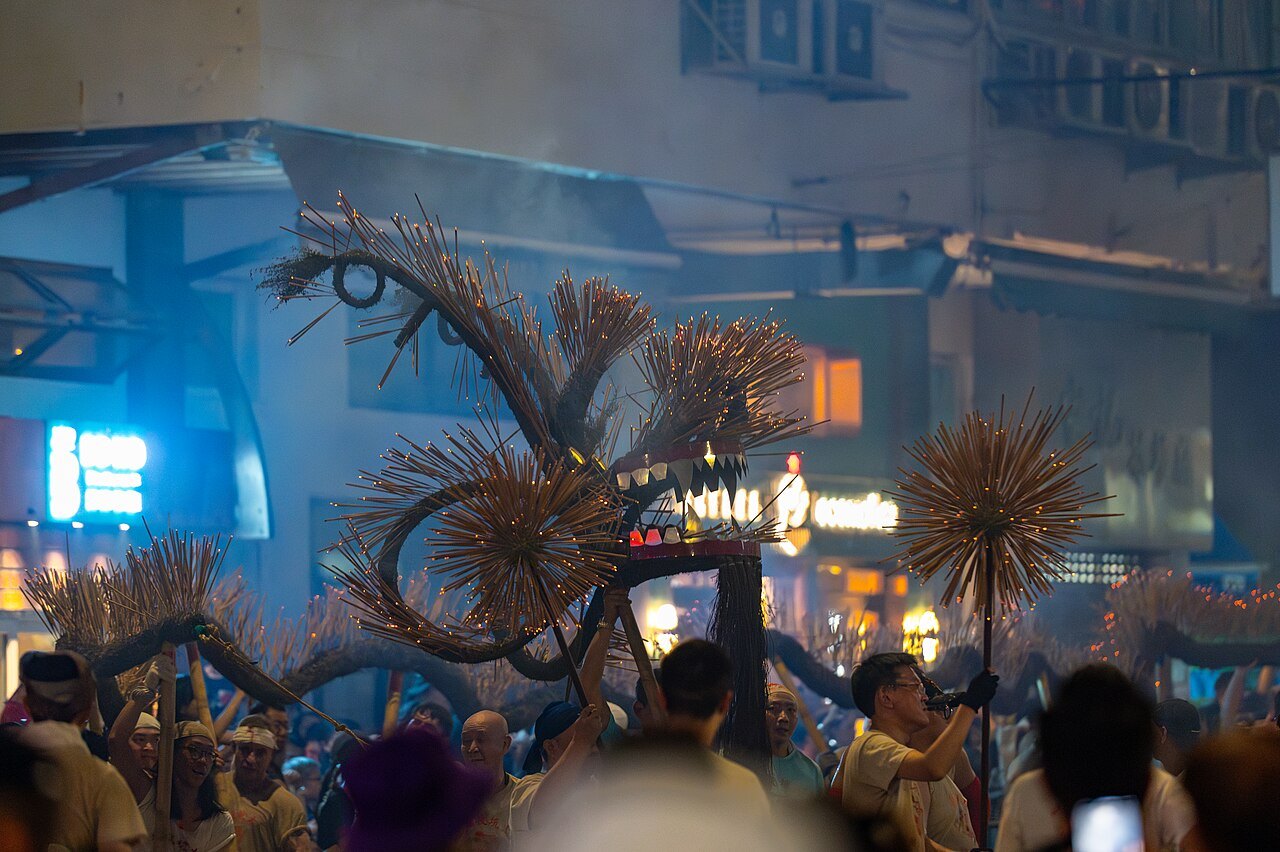
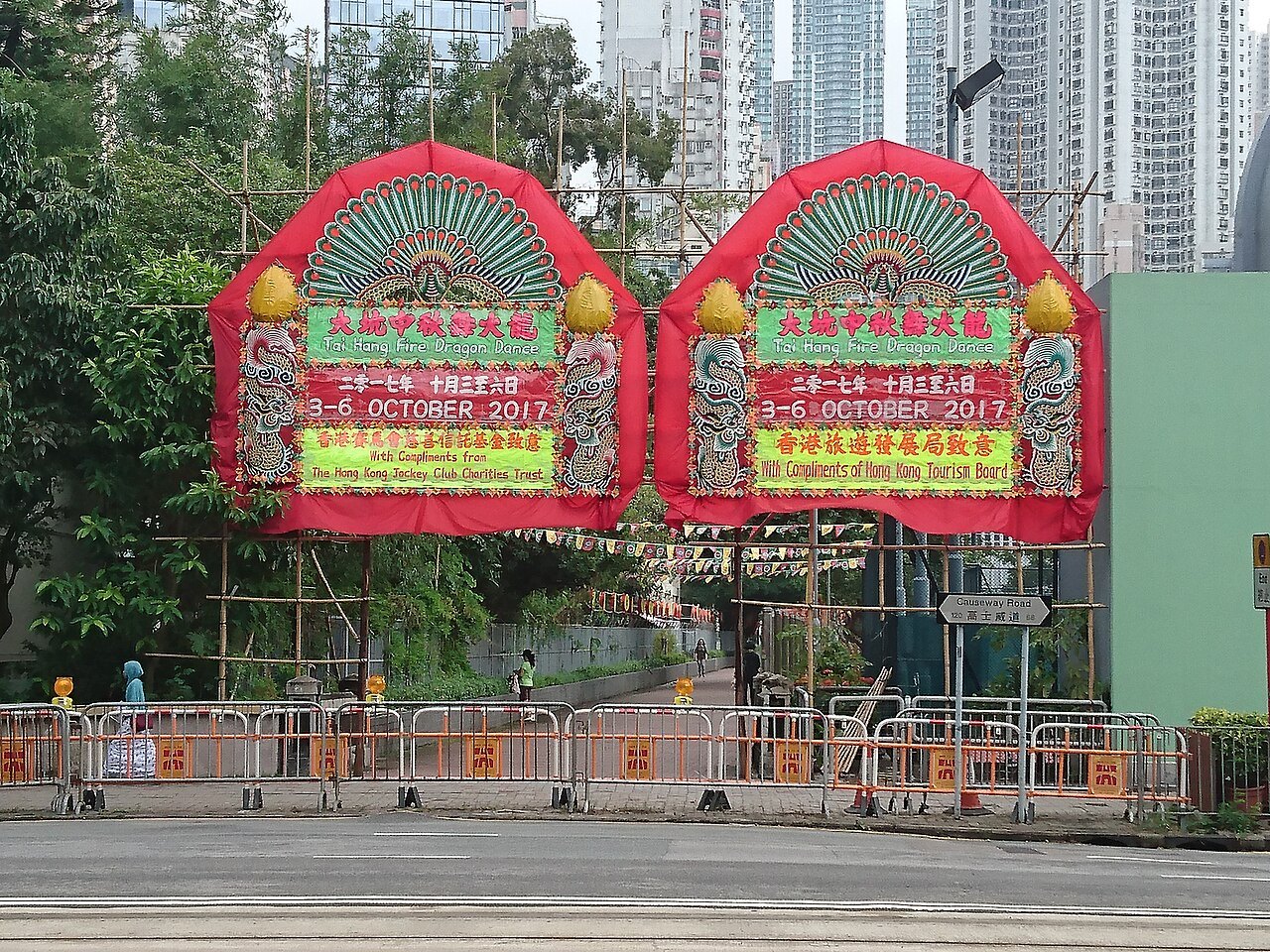
Tai Hang's fire dragon tradition has a distinct neighborhood history. The ICH Office traces its origin story to a reported epidemic in 1880, when Tai Hang was a Hakka village. In the story, residents fashioned a dragon covered with incense sticks and paraded it to avert disaster. The account belongs to the community's heritage narrative; it is not medical evidence that the performance ended disease. Tai Hang heritage record
Understanding that distinction lets us take the story seriously without turning it into a claim it cannot support. The dragon is meaningful as a collective practice, a remembered response and a continuing form of local identity. It should not simply become a dramatic stock image for “Chinese lanterns.”
The performers matter as much as the illuminated form. In a still photograph, the dragon can appear almost independent of its carriers. Remembering the human coordination restores what the image tends to conceal: this is something people do together, not merely something people look at.
Another neighborhood, another account
The ICH Office also documents a Mid-Autumn fire dragon tradition in Pok Fu Lam. Its existence is a reason to be more precise, not to merge the two neighborhoods into one generic custom. Shared terms do not make local histories identical. Pok Fu Lam heritage record
This principle helps international readers avoid a common mistake. A highly visible practice can become shorthand for an entire country simply because it produces memorable photographs. The more striking the image, the more important its caption becomes. Naming the place is not a minor detail added after the story; it is part of understanding what the story is.
Let captions preserve the differences
The photographs accompanying this article document particular past celebrations. They are not promises of this year's installations, and they cannot represent every household's Mid-Autumn evening. Read the date and location before treating a scene as a model of what to expect.
That habit makes festival travel more rewarding. Instead of arriving with a checklist of supposedly universal customs, you can ask what distinguishes this neighborhood, who organizes the celebration and which practices belong to the public event rather than private life. Cultural curiosity becomes a form of attention rather than a demand for a familiar picture.
Lantern light can be spectacular, but the most lasting discovery may be quieter: one festival can hold several ways of being together. Some are public, some intimate, some rooted in a particular street. Keeping those differences visible makes the shared occasion richer, not less coherent.
For another place-centered reading, explore Beijing's hutong neighborhoods.
Join the conversation
What did this make you notice?
Does your own city have a seasonal tradition that photographs capture beautifully but explain poorly?