
A closer look
A useful first question about guqin music is not whether it sounds relaxing. Ask what happens to a note after it begins. Does its pitch remain still, travel or briefly seem to hover? Is its edge bright, grainy or soft? Listening for these changes gives an unfamiliar instrument a structure you can follow without turning it into a soundtrack for an imagined, timeless China.
The guqin is a Chinese plucked zither with seven strings. UNESCO's account of the instrument and its music distinguishes open-string sounds, stopped-string sounds and harmonics, known respectively as san, an and fan. These are useful starting points, not a complete theory course. They tell a new listener that differences in touch belong to the musical vocabulary, rather than being incidental noises around a tune.
Begin with the shape of one sound
Choose a credited solo performance, preferably with a clear view of the musician's hands and without a backing track. On a first listening, do not try to identify every technique. Notice one sound that catches your attention and wait for its ending. Does the next note interrupt it, answer it or arrive after a gap? The exercise is simply a way to make your listening more specific.
On a second pass, follow the visible gesture. An open string can ring without being pressed down. A stopped string involves contact that changes its sounding length; movement can carry the pitch. A harmonic depends on a lighter touch. You do not have to attach the correct label instantly. Let the difference between a ringing note and a traveling one become audible first. Technical vocabulary is more useful when it names something you have noticed.
Silence is not a separate room
We often imagine silence as the space between musical events. For this listening exercise, try treating the fading edge of a note as part of the event itself. A pause after a sharp attack does not feel identical to a pause after a sliding sound. What precedes it changes what you expect next. You can test that observation with another instrument too; it is not a claim that one culture uniquely understands quiet.
Nor is quietness a measure of spiritual achievement. A listener may feel impatient, intrigued or unmoved. None of those responses disqualifies them. If a recording is difficult to hear, adjust the volume comfortably rather than making discomfort into a ritual. The aim is to hear musical choices, not to perform reverence. There is no need to promise that the instrument will heal anxiety, improve concentration or reveal a hidden energy.
A dark surface is a working surface
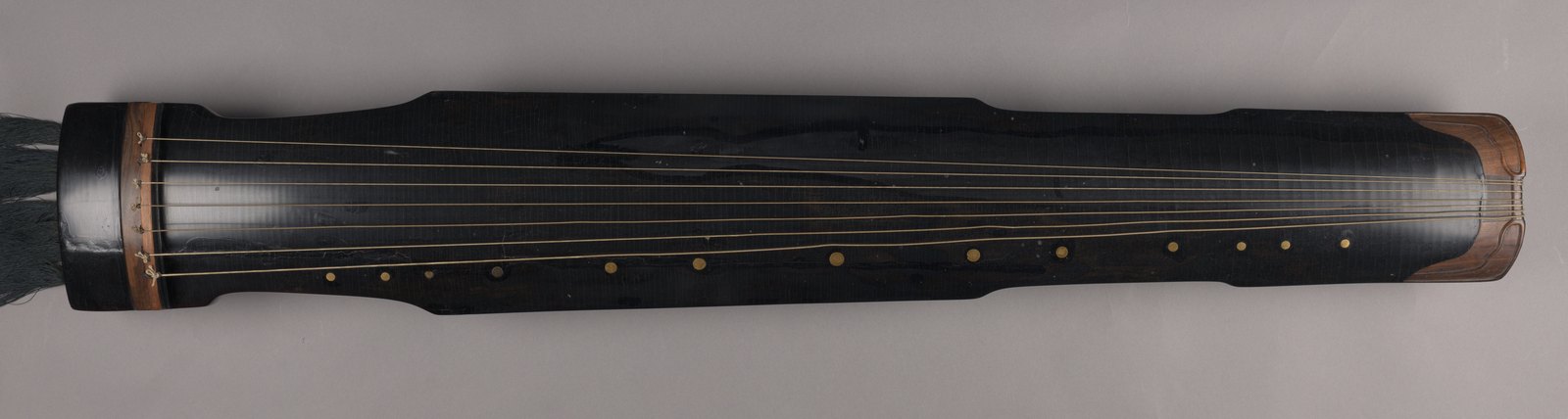
A late sixteenth-century instrument in the Metropolitan Museum of Art is catalogued as Qin (Seven-stringed zither), made with zitan wood and black lacquer. Its elongated body is visually restrained. Looking at it, a beginner might see a minimal sculptural object before recognizing a place where the two hands do different kinds of work. The photograph is a good opportunity to connect an instrument's appearance with the act of playing.
Follow the strings with your eyes. Then imagine how differently that surface would be encountered by somebody seated at it rather than standing in front of a display case. This is not permission to handle a museum instrument. It is a reminder that a musical object has orientations a front-facing photograph cannot fully communicate. A beautiful silhouette tells us something, but not everything, about a thing designed to be touched.
The supposedly solitary instrument has patrons
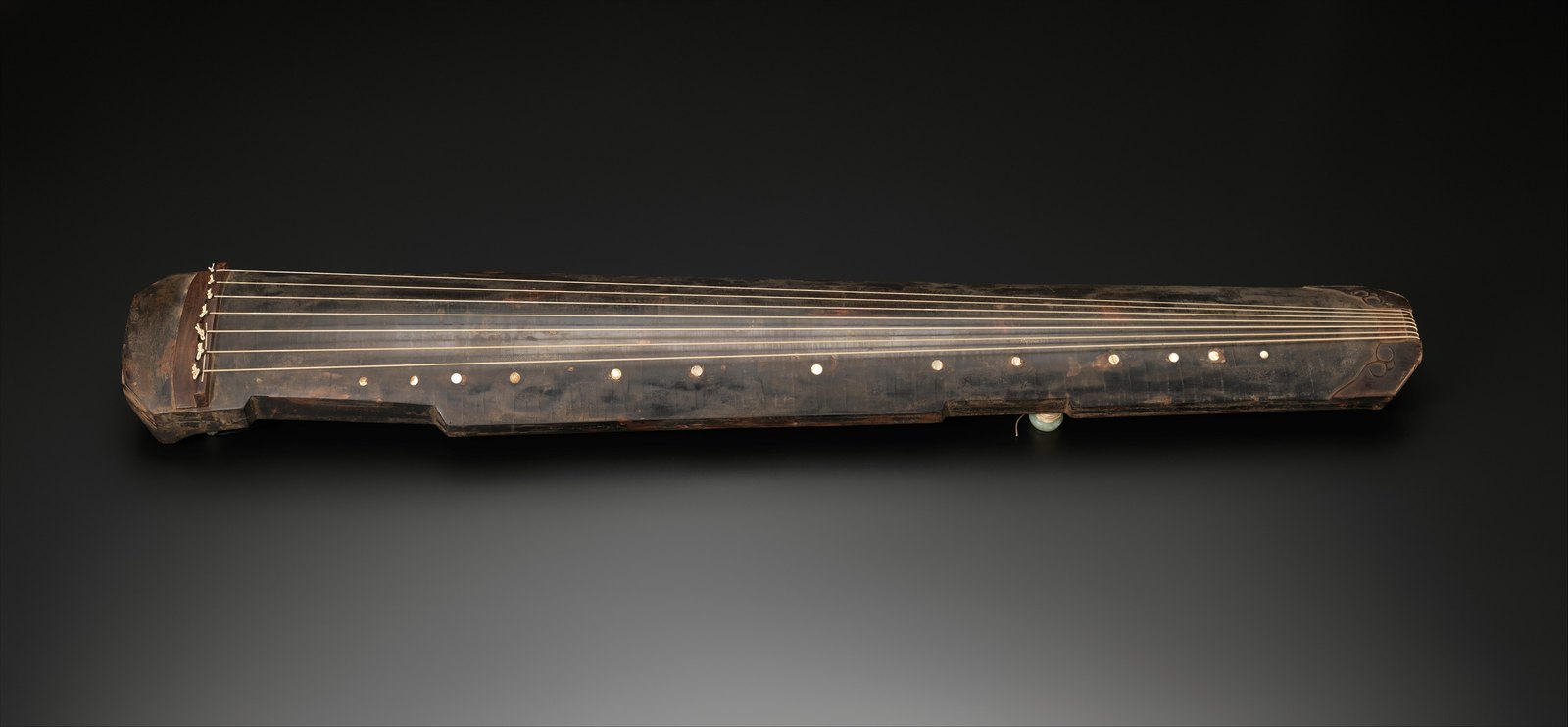
Another Met guqin, associated with Prince Lu and dated 1634, belongs to a numbered group commissioned for a princely household. The museum identifies it as number eighteen. That small administrative detail usefully interrupts the fantasy of a solitary sage making music outside every social institution. An instrument can be connected with inward attention and also with patronage, skilled labor and ownership.
Place the two instruments side by side on your screen. Instead of ranking one as more authentic, ask what information each record lets you know. A date is different from a biography; a commission is different from evidence that a patron personally made or regularly played an object. Keeping those categories separate leaves room for curiosity without inventing a scene. We can appreciate an instrument while admitting that much of its audible life is unavailable to us.
A painted listener is not a census
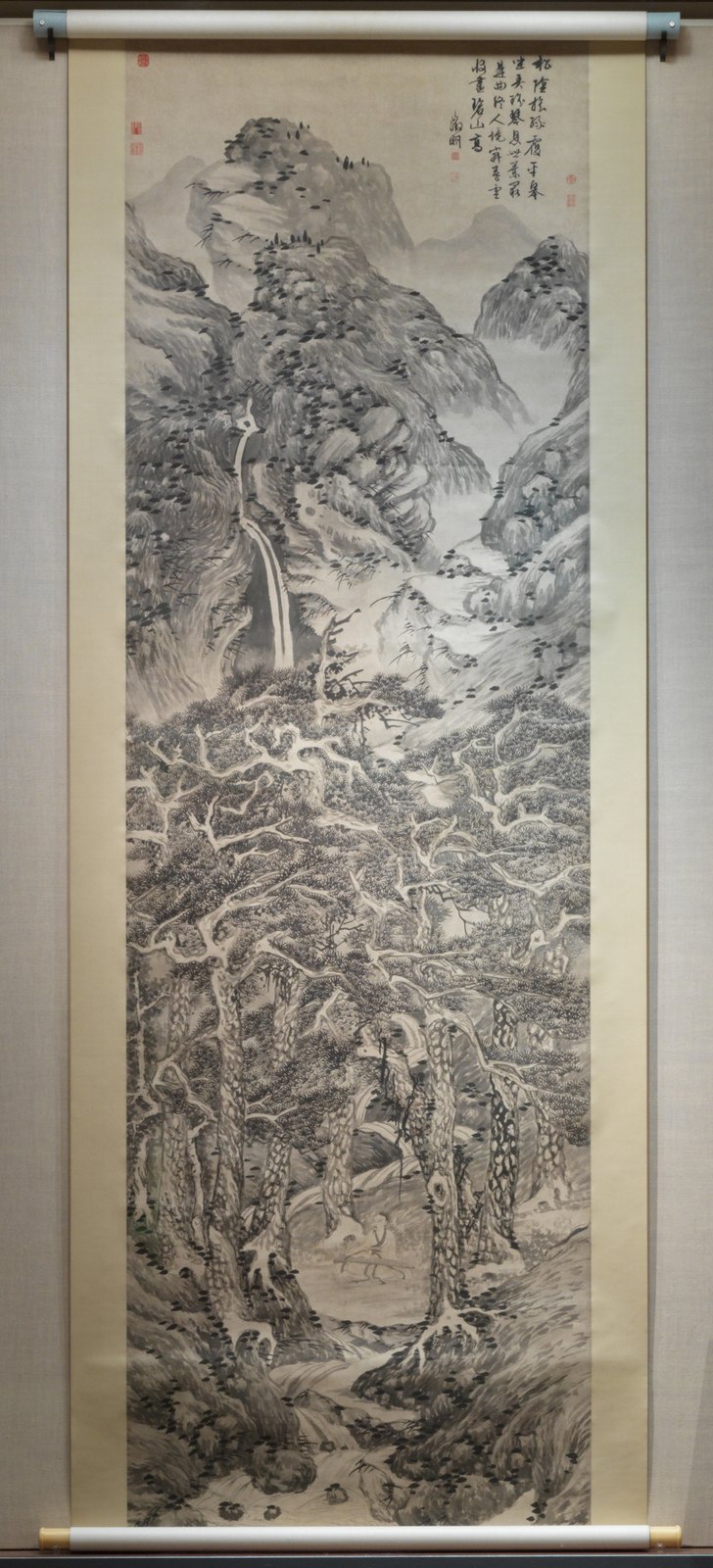
Wen Zhengming's Recluse playing the zither in a pine grove, dated around 1540, presents music within an imagined landscape. The Met connects the qin with scholarly self-cultivation and notes that this large hanging scroll was conceived to be seen across a spacious hall. A picture of withdrawal could therefore itself have a substantial presence in a room.
That contrast is more interesting than using the painting as proof that musicians always played alone beneath trees. An artwork can propose an ideal rather than document an ordinary afternoon. Ask what the setting makes you expect to hear, then return to an actual performance. Are you listening to the musician's sound, or to the landscape you have supplied in your mind? Neither experience must be rejected, but they should not be confused.
Give the performance a second hearing
For a final pass, listen without watching the hands. Follow one phrase and see whether your attention has changed since the first attempt. Perhaps a sound you initially regarded as a pause now seems to carry motion. Perhaps you notice how strongly you wait for a familiar kind of resolution. That expectation tells you something about your own listening habits; it does not establish a universal difference between Chinese and Western music.
Keep the performer's name, the work's title and the recording context when you share what you heard. A named musician offers a better entrance than an anonymous playlist labeled ancient wisdom. For another way to consider paced attention, read a little longer at the tea table. For a visual comparison between gesture and trace, explore Chinese calligraphy. Neither is a substitute for the sound. The next step is to listen again, with one more detail available to you.
Join the conversation
What did this make you notice?
What drew your attention first: the plucked note, the movement after it or the moment when it faded?