
A closer look
An incense burner in a museum has lost the thing that once made it active. There is no rising smoke, no changing fragrance and no need to watch an ember. What remains is a container. Yet this apparent absence makes the object unusually revealing: without the scent to distract us, we can ask why someone chose this material, this opening and this shape to hold something that would disappear.
Chinese incense culture cannot be reduced to a single practice. A vessel does not automatically tell us whether it served devotion, hospitality, personal enjoyment or another setting. Three surviving burners offer a narrower, more useful route into the subject. Instead of proposing a timeless national ritual, they let us examine how objects organize an experience—and how much of that experience remains beyond the museum label.
A small vessel within a larger world
A Metropolitan Museum of Art publication describes incense as a fashionable interest among scholars and merchants in prosperous southeastern Chinese cities during the late Ming and early Qing. It connects that interest with maritime exchange, which brought aromatic materials alongside other valuable goods. This is a specific social and historical setting, not a description of every household in China. The Met, Chinese Decorative Arts
The connection matters because fragrance can seem intensely private. Someone enjoys a scent in a room; the room feels removed from the world. But the material may have arrived through a much larger network. Looking at the burner alongside that history unsettles the familiar image of cultivated leisure as effortless isolation. A quiet interior can depend on busy ports, specialized labor and unequal access to desirable things.
Bronze and the scale of attention
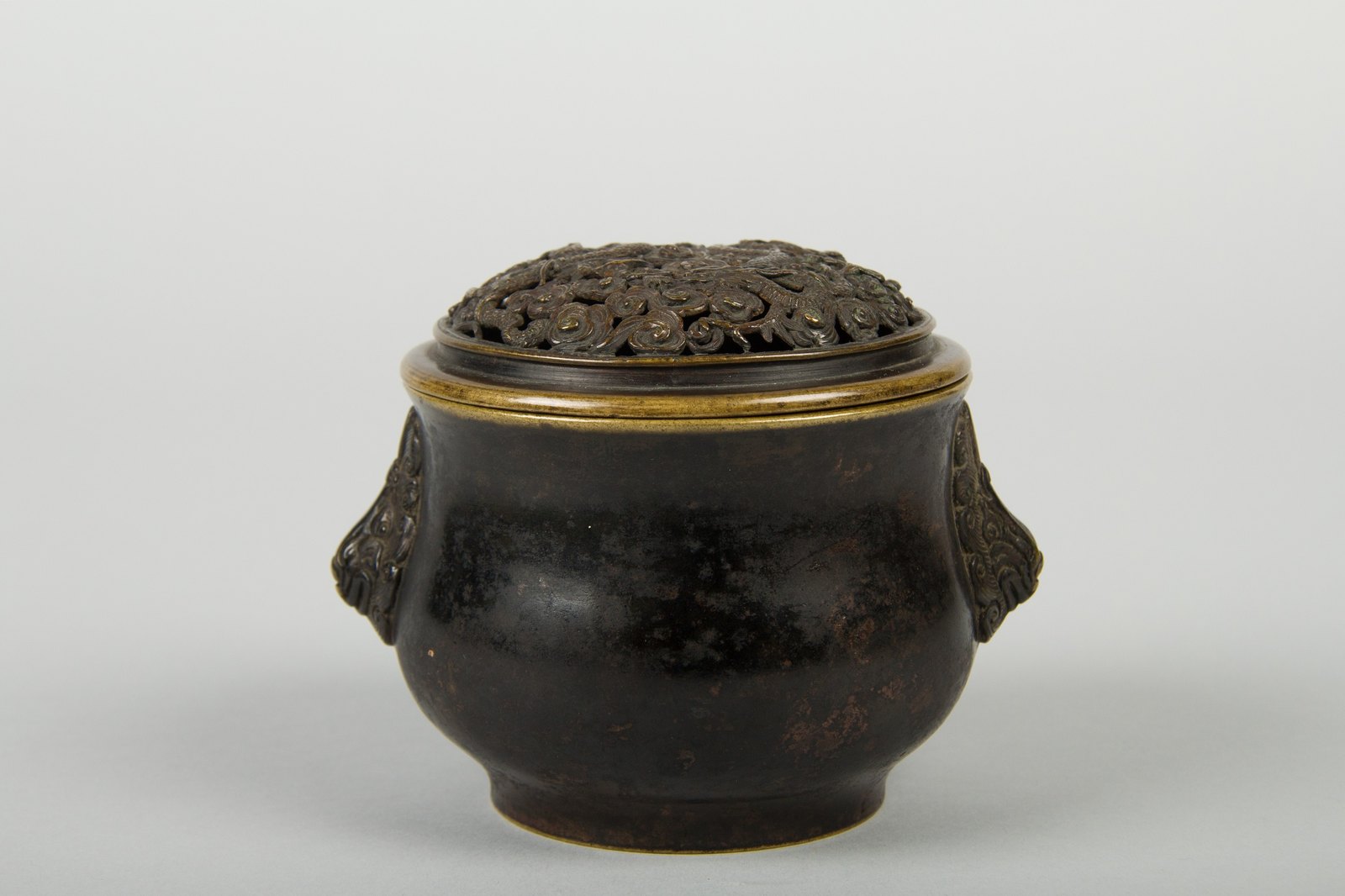
An eighteenth-century bronze burner at the Met measures only 8.9 centimeters in height. Its modest dimensions are worth noticing before enlarging the photograph. On a screen, a small object can assume the visual weight of a monument. In a room, it asks for a closer encounter. The Met, 91.1.493
That difference in scale changes the questions we ask. A great architectural feature organizes people around it; a small vessel may organize attention around a surface. We should not invent a particular desk, owner or ceremony for this burner. We can, however, notice how its size invites comparison with hands, other containers and the limited area in which it would sit.
Try looking at the outline before the surface. Where does the body become its rim? How do the supports affect the sense of weight? Is the opening visually generous or restrained? These questions do not require a dictionary of symbols. They concern the relationship between form and the practical task of containing a burning material.
White porcelain offers another presence
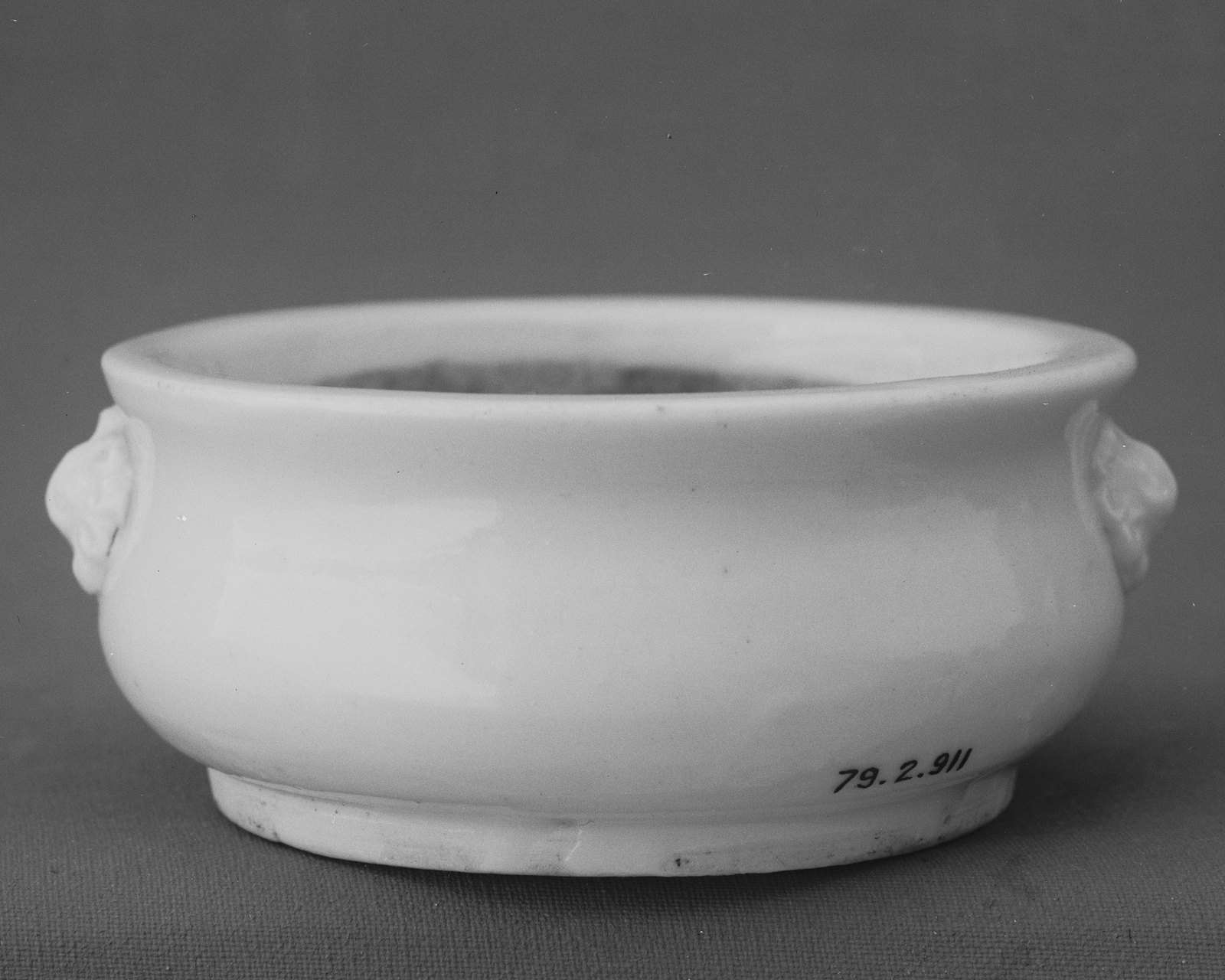
A seventeenth-century Dehua porcelain burner supplies a different material vocabulary. The museum identifies low-relief decoration beneath a clear glaze. Rather than assuming that its pale appearance made it spiritually purer, attend to what the material actually lets you see. The relief and glaze make subtle changes of illumination part of the object's legibility. The Met, Dehua incense burner
A digital image may encourage us to describe such an object simply as white. That word is insufficient as a way of looking. Edges, hollows and raised decoration can separate themselves through shadow rather than strong color. The object may reward moving the eye across it instead of searching for a single dramatic motif.
This does not mean porcelain replaced bronze in a neat progression toward refinement. The comparison is not a timeline of improvement. It shows that a broadly similar function could support different material solutions. A history of taste becomes less reductive when it allows alternatives to coexist rather than appointing one as the final expression of elegance.
A mark does not settle an object's history
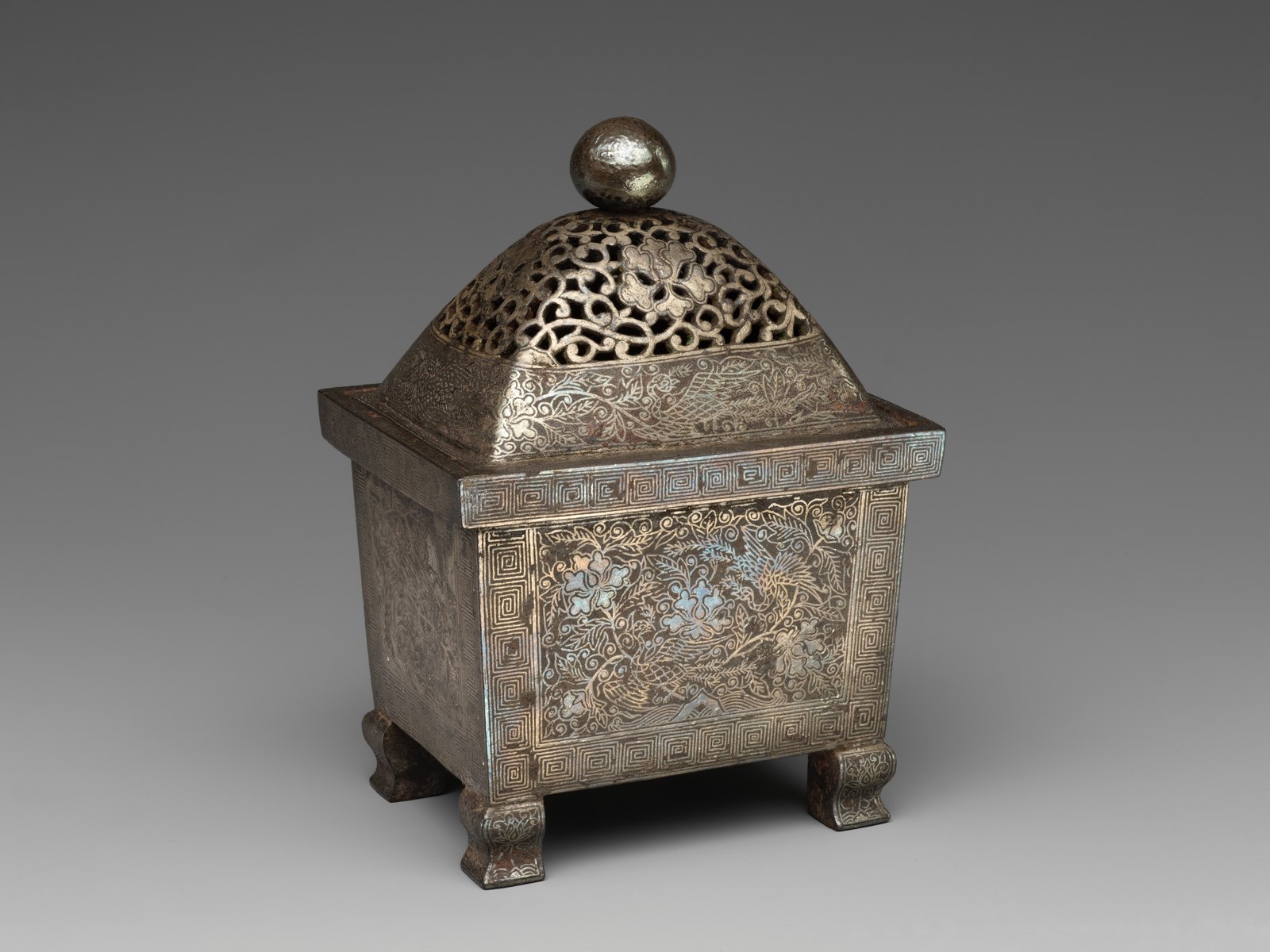
A third burner, decorated with peacock and peony imagery, has an iron body with silver damascening. Its record places it in the fifteenth or sixteenth century and suggests production in Derge, in eastern Tibet, now Gengqing in Sichuan. Although it carries a Xuande reign mark, the museum explains why its writing and decoration differ from imperial bronzes of that reign. The Met, 2006.473a,b
The example is a useful warning against treating inscriptions as self-explanatory certificates. A mark is evidence, but so are the material, the way it was worked and the design. The specialist's task is to compare them. For a reader, the lesson is not to become suspicious of every object; it is to distinguish a name present on a surface from a securely established account of manufacture.
It also prevents “Chinese incense burner” from becoming a category without geography. The institution's attribution opens a specific regional question. That complexity is more interesting than presenting all three pieces as interchangeable signs of one ancient aesthetic.
Resist inventing the vanished smoke
None of these photographs can tell us precisely what each burner smelled like in use. They cannot identify every substance placed inside, how frequently it was lit or what a particular owner believed. A suggestive object is not permission to fill every gap with a beautiful story.
The missing information can instead guide a more thoughtful reading. Which claims belong to the object's record? Which belong to the history of incense more broadly? Which are our own associations with quietness, luxury or memory? Keeping those layers separate does not diminish the atmosphere. It allows us to enjoy it without mistaking imagination for documentation.
An encounter without recreating a ritual
You do not need to light incense to learn from these objects. Place their images side by side and compare scale, material and silhouette. Notice which vessel first attracts you, then examine whether your preference changes after reading its record. A decorative surface may become more compelling when its making becomes visible.
The point is not to extract an instant wellness practice from a museum collection. It is to recognize that an ordinary-looking container can connect sensory pleasure, trade, craft and historical judgment. Even without fragrance, the burner remains active as a question: how do people give material form to experiences that cannot last?
Continue with a little longer at the tea table and how a Suzhou garden borrows the world.
Join the conversation
What did this make you notice?
Which vanished sensory quality would you most like a museum object to recover: its fragrance, its sound or the feeling of holding it?