
A closer look
A mooncake is a festive pastry category, not a single flavour. The familiar moulded cake with a browned surface is only one possible encounter. A flaky pastry that sheds crumbs and a soft snow-skin mooncake can share a festival association while offering quite different experiences. Even within a named style, filling, size and the maker's choices matter. “I tried a mooncake” is a beginning, not a complete description.
This guide starts with three useful points of comparison: a baked lotus-paste cake, Suzhou-style flaky pastry and snow-skin varieties. It is not a complete map of China, and these styles are not confined to their places of association. The aim is to give you a vocabulary for noticing what is in front of you. Once crust, filling and serving condition become separate questions, a gift box becomes much easier to read.
Start at the outside, then look at the cut
The Hong Kong intangible cultural heritage inventory includes mooncake making and identifies mooncakes as Mid-Autumn festive foods and gifts, with pastry, lotus-seed paste and other fillings. That description preserves an important openness: a familiar ingredient is not the only possible ingredient. A festival food can have a recognizable social role without one recipe exhausting its identity.
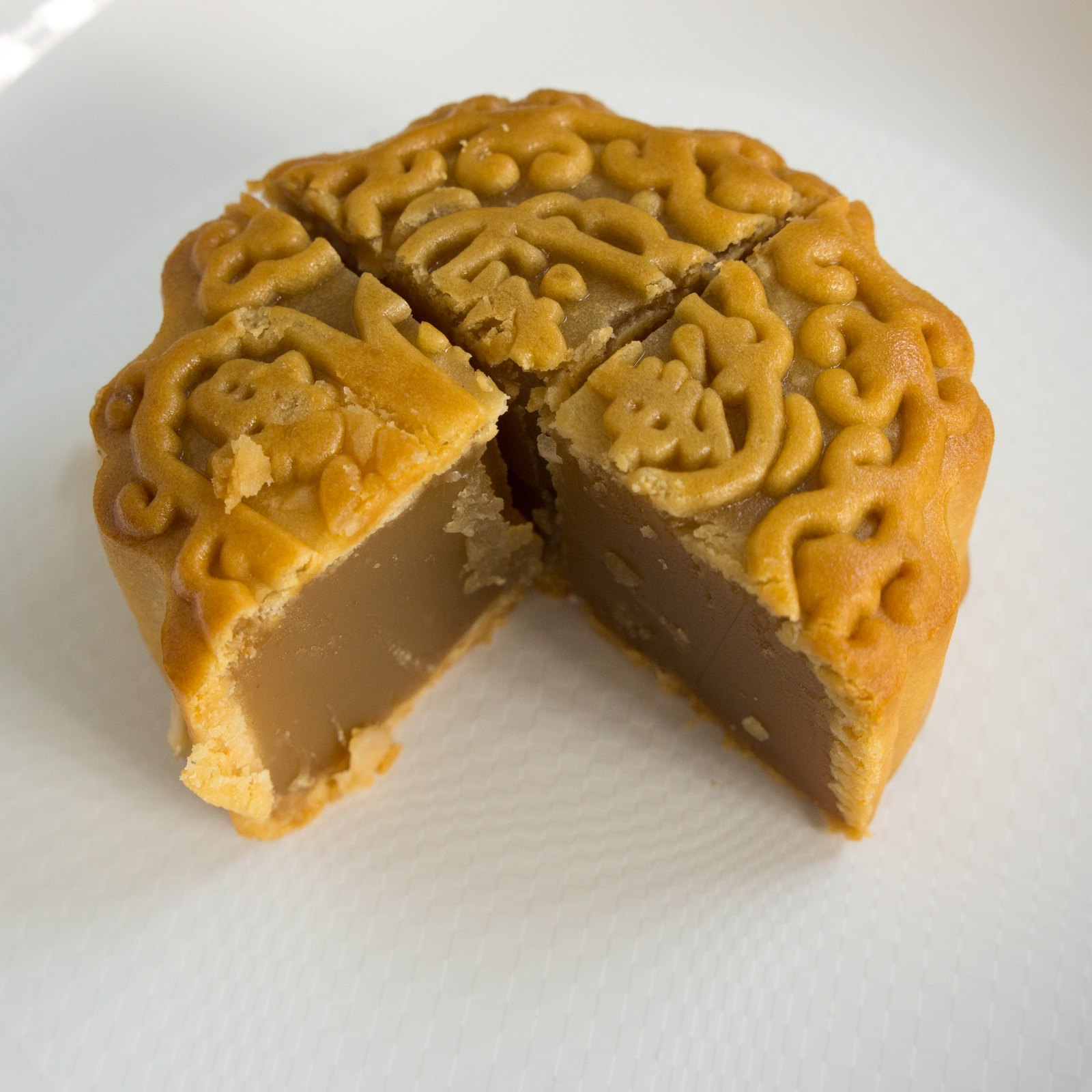
Look first at the baked lotus-paste example pictured here. Its patterned surface makes the whole cake legible as a designed object. The cut surface tells a different story: the relationship between an outer enclosure and a dense interior. Neither view is sufficient on its own. A beautiful mould cannot tell you whether the filling suits your taste, while a slice alone conceals the care invested in the top.
For a beginner, this suggests a better first question than “Is it sweet?” Ask what kind of sweetness, what texture and what contrast the cake offers. Is the filling smooth or visibly mixed? Does the crust remain distinct as you eat, or seem to merge with it? A small portion gives you space to notice. These are tasting prompts, not rules for judging a cake's authenticity.
Suzhou-style: let the crumbs be part of the pleasure
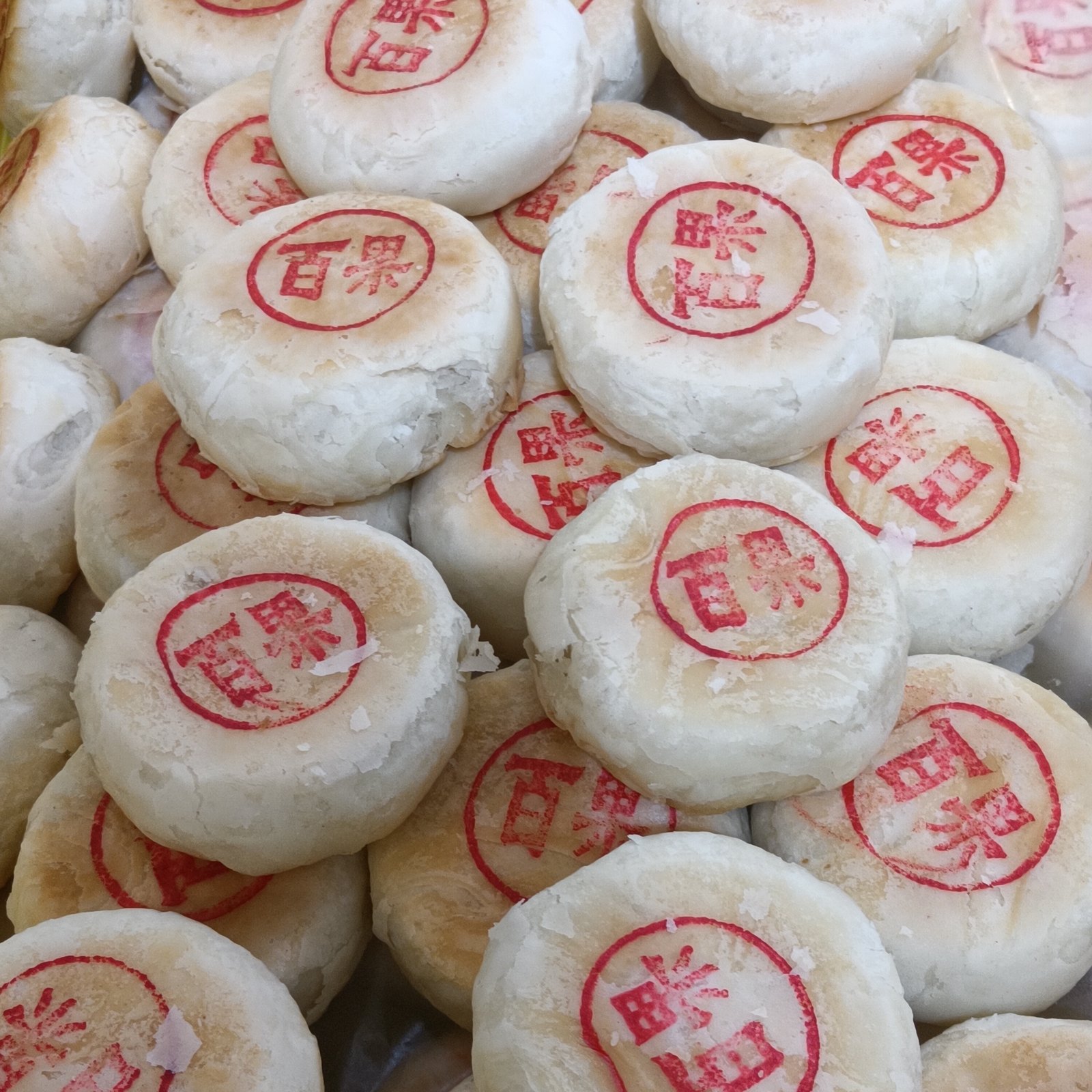
The flaky exterior of a Suzhou-style mooncake changes the experience before the filling enters the picture. Rather than a moulded surface enclosing a compact centre, the pastry calls attention to layers and breakage. Our photograph shows a ginkgo-filled example identified by its photographer. It illustrates one variation, not a claim that ginkgo is the defining filling of the entire style.
A Suzhou municipal report from October 2025 describes freshly baked meat mooncakes being sold through neighbourhood markets. This is a useful correction to the assumption that every mooncake is a sweet, long-keeping item purchased in an elaborate box. It is a documented local example, not a statement about every bakery today or every family's festival meal.
The contrast also helps explain why the same serving ritual need not fit every cake. A pastry appreciated for a freshly baked crust asks for a different kind of attention from a dense cake divided into small pieces. Follow the seller's instructions rather than applying one storage or reheating method to the whole category. The word “mooncake” identifies a relationship between foods; it does not erase their material differences.
Snow skin changes the question again
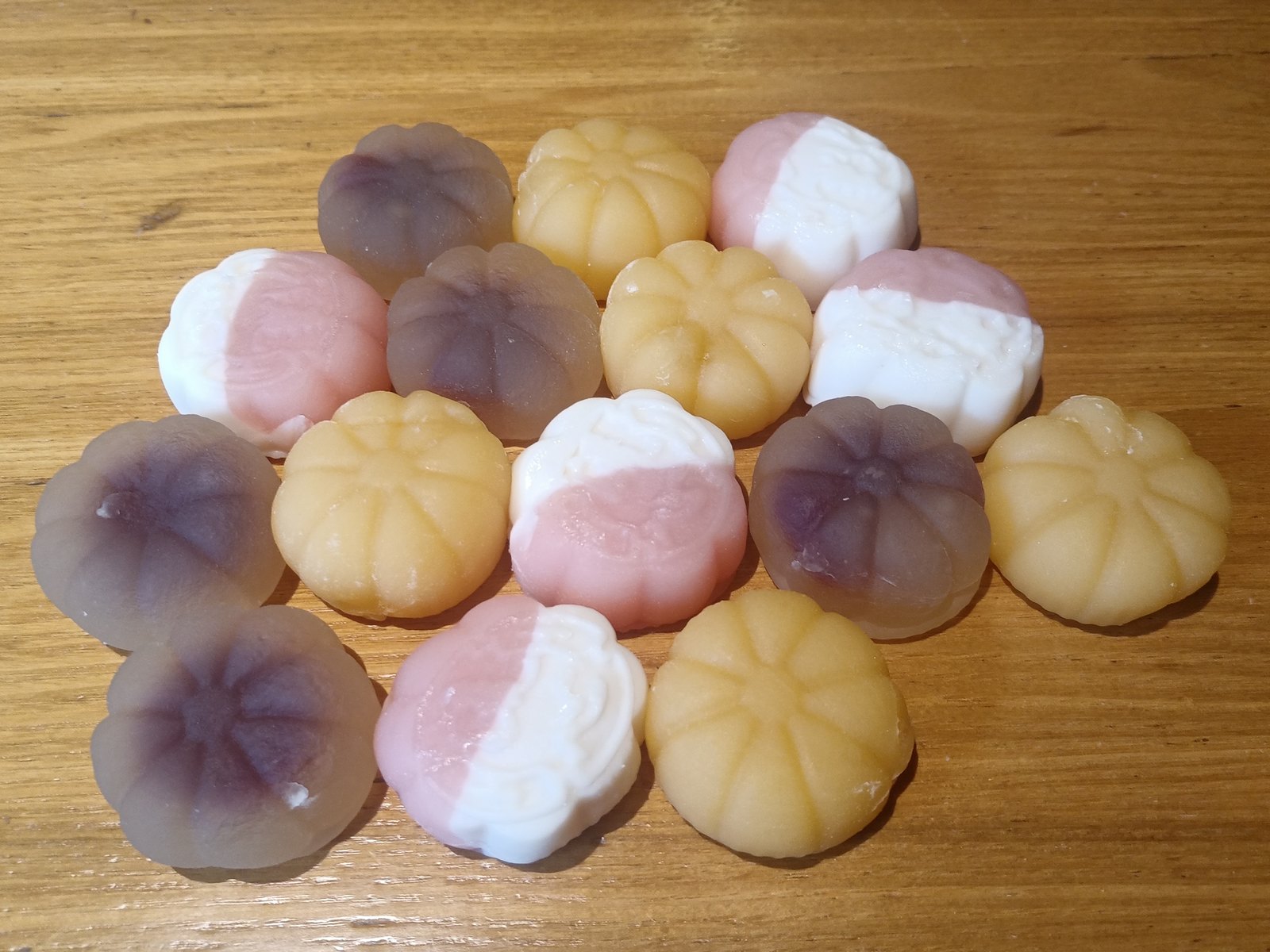
Snow-skin mooncakes make the limits of judging by silhouette especially clear. A moulded flower or geometric pattern can resemble a baked cake's decoration, while the pale or coloured covering promises a different texture. Our photograph records assorted fruit-flavoured examples. Their colours identify this particular assortment; they are not a reliable universal key to flavour across shops.
Hong Kong's Centre for Food Safety guidance, issued in September 2026, distinguishes snowy and ice-cream mooncakes from high-temperature-baked types. It advises keeping snowy mooncakes at 4°C or below and following package instructions. The practical lesson is simple: do not treat every festival box as something that can sit on a desk. The needs of the food take priority over the attractiveness of the packaging.
Do not confuse snow skin with ice cream, either. The category name is not a promise that every filling is frozen dairy. Read what the producer actually calls the product and how it should be kept. As a reader of food culture, you gain more from these ordinary distinctions than from searching for one dramatic origin story. How a cake reaches the table is part of what it is.
Regional names are useful, but not fences
A regional label helps organize knowledge, yet it does not mean all local people prefer one version or that makers elsewhere cannot work in that style. Consider how often familiar foods in your own city travel beyond their original place names. The label may describe a technique, a family resemblance or an association. It is a starting point for questions, not a border around legitimate taste.
A Hangzhou government-site report from September 2026 describes traditional Suzhou-style and Cantonese mooncakes alongside newer flavours, including a filling inspired by the local noodle dish Pian'er Chuan. The example shows a maker adapting a recognizable local reference to another format. It does not prove that novelty has replaced older tastes, or that one invention represents a whole city's preferences.
This is why a useful guide should admit its edges. Yunnan, Beijing, Chaoshan and other traditions deserve their own careful treatment; squeezing them into a single adjective would make the map less informative. For now, comparing three different constructions gives you a stronger foundation than memorizing ten regional names with no sense of how the pastries actually feel.
A shared plate is a better introduction than a ranking
For an informal tasting, identify each cake before cutting it. Keep the ingredient and storage information available, especially when people have allergies or dietary restrictions. Offer small portions and let participants decline or choose another variety without turning preference into a cultural test. A person who dislikes lotus paste has not rejected a festival. They have discovered something about one filling.
Then ask for descriptions before verdicts. “Flaky,” “dense” or “soft” opens a conversation more effectively than “good” or “strange.” Notice whether the same cake changes your expectations after the first bite. If you are hosting, the most useful explanation may be as small as pointing out why two cakes with similar shapes have different crusts. Expertise need not become a lecture at the table.
Return to our Mid-Autumn introduction for the festival's broader context, or explore the shared Chinese table and gifts as relationships. Mooncakes belong within those conversations, but they also reward attention as food. Their diversity is not an inconvenience to summarize away. It is the reason a second taste can reveal something the first one could not.
Join the conversation
What did this make you notice?
Which matters most to you in a pastry: the crust, the filling, or the contrast between them?