
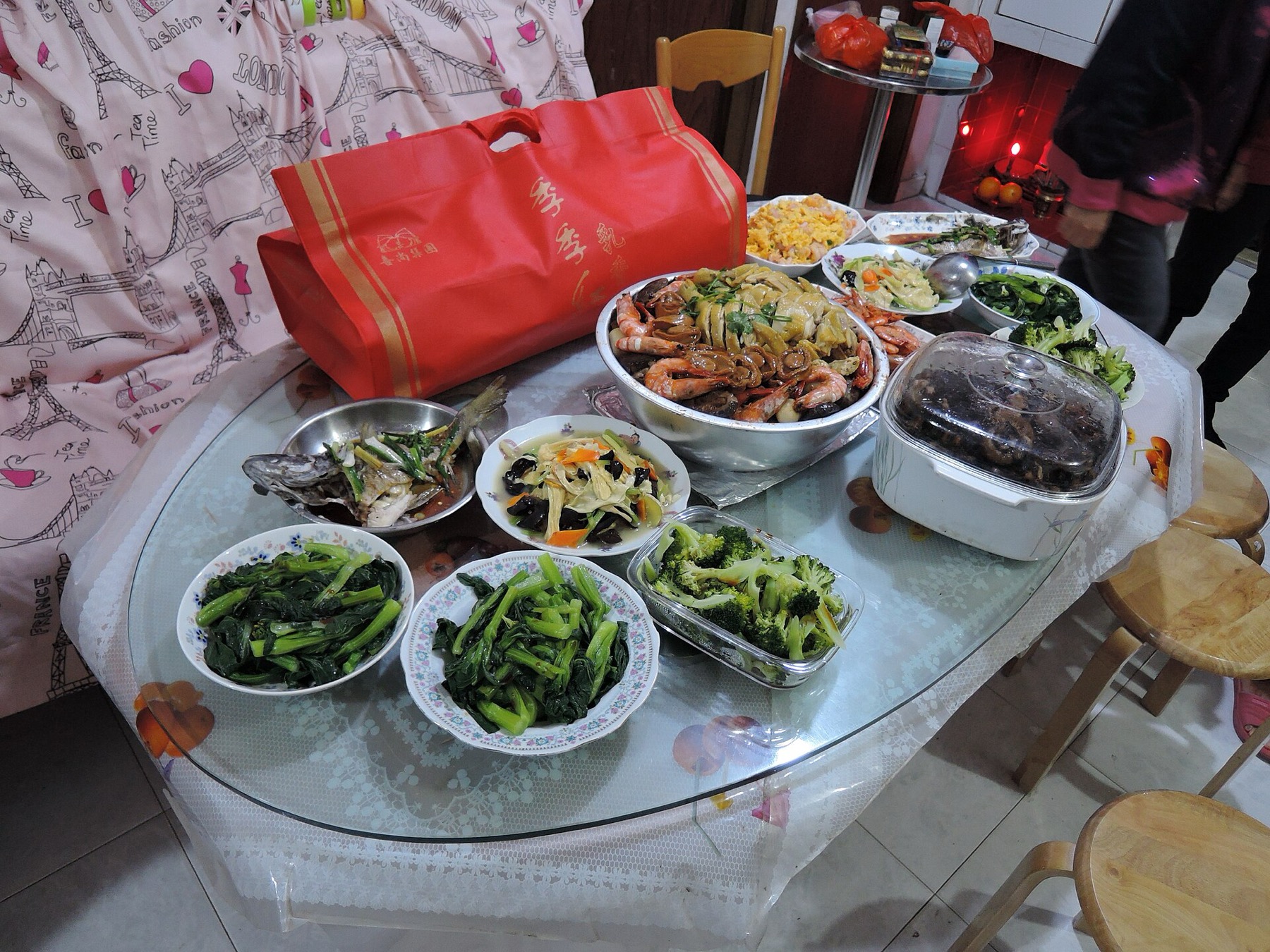
The meal has no private center
At many Chinese group meals, each diner receives a bowl while dishes belong to the table. The arrangement changes the meal’s grammar. Instead of choosing one complete plate, people build a sequence of tastes from shared vegetables, meats, fish, tofu, soup and staples. Variety is created collectively.
This pattern is widespread but not universal. Breakfast stalls, noodles, set meals and solo dining follow other logics. “Chinese people always share” is less accurate than noticing when a meal has been deliberately organized for a group.
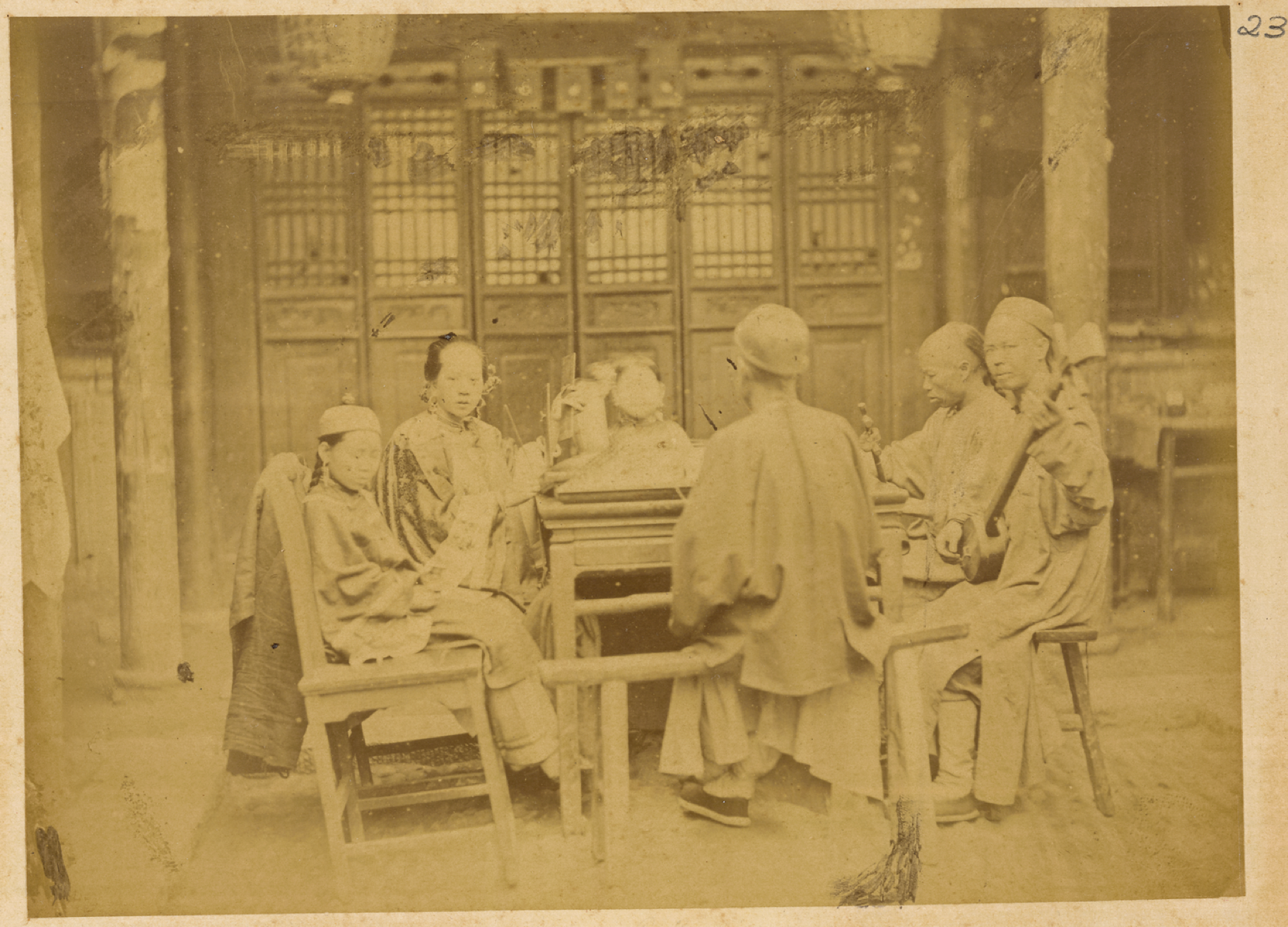
Roundness had a history
The round restaurant table now feels inevitable, yet research by historian Kyoungjin Bae traces its establishment as a common dining form to social changes during the Qing period. Shape gave every diner access to the center and reduced the visual hierarchy of a rectangular table, even when seating order still marked honor and seniority.
The table demonstrates how an ordinary object can reorganize behavior. Architecture does not dictate culture, but it makes certain actions easier: seeing everyone, circulating dishes and creating one shared field.
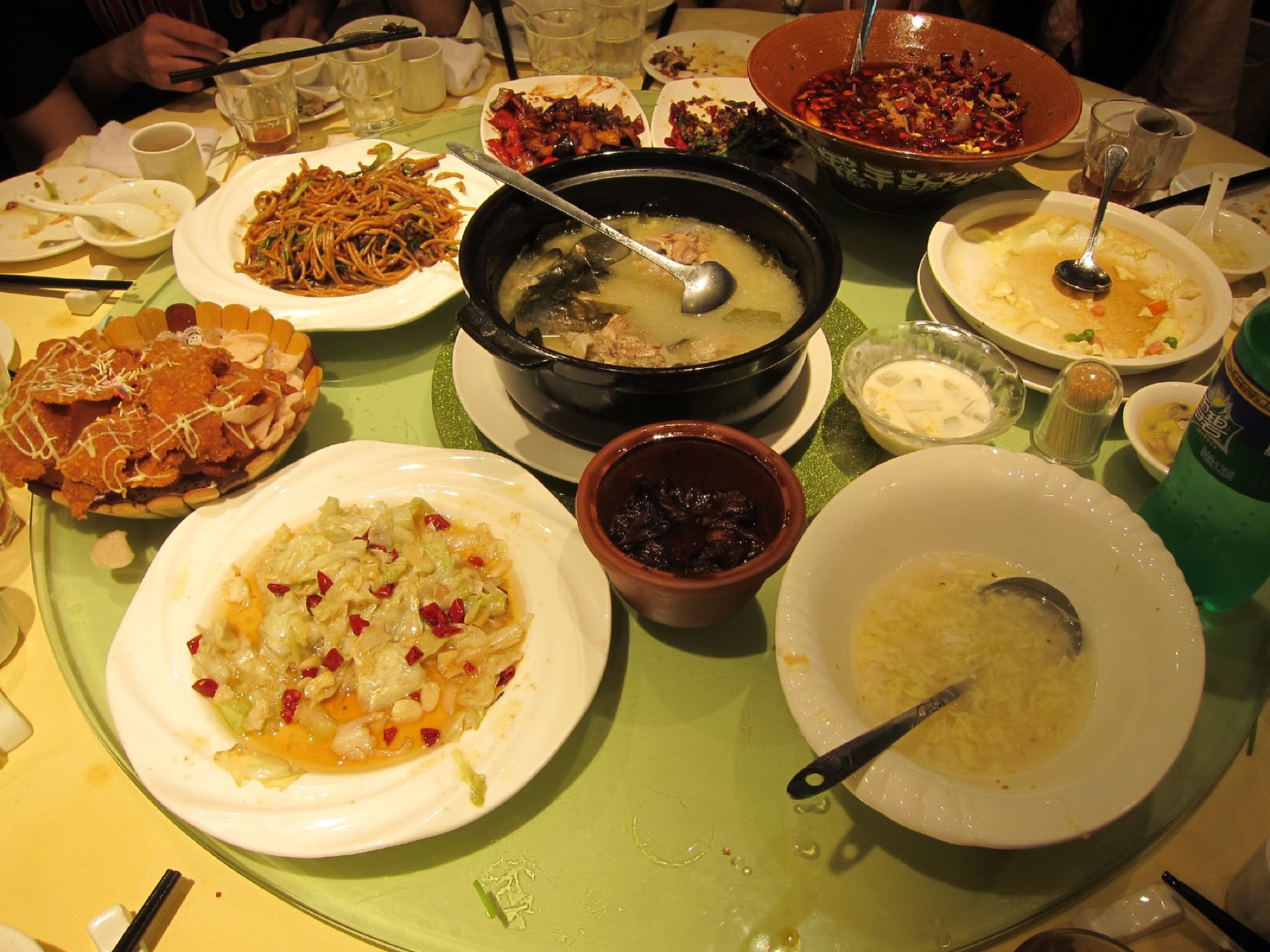
The rotating tray is social technology
A glass or wooden turntable solves a practical problem: how can many people reach many dishes without constant passing? Yet using it requires attention. Spin only after someone has finished serving, move slowly, and notice who has not tasted a dish. Convenience becomes etiquette.
The center also creates choreography. Steam approaches, an empty plate departs, and a final piece circulates without anyone immediately taking it. Small hesitations reveal generosity, appetite and the desire not to appear greedy.
Hosts, guests and changing etiquette
Formal banquets may assign a seat of honor and give the host responsibility for ordering, toasting and pacing the meal. Ordinary dinners can be much looser. Age, region, family habits and setting all matter. Watch what the table is doing before applying a rule learned from a travel guide.
Serving food directly into another person’s bowl may express care, especially within families, but it can also conflict with dietary needs or contemporary preferences. Shared serving utensils offer a respectful option. Hospitality works best when attention includes consent.
Join by paying attention
At your first shared meal, you do not need a performance of perfect manners. Ask about allergies before ordering, try a little at a time, keep personal chopsticks out of shared dishes when serving utensils are provided, and let conversation correct you. Curiosity is more graceful than confidence built on stereotypes.
The turning table offers a simple cultural insight. Sharing is not passive; it requires continuous adjustment. Everyone has access to the center, yet each person helps decide how the meal moves.
Join the conversation
What did this make you notice?
What do you notice about a meal when the dishes belong to everyone at the table?