
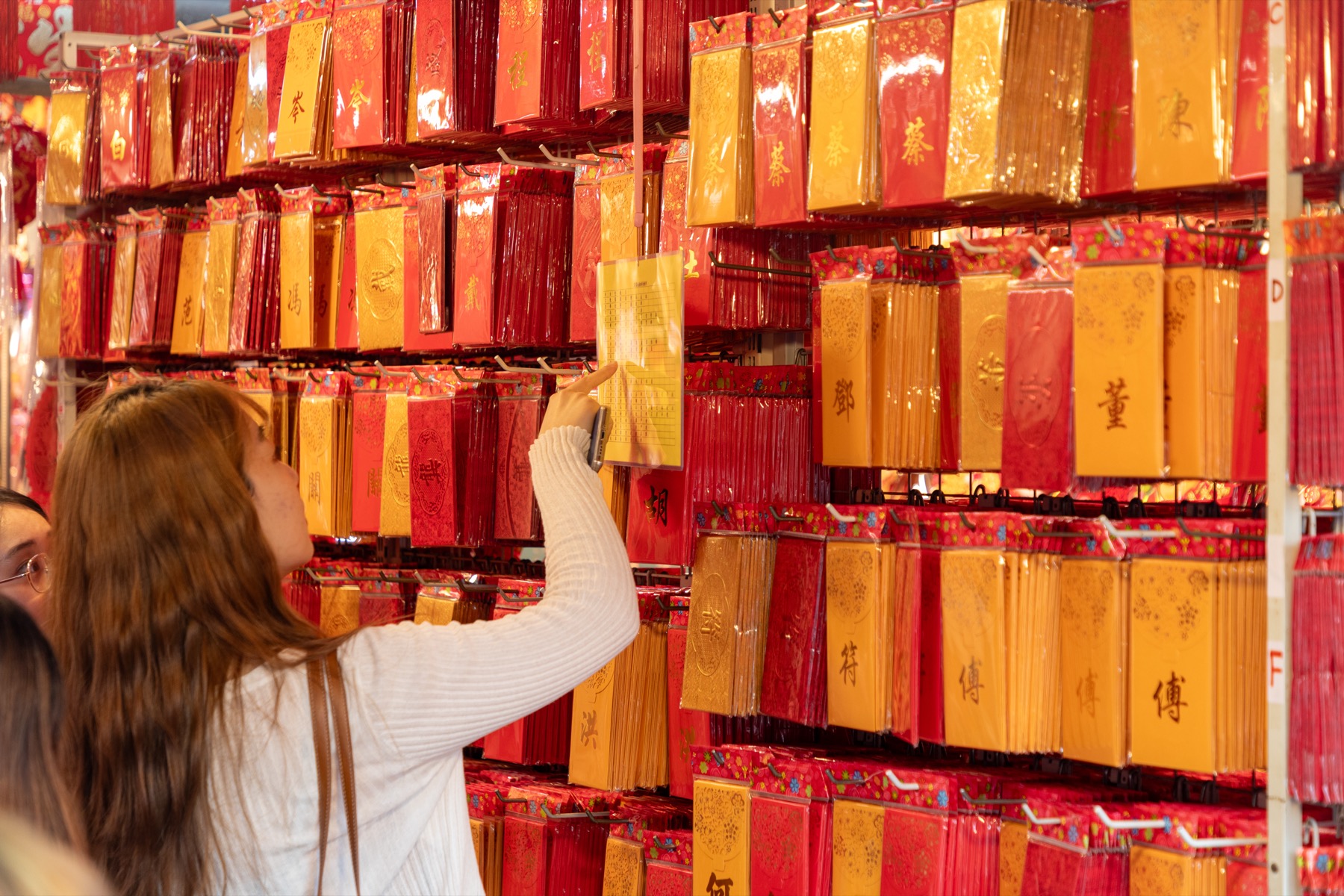
The envelope changes the money
Cash handed across a counter is payment. Cash enclosed in red paper during Spring Festival, a wedding, a birth or another celebration becomes a relational gift. The envelope separates the amount from ordinary exchange and gives the transfer a visual language of good fortune. It also protects privacy: the value is present but not displayed to the room.
Names vary across languages and regions—hongbao in Mandarin, lai see in Cantonese, and other forms across Asian communities. Customs vary too. There is no single correct amount or universal list of recipients.
Direction tells a social story
During Lunar New Year, older or married relatives commonly give to children and younger unmarried family members, although regional and family practice differs. At weddings, guests may give to the couple; employers may give to workers; adults may offer envelopes to parents. Who gives to whom maps age, care, responsibility and occasion.
The gift can therefore feel warm and complicated at once. Amounts may communicate generosity, obligation or status. Good etiquette begins by observing the specific family rather than treating a number found online as universal law.

Giving includes a small performance
An envelope may be offered and received with two hands. A recipient may initially refuse out of politeness before accepting. Adults guide children through words of thanks and blessing. These gestures slow the transfer and acknowledge that the relationship is more important than the cash alone.
Outsiders sometimes read polite refusal as insincerity. It is better understood as interaction: generosity should not be seized too quickly, and acceptance should recognize the giver. The exact performance depends on familiarity and context.
The envelope entered the phone
Digital red packets on WeChat transformed the custom into a fast social game. Friends send fixed gifts or release a total amount into a group chat where members race to claim random shares. The color, opening animation and language of luck preserve the envelope metaphor even when no paper exists.
Technology did not simply replace tradition. It changed scale, speed and participation. A gesture once organized mainly through family and formal occasions can now animate work chats and distant friendships in seconds. At the same time, platform records make an exchange less private than folded paper.

Ask before performing expertise
If invited to participate, ask a trusted person what is appropriate for that occasion. Use a clean new envelope, avoid writing casually across it and let the family guide amount and timing. Symbolic number rules exist, but they are not a substitute for local advice or your actual relationship with the recipient.
The red envelope matters because it makes connection visible. Paper, color, gesture and money work together to say that fortune should move through relationships. Understanding that is more useful than memorizing one supposedly lucky sum.
Amount, numbers and the danger of universal rules
Online etiquette guides often promise a correct amount, but a red envelope is calibrated by relationship, life stage, local custom and the scale of an event. An amount suitable for a colleague’s wedding may be strange for a child at New Year. Numbers associated with prosperity can influence a choice, while those linked by sound to misfortune may be avoided, yet context is more reliable than a formula. Generosity that creates embarrassment or an obligation to repay can miss the social purpose of the gift.
For a newcomer, the simplest method is also the most respectful: ask the host or a trusted participant privately, and follow the range they suggest. Do not photograph the cash, compare envelopes publicly or turn the exchange into a performance of cultural fluency. Discretion is part of the design. The paper allows money to be present while keeping attention on the relationship.
What remains when the paper disappears
A digital packet preserves more than a red screen. It still creates a moment of anticipation, names a giver and a recipient, and invites a response inside a social group. Yet the tactile choreography changes. There are no two hands receiving paper, no envelope kept in a drawer, and no private weight that can be felt before it is opened. The digital form favors speed, play and distance; the paper form favors material memory and ceremony.
Neither version is automatically more authentic. Families combine them according to circumstance, sending money across borders by phone and placing physical envelopes beside a meal at home. What persists is the decision to frame value as a blessing rather than a payment. The custom stays recognizable because its social grammar can move between materials.
Join the conversation
What did this make you notice?
What small ritual changes a practical gift into something relational in your culture?