
Both accounts can be true
Why can a visitor's China look different from a resident's? Because a trip and a life select different experiences from the same place. A visitor may encounter excellent transport, memorable meals and generous hospitality. Someone living nearby may value those things while worrying about work, housing or family responsibilities. Neither account automatically cancels the other. The mistake is turning either into a verdict on everyone's life.
This question was prompted by the conversation around Alice Han's appearance on What Now? with Trevor Noah, published on July 2, 2026. The episode is a starting point for curiosity, not evidence for the conclusions here; its arguments are not reproduced or treated as established facts.
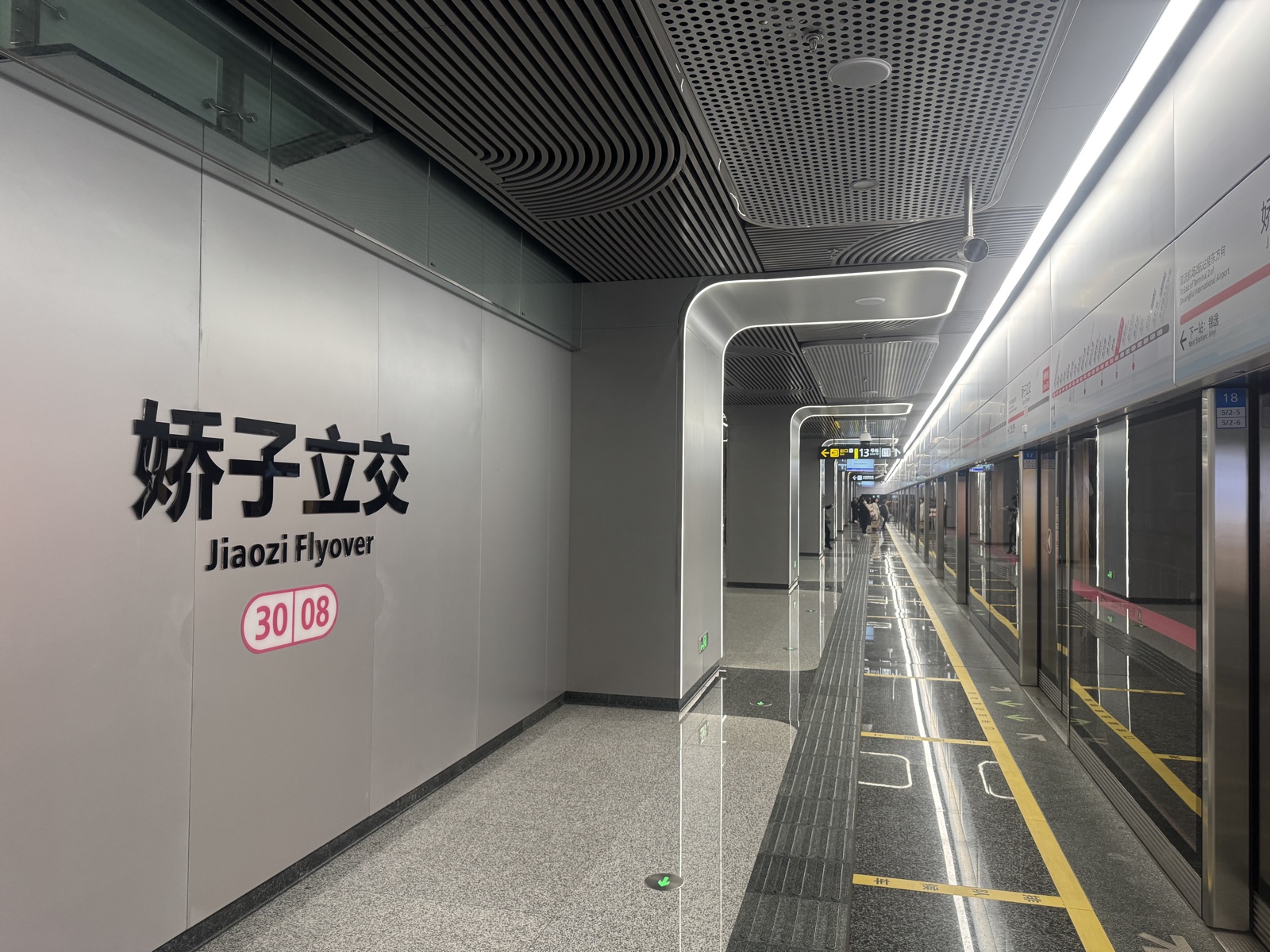
The useful distinction is not between a beautiful façade and a hidden truth. It is between vantage points. A station can be impressive infrastructure, a daily necessity and somebody's workplace at once. To understand a place more fully, we need to ask what changes when the person looking changes—and when looking becomes living.
An itinerary is already a filter
A holiday rarely distributes attention evenly. A route organised around a few major cities, comfortable hotels and well-connected attractions gives those settings repeated opportunities to shape an impression. This does not make the experience staged. It means the sample was selected before the traveller began drawing conclusions. Adding another famous destination can enlarge a journey without diversifying what it reveals.
Time of day matters too. Consider the difference between taking a train because its departure fits your sightseeing and taking one because you must reach work before a fixed hour. The carriage might be identical; your freedom to avoid a crowded service is not. Our story on China's high-speed rail and distance offers another way to think about movement, but a fast connection cannot tell us everything about the lives at either end.
Language adds a quieter selection. People able and willing to talk with a foreign visitor are not a random cross-section of a neighbourhood. Their hospitality can be completely sincere while the resulting conversation remains socially narrow. Access to a conversation and representativeness are different things.
The difference is also a calendar
A holiday budget contains something easy to overlook: time temporarily released from ordinary obligations. Residents must fit pleasurable experiences around recurring commitments. One enjoyable afternoon cannot show how childcare, household tasks and paid work fit together across a month. The visitor usually leaves before the repetition becomes visible.
China's National Bureau of Statistics surveyed 107,000 people aged six and above in May 2024. Respondents recorded a weekday and a weekend day. Among participants in unpaid labour, women averaged 3 hours 29 minutes daily and men 1 hour 52 minutes, calculated across a seven-day week. These are participant averages, not figures for every person or only for working days.
The figures make overlooked time visible; they do not explain any individual's feelings. Nor can the difference establish its causes on its own. A resident's account supplies a different kind of evidence: how obligations connect, which arrangements are negotiable and what happens when plans fail. Asking someone what a normal Tuesday requires can open a better conversation than asking whether life in China is good.
Our look at Chinese breakfasts begins with food, but the distinction reaches beyond flavour. For a traveller, breakfast can be an occasion to linger. For someone on the way to work, the same meal may need to fit into a tightly organised morning.

Convenience has more than one side
Consider a meal ordered to a hotel: a hypothetical example, not a reported encounter. From the customer's side, the relevant questions may be price, speed and whether the food arrives warm. From the worker's side, useful questions include pay, waiting time, expenses and control over the working day. The customer's successful order answers none of those questions by itself.
It would be equally careless to infer a worker's entire situation from the fact that delivery was fast. Speed is an outcome, not a complete explanation of how labour is organised. Understanding the work would require evidence from workers and the arrangements governing it, rather than an emotional conclusion drawn from an app.
This is not an instruction to distrust every convenience. A reliable service can genuinely improve daily life for residents as well as visitors. The point is to keep the benefit and the production of that benefit in the same picture. A comfortable experience becomes more informative when we ask what made it possible, who shares the gains and who can change the terms.
Access can reverse the advantage
Visitors do not always have the easier experience. Familiarity with a language, a payment system or a local procedure can make an ordinary task simple for a resident and confusing for a newcomer. An outsider's difficulty is real without being typical of local life. Equally, a visitor assisted by a guide may never encounter a difficulty another traveller faces alone.
An April 2024 notice from China's central bank, commerce ministry and foreign-exchange regulator called for better acceptance of cash, mobile payments and domestic and overseas cards, with attention to older people and overseas visitors. That is evidence of a policy response to differing needs—not proof that every merchant now offers identical access.
The useful question is therefore not just whether a service exists. It is what someone needs to use it: knowledge, documentation, a compatible device, assistance or time to solve a problem. Such requirements change what convenience means. A payment experience cannot serve as a complete judgement of Chinese society, but it can reveal how a system looks different from its familiar centre and its less familiar edges.
There is no single resident's China
Replacing the tourist's view with the resident's view sounds like a correction, but the singular is misleading. A homeowner and a renter, a student and a parent, someone with savings and someone without a financial cushion need not assess the same neighbourhood alike. These are distinctions to investigate, not characters from whom we can invent representative testimony.
Regional comparison needs similar care. A photograph of a prosperous district does not establish conditions across its city, still less in smaller towns or rural areas. Nor does one difficult experience elsewhere invalidate what works in that district. Ask which place and population a claim describes before asking whether it describes China.
Residents also enjoy beauty, leisure and discovery. A.J. Veal's 2023 scholarly discussion of everyday life warns against separating leisure too cleanly from ordinary routines; it is a theoretical lens, not a survey of China. The lesson here is modest: reducing residents to hardship would be as distorting as reducing visitors to pleasure. People inhabit places with attachments as well as constraints.

A fuller account, not a final verdict
Different evidence answers different questions. A travel video can document an encounter; it cannot tell us how common that encounter is. A national survey can describe a measured pattern without explaining how it feels to a particular household. A policy document states an intention or requirement, not necessarily the experience at every counter. Combining them is useful only if their limits remain visible.
For a traveller, greater understanding need not mean searching for a supposedly untouched, more authentic neighbourhood. That search can turn somebody else's privacy into an attraction. Return to an ordinary public place at another hour; notice who is working while you are resting; invite conversation without demanding that a stranger explain a country. Take a refusal as a boundary, not as missing material for your story.
You can leave China with admiration without claiming completeness, or with questions without denying what delighted you. A stronger account says where you went, when, with what help, and what you still do not know. Its value lies not in deciding which China is real, but in making room for the people whose lives continue after the visit ends.
Join the conversation
What did this make you notice?
When have you and someone who lives in a place described it differently—and what changed when you compared your everyday responsibilities?