
Family name does not mean “first name”
English forms often label the first box “first name” and the second “last name.” Those terms describe position in a common Western sequence, not universal categories. For Chinese names, “family name” and “given name” are clearer. The family name usually appears first in Chinese order. The given name follows and may contain one or two characters, though other forms exist.
Calling the family name a first name because it is written first creates immediate confusion. Calling the given name a last name because it appears last does the same. Databases then rearrange passports, citations, tickets and email salutations. The small vocabulary change from first/last to family/given is therefore practical, not merely academic.
One written name can take several Latin-letter forms
Chinese characters do not contain spaces in the way Latin alphabet names do. Romanization must decide how to represent sound and word boundaries. Hanyu Pinyin is the standard system for Mandarin in the People’s Republic of China and is widely used internationally, but older systems and regional language forms remain visible. Beijing once appeared commonly as Peking; the same historical layers affect personal names.
Library of Congress guidance joins the syllables of a multi-syllable Chinese given name in pinyin: Zhang Xinyin, not Zhang Xin Yin. Yet individuals may prefer a space or hyphen, especially where family documents, passports or professional history established it. Cantonese, Hokkien and other language backgrounds produce different romanized surnames and given names. “Correcting” a person’s chosen spelling to standard Mandarin pinyin can erase rather than clarify identity.
Given names carry meaning without becoming personality codes
Chinese given names are made from characters with lexical meanings. Parents may choose associations with virtue, nature, beauty, aspiration, season or family memory. A name can also echo a generation pattern shared by siblings or cousins. But translating characters into an English word list rarely captures the complete choice. Sound, visual form, literary association, family history and combination all matter.
The same spoken syllable can correspond to different characters and tones. Without seeing the characters, an outsider may not know the intended meaning. Even after seeing them, a poetic or historical allusion may require context. Asking what someone’s name means can be welcome in a genuine conversation; confidently inventing a translation from sound alone is not.
Titles often work with the family name
In many settings, a title follows or accompanies the family name: Zhang laoshi means Teacher Zhang, while Zhang xiansheng corresponds broadly to Mr. Zhang. Exact usage depends on language, relationship, profession and formality. In English, “Ms. Zhang” uses the family name. Addressing someone as “Ms. Xinyin” would usually apply an English title to the given name.
Workplaces and international classrooms may use given names freely. Some Chinese people adopt an English name for convenience, creative expression or continuity with earlier education; others dislike the expectation that they should. An adopted name is not automatically fake, and a Chinese name is not automatically difficult. The respectful solution is simple: notice how the person introduces themselves and ask what they prefer to be called.
Why order changes at the border
A person may write Zhang Xinyin in Chinese contexts and Xinyin Zhang on an English-language website. The change can help systems and readers identify the family name, but it may also create mismatches across airline bookings, academic publications, bank records and search results. Capitalizing the family name—ZHANG Xinyin—is one solution used in some international contexts, though it is not universal.
Public figures add another complication. Some maintain Chinese order internationally; others use Western order. Historical figures may appear under older romanizations, courtesy names, art names or titles. Catalogues often invert names for alphabetical sorting. Before assuming inconsistency, ask what function the form is serving: personal presentation, legal identity, bibliography or database sorting.
A name can be more than one name
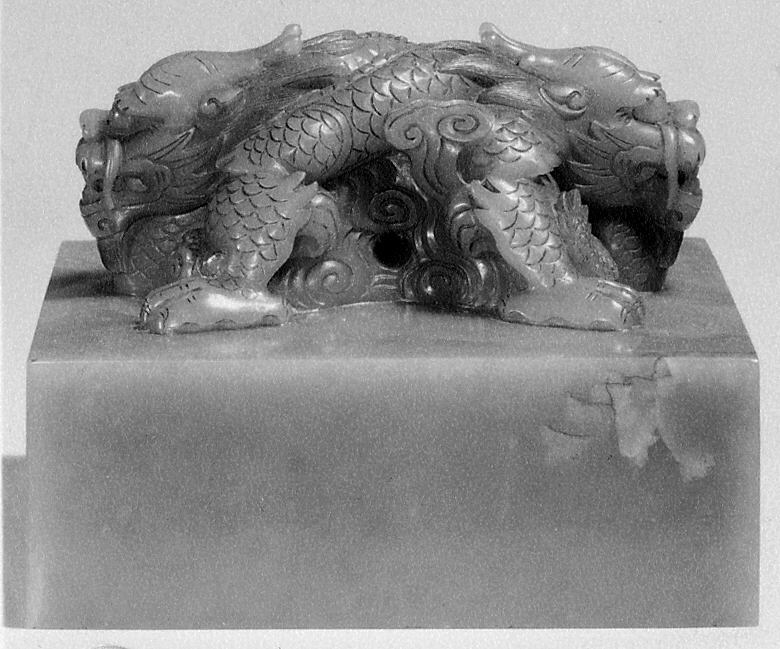
Historical Chinese naming systems included childhood names, formal names, courtesy names, art names, religious names, posthumous names and titles. Not every person used every category, and modern official naming is much simpler. Still, those older layers explain why one poet, painter or ruler can appear under several labels in a museum or book.
This matters when learning Chinese art and history. A familiar Western-language name may be a romanized personal name, a dynastic title or an art name rather than the name used at birth. Good interpretation identifies the form instead of treating alternatives as random aliases. Names locate people inside relationships, institutions and stages of life.
How to avoid the common mistakes
On a form, request “family name/surname” and “given name” rather than first and last. Preserve capitalization, spacing, hyphens and accents exactly as supplied. Do not split a two-syllable given name unless the owner does. When citing a scholar, follow the spelling used in their publication and the relevant style guide. For travel, match the passport exactly even if the display order looks unfamiliar.
In conversation, one sentence solves most uncertainty: “How would you like me to address you?” This is not an admission of ignorance; it is recognition that cultural pattern does not overrule individual choice. The family name comes first in the conventional structure, but the person comes before the rule.
Join the conversation
What did this make you notice?
Has your name ever been rearranged, shortened or translated by another language—and what changed when it was?