
Jade begins as resistance
Jade is admired for smoothness, translucency and color, but its cultural force begins with toughness. Nephrite—the principal jade worked in early China—cannot simply be carved like soft wood. It must be abraded patiently with harder material and grit. A polished surface therefore condenses hours of controlled friction. Long before modern machinery, every clean edge and pierced opening was evidence of organized labor and exceptional persistence.
English uses “jade” for more than one mineral, especially nephrite and jadeite. Their histories in China are not identical. Nephrite shaped early ritual traditions; vivid jadeite from Myanmar became especially desired much later, during the Qing period. Treating every green stone as the same timeless substance hides these material histories.
Objects whose first meanings are partly lost
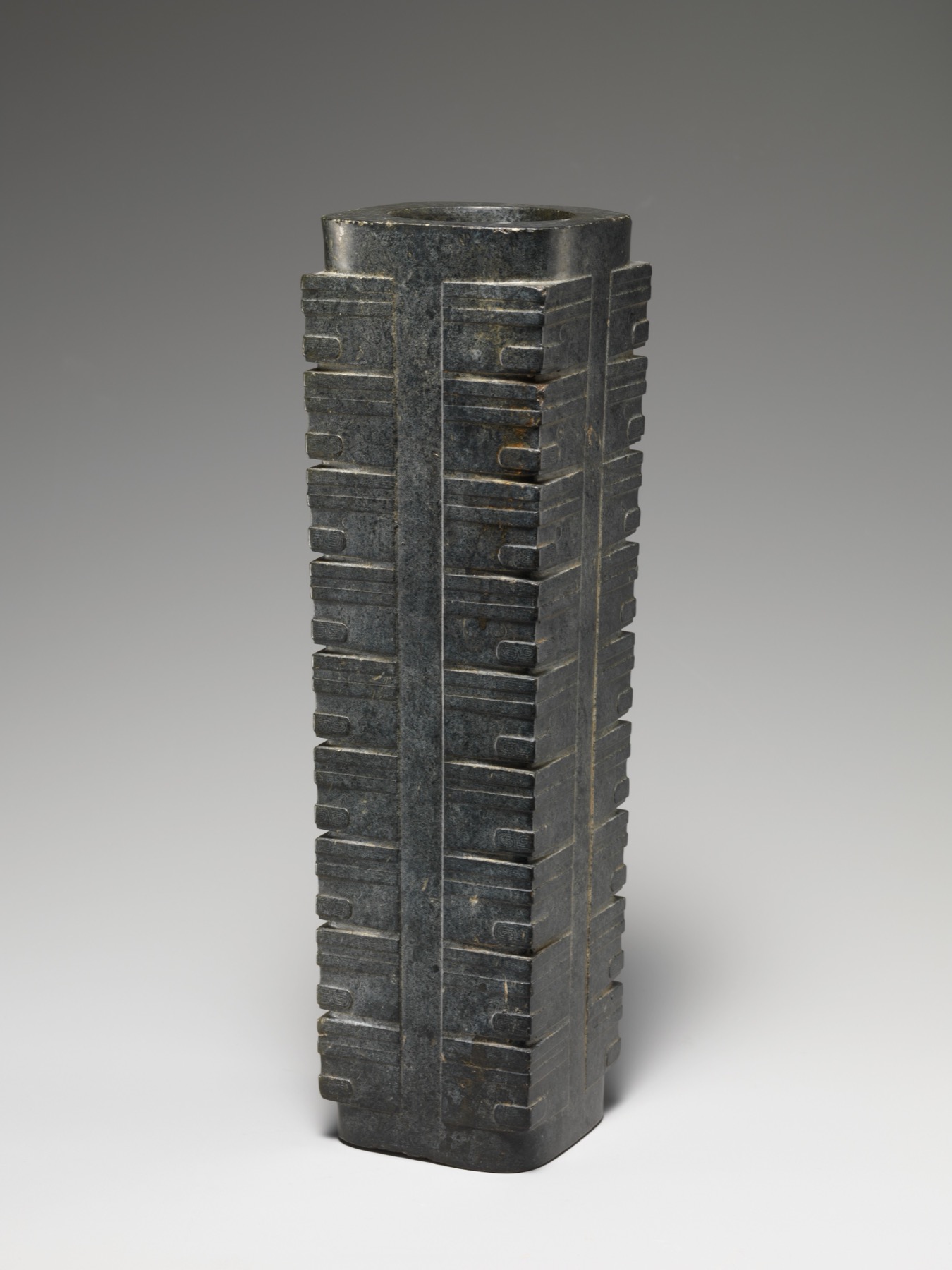
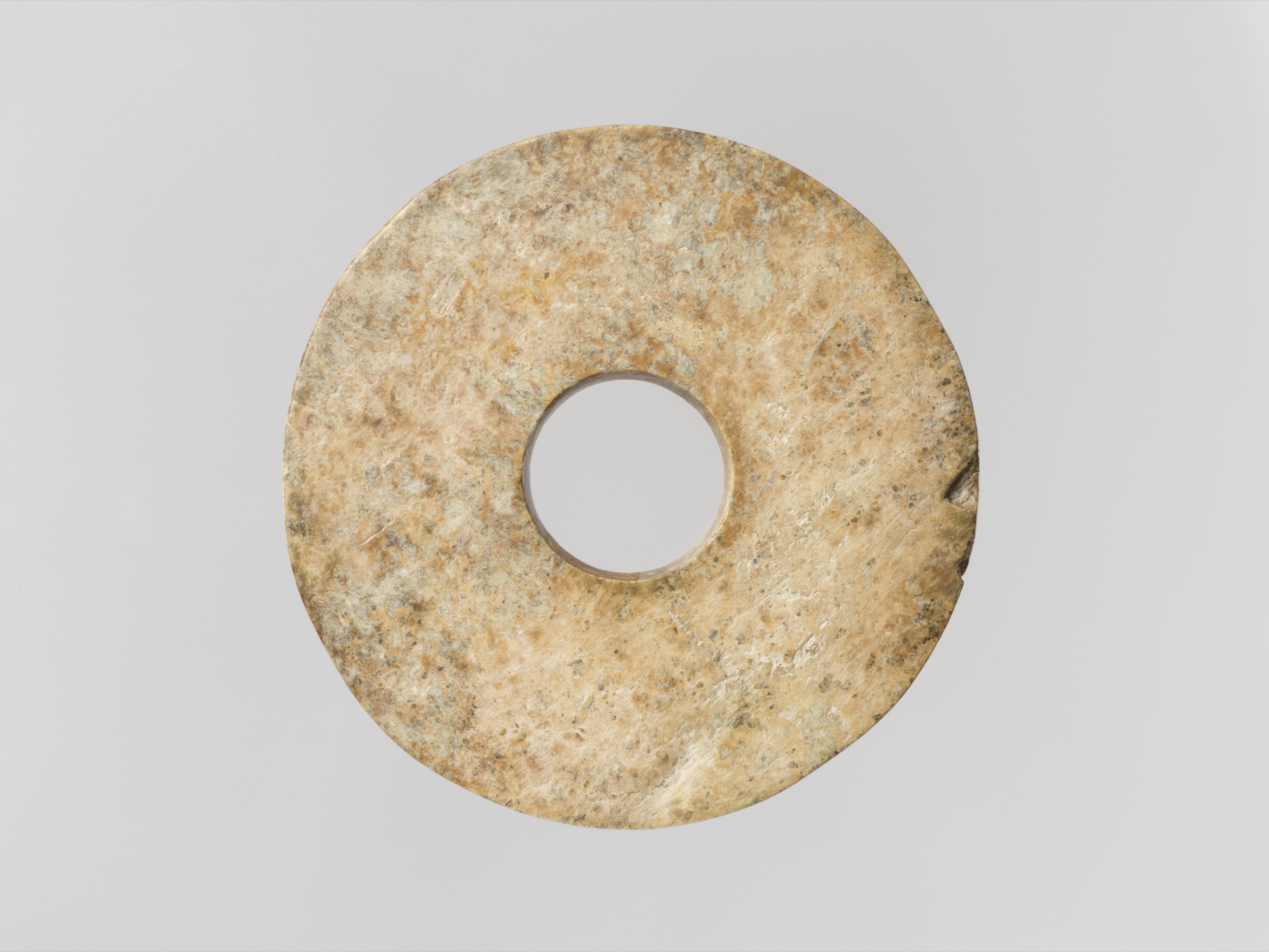
Neolithic graves contain jade discs known later as bi and squared tubes later called cong. Their exact original purposes remain uncertain. Archaeologists can study where they were placed, how they were made and which bodies or objects accompanied them, but later names do not give direct access to the intentions of communities living thousands of years earlier.
That uncertainty is important. Jade often attracts confident symbolic explanations, especially in commercial settings. A responsible encounter distinguishes documented use from later interpretation. Mystery need not be filled with an invented promise. It can remain evidence that an object has outlived the world that first made it meaningful.
A material becomes moral language
Over centuries, writers compared qualities of jade with cultivated virtues. Its luster, strength and resonant sound could become metaphors for integrity, intelligence or disciplined conduct. These associations did not make every jade object sacred, nor were they unchanged across time. They show how closely people can read a material until physical characteristics become ethical vocabulary.
Jade also marked status. Access to fine stone, skilled workshops and time-consuming production concentrated power in courts and elite households. Pendants, belt fittings, vessels, seals and burial objects did different work. “Jade symbolized virtue” is therefore incomplete unless we also ask who possessed it, who made it and where it was displayed.
Color is only one clue
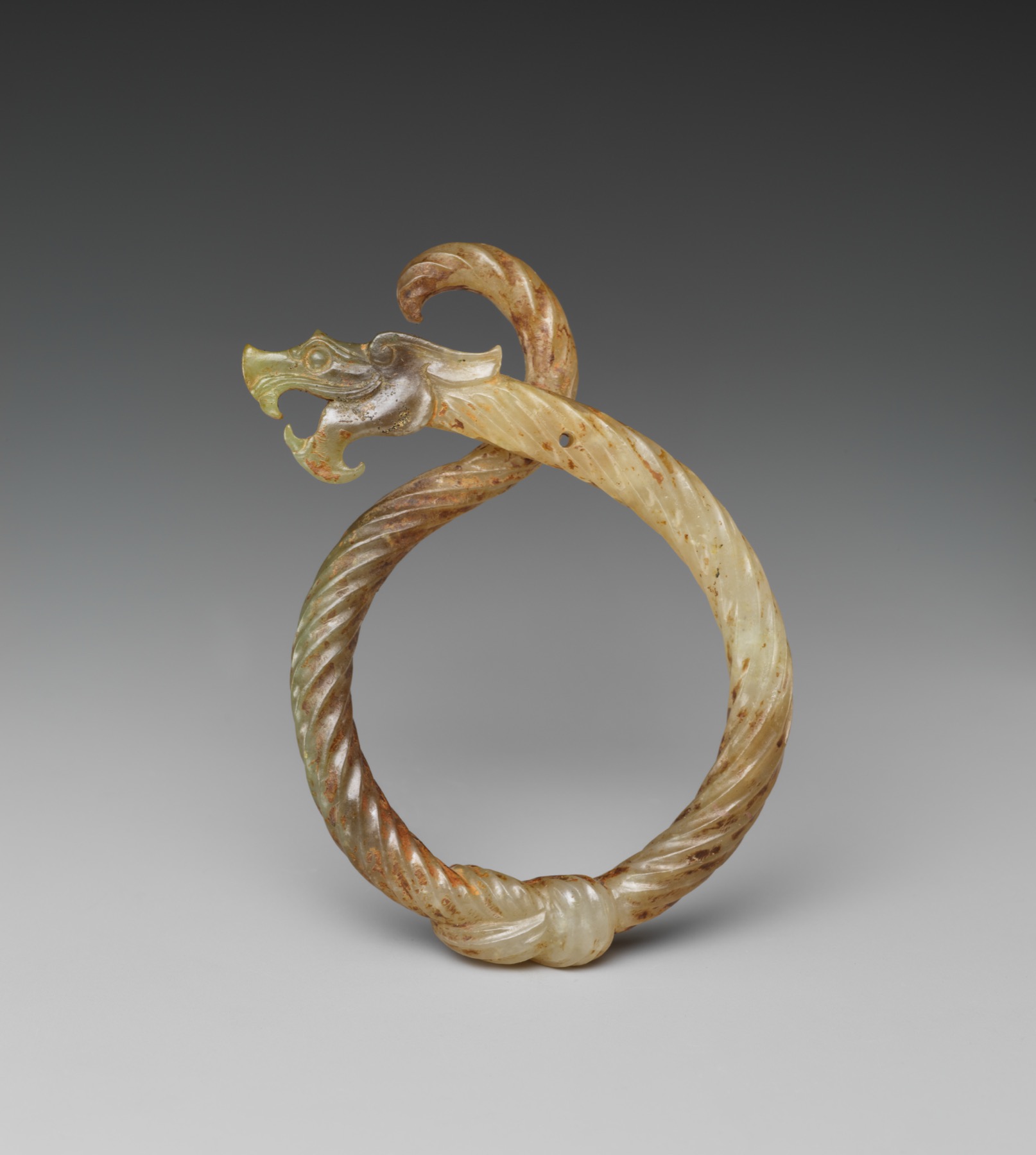
Many visitors expect jade to be bright green. Museum cases quickly undo that assumption. Nephrite may appear creamy white, grey, yellow, brown or softly green, and makers sometimes incorporated skin, veins and changing tones into a design. Value has never depended on color alone. Texture, translucency, workmanship, rarity, condition and cultural context all matter.
Touch is central to jade’s appeal, yet museum objects must remain behind glass. Let the eye imagine weight instead. Follow the contour, identify drilled passages and notice how light gathers beneath the polished surface. The object rewards slow looking because its drama is often compressed rather than spectacular.
Buy the object, not a miracle
Contemporary jade can be meaningful jewelry, sculpture or family inheritance. It can also be a market full of treatments, ambiguous names and exaggerated spiritual claims. If buying, ask whether the material is nephrite, jadeite or another stone; whether it has been dyed, bleached, filled or otherwise treated; and whether the seller will state this in writing. An independent laboratory report may be appropriate for a valuable piece.
Cultural meaning should deepen attention, not suspend judgment. Jade’s real history—its difficulty, longevity and astonishing range of forms—is richer than a promise that one bracelet automatically delivers health or fortune. Respect begins by letting material, maker and evidence remain visible.
How to look at jade in a museum
Begin with the silhouette rather than the label. A bi disk organizes attention around a void; a cong sets a rounded interior against a squared outer wall; a pendant asks gravity to complete its design. Move around the case if you can. A profile may reveal a bevel, a suspension hole or a change in thickness that disappears in a frontal photograph. These choices show that jade was designed for bodies, rituals and handling, not only for still display.
Then look for traces of making and use. Perfect polish can hide the labor of abrasion, while softened edges may record long contact rather than careless manufacture. Museum dates are often ranges because an object may be difficult to place precisely, and a later inscription or mounting can belong to a different chapter of its life. The most rewarding question is not simply “What does this symbol mean?” but “What happened to this material before and after it reached this case?”
Jade is not one unchanging Chinese idea
The word yu has gathered meanings through archaeology, philosophy, court culture, collecting, family memory and the modern gemstone trade. Those layers can meet in one bracelet, but they should not be collapsed into a single ancient belief. A person may wear jade because it was given by a grandparent, because the stone feels cool against the skin, because the color suits them, or because they value a particular cultural association. Personal meaning is real without becoming evidence for a universal rule.
This distinction matters especially when Chinese aesthetics enters global luxury. History can enrich a contemporary design, yet heritage should not be used as a vague guarantee of purity, healing or authenticity. The stronger story is specific: name the material, disclose treatments, explain the form, identify the reference and credit the craft. Jade has survived many changes of taste because it invites close attention. It does not need mythology invented at the point of sale.
Join the conversation
What did this make you notice?
Which quality of jade holds your attention most: its resistance, polish, translucency or long human history?