
The material begins with a tree
Traditional East Asian lacquer comes from the refined sap of lacquer trees. Fresh material is difficult and hazardous to handle, but once properly cured it forms a hard, glossy coating resistant to water and some heat and acids. That practical strength helps explain lacquer’s long history on vessels, furniture and containers. Yet utility alone does not explain why a small box could become a luxury object. The answer lies in the transformation of a liquid coating into accumulated time.
A lacquer worker applies one very thin coat and lets it cure in warm, humid, draft-free conditions. The process is repeated. High-quality objects may require thirty or more coats; exceptionally thick carved pieces can contain many more. Each layer must be sound before another is added. Rushing risks cracks, uneven curing or a surface incapable of holding fine relief. By the time carving begins, the maker is working not on the wood foundation but through a carefully built body of lacquer.
Red is a material decision, not just a symbol
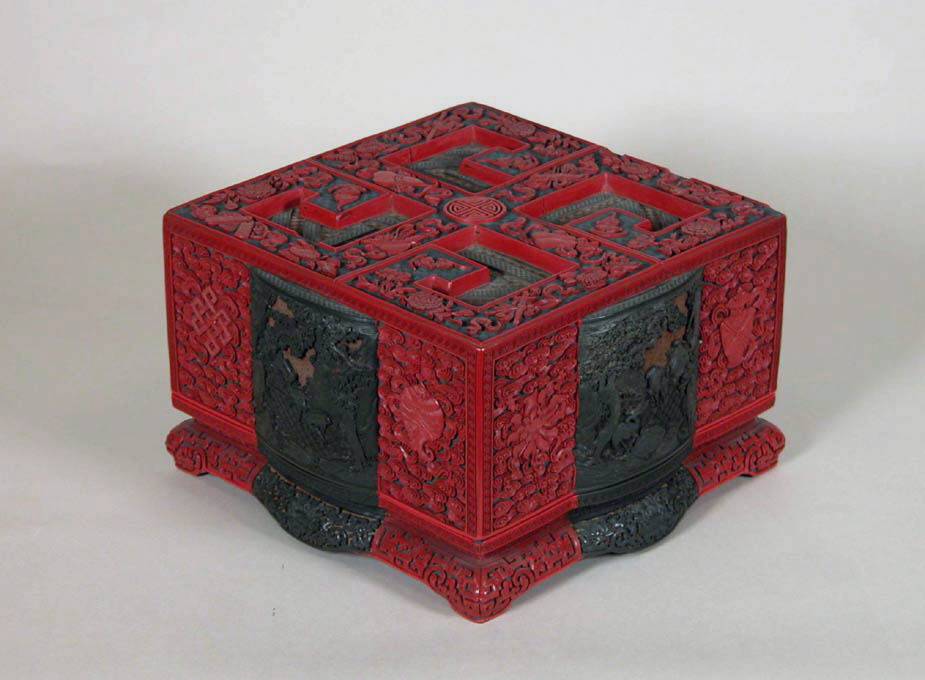
Black and red are among the most familiar colors in early Chinese lacquer. Carbon could darken the sap; cinnabar, a mineral pigment based on mercury sulfide, produced the celebrated red associated with many later carved works. Museum labels often call such pieces “cinnabar lacquer,” but the phrase should not turn every red object into a simple color symbol. Red is simultaneously chemistry, workshop practice, visual contrast, cost and cultural association.
Look closely at a carved red box and the surface rarely behaves as a flat field. Light catches the ridges and leaves shadows inside the cuts. Black, green or yellow layers may appear beneath or beside the red, making depth visible. In some techniques, fine incisions were filled with gold; in others, mother-of-pearl or differently colored lacquer created inlay. The palette is therefore inseparable from construction. Color tells us how the object was made before it tells us what a motif might mean.
Carving happens after patience
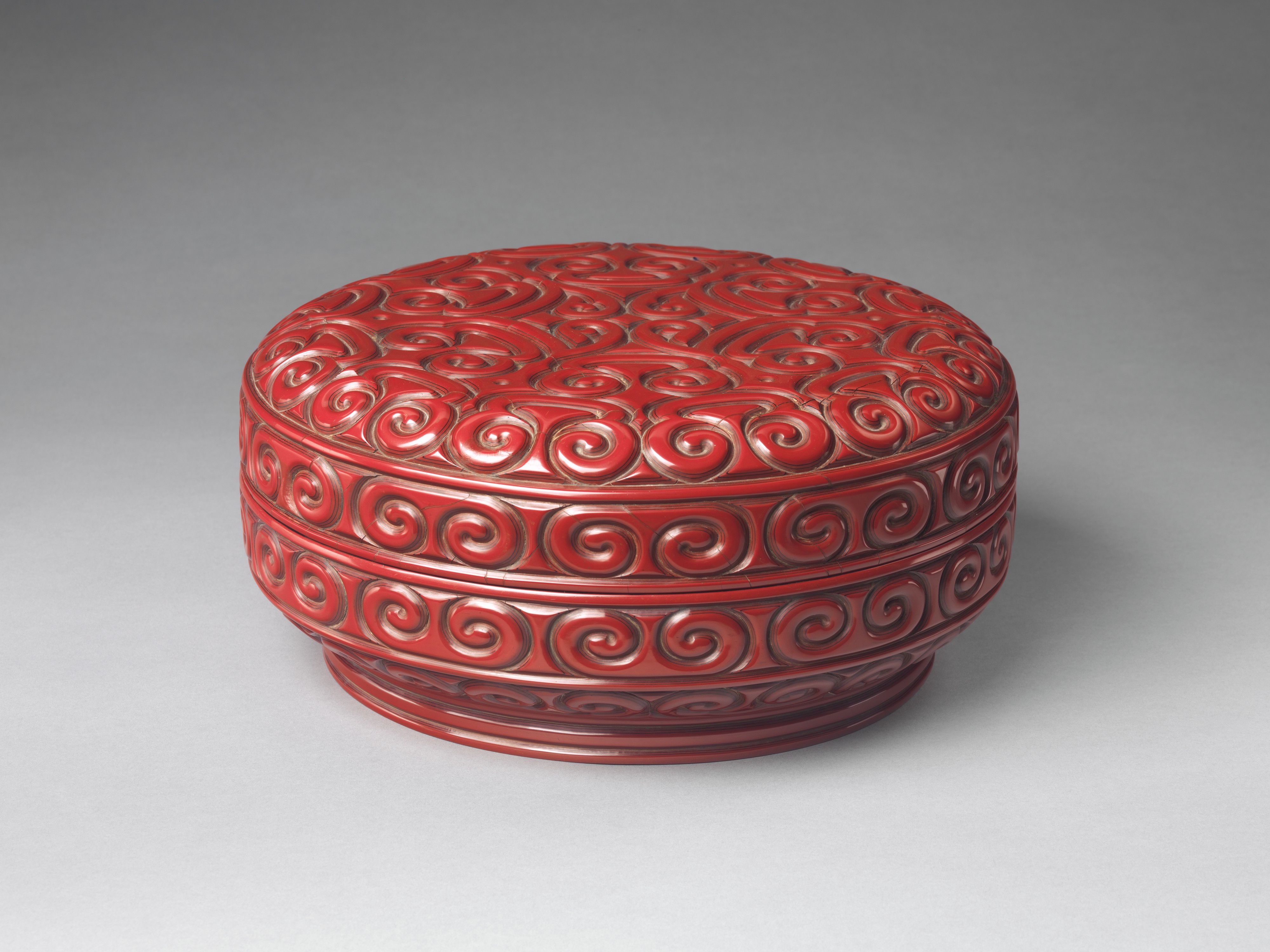
Carved lacquer, known as diaoqi, became a particularly important Chinese achievement. Once sufficient thickness had accumulated over a usually wooden core, artisans cut designs into the lacquer itself. A shallow geometric texture required one kind of control; a garden scene with figures, rocks, buildings, water and sky required another. Background patterns could differentiate elements that share the same red material: one rhythm for earth, another for water, another for air.
This is why carved lacquer rewards angled viewing. From directly above, an image may appear crowded. Shift position and the relief separates into planes. Follow a line from the rim toward the center. Notice how a cloud passes behind a building or how a flower rises above a patterned ground. The cutter had to anticipate not only the picture but also the remaining thickness. One mistaken cut could not be replaced by gluing the liquid layer back into place.
A box contains more than its contents
Many surviving pieces are boxes, dishes, trays and containers. Their forms remind us that Chinese decorative art did not divide usefulness from imagination. A box might hold incense, cosmetics, papers, gifts or small treasures, while its exterior staged a garden, a dragon, a longevity character or a field of flowers. Opening it made touch and sequence part of the experience: lid, edge, interior and contents appeared in turn.
Motifs also changed with audience and occasion. Peaches, cranes and the character shou could support wishes for long life; dragons might invoke power or auspicious force; scholarly figures in landscapes could connect a luxury surface with cultivated retreat. No motif should be interpreted alone. Date, intended use, patron, inscription and surrounding images determine what it is doing. A bat near shou, for example, participates in a visual language of good fortune, but the box is still a made object rather than a magical device.
What museums preserve—and what they cannot show
Lacquer is durable after curing, but historic objects remain vulnerable to changes in humidity, light, impact and earlier restoration. Museum displays protect them, yet glass removes the tactile scale of a hand-sized box. Photographs intensify color while flattening relief. A responsible viewer uses the label and image together: dimensions restore size; side views reveal carving depth; conservation notes may explain dullness, repair or loss.
The anonymous credit on many labels is also worth noticing. It does not mean the object made itself. Lacquer depended on people who cultivated and tapped trees, refined sap, prepared cores, applied layers, polished surfaces, designed motifs and carved them. Some renowned makers, such as the fourteenth-century lacquer artist Yang Mao, are associated with signed or marked works, but most labor remains unnamed. Luxury becomes more meaningful when we imagine this chain of skill rather than treating perfection as effortless.
How to recognize quality without pretending expertise
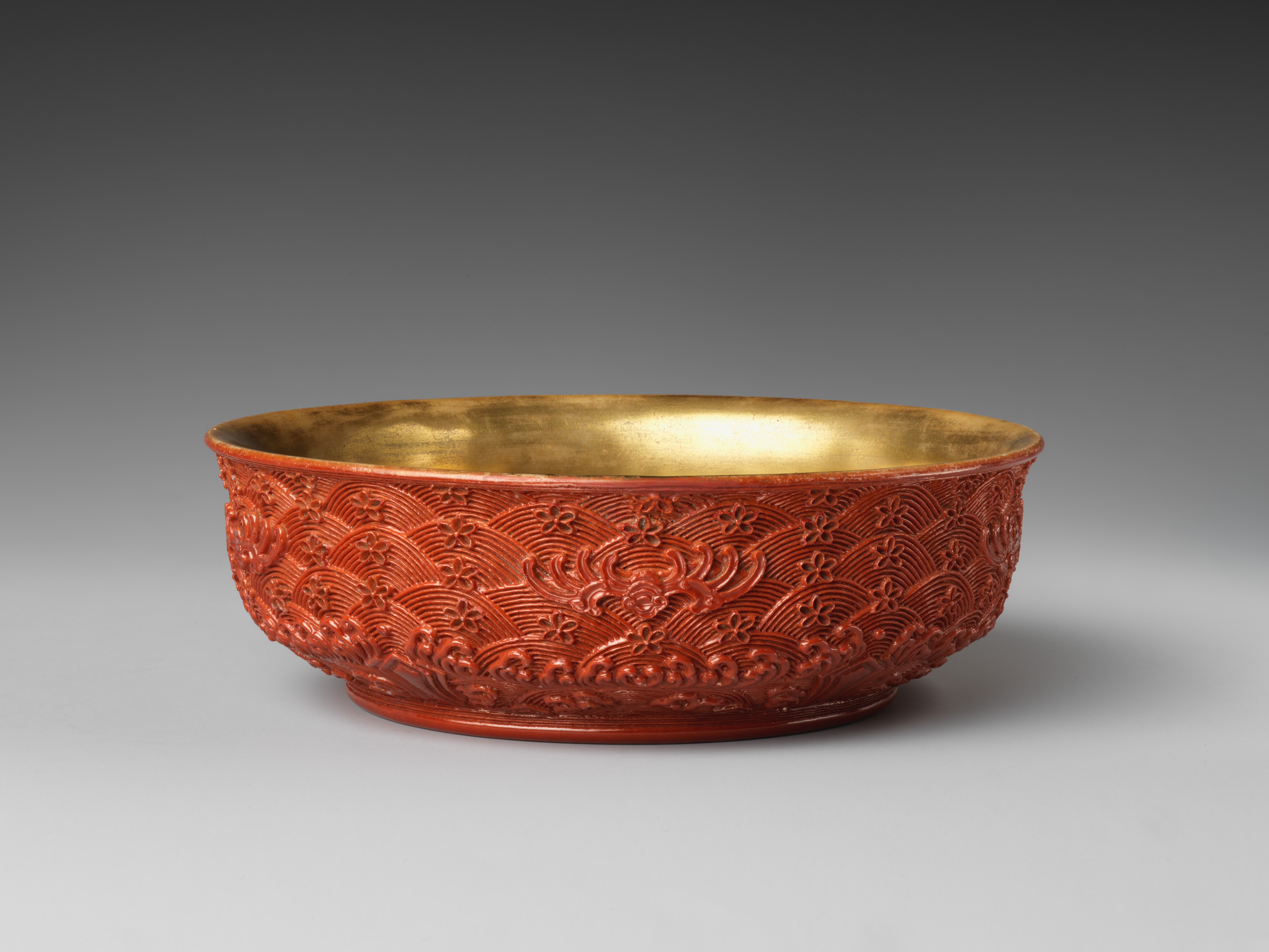
Begin with coherence. Does the carving keep a consistent depth? Do figures remain legible against patterned grounds? Does the design respond to the curve of the container? Look at transitions around the rim, foot and corners, where weak planning becomes visible. Then compare documented museum pieces from different periods. Quality is not identical with density: a spare geometric surface may be as controlled as an elaborate narrative.
For contemporary lacquer, ask what the seller means by “lacquer.” The word can describe traditional tree-sap lacquer, modern synthetic coatings or a style of glossy finish. Ask about the core, materials, technique, place of production and maker. Avoid assuming that red proves cinnabar pigment or that “handmade” explains every stage. Specific information respects both buyer and craft.
Chinese carved lacquer makes time visible because its beauty depends on duration that the finished surface seems to conceal. The best way to look is to reverse that concealment: imagine the liquid becoming layers, the layers becoming depth and the depth becoming an image under a steady hand.
Join the conversation
What did this make you notice?
When an object hides the time required to make it, what visual detail helps you sense the labor again?