
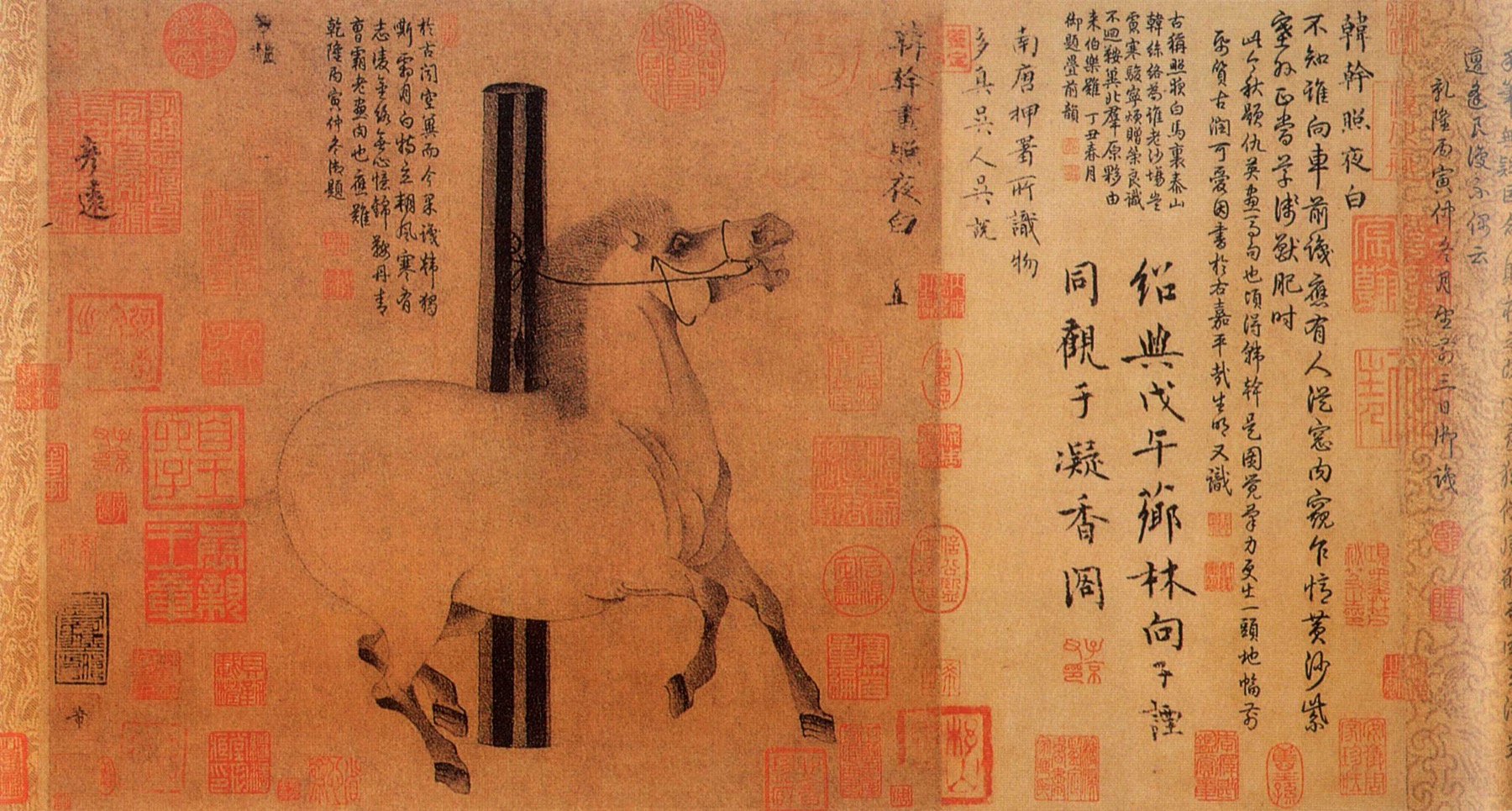
A signature made through carving
Chinese seals are carved in reverse so that their characters print correctly when pressed into seal paste. The writing commonly draws on seal script, an ancient family of character forms that remained central to seal carving. A name seal might give an artist’s formal name; another might use a courtesy name, sobriquet or studio title. Paired seals could present different facets of one identity.
That makes the seal more than an administrative stamp. The choice of stone, the cut of the characters, the balance between red and white, and the relation of the impression to brushed calligraphy all contribute to its effect. In a “red-letter” or relief seal, the characters remain red; in an intaglio impression, the carved characters appear white within the red field. Even at thumbnail scale, the two behave differently on paper.
For painters and calligraphers, positioning mattered. A seal could anchor the end of an inscription, answer a dense passage of ink or introduce a small pulse of colour into a pale landscape. The Metropolitan Museum of Art notes that artists used seals both to sign works and to embellish composition. The red mark is therefore textual, biographical and visual at once.
The painting did not stop when the painter stopped
Traditional formats help explain why later marks could join a work. A handscroll is encountered gradually as it is unrolled; albums are turned leaf by leaf; hanging scrolls can acquire mounting borders; colophons can be attached after the painted section. These structures allow different moments of response to coexist without pretending that they happened at the same time.
A respected owner might impress a collection seal in a margin. A later connoisseur might add a written colophon explaining when the work was seen, how it was attributed or why it mattered. Imperial collectors could add conspicuous marks of possession. Over centuries, these additions formed something like a visible archive.
This can feel surprising if one expects a museum picture to preserve a single untouched surface. Yet the additions were usually governed by convention. They could extend the work’s history rather than simply cover it. The Met describes such seals and inscriptions as a distinctive feature of Chinese collecting and connoisseurship because they record transmission and continuing impact.
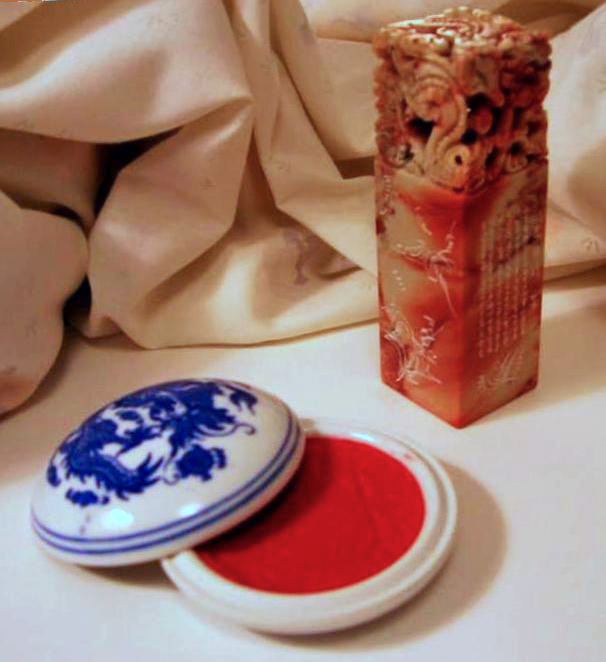
A seal is evidence, not a verdict
Collectors’ marks can help reconstruct provenance: if a known seal is genuine and appears where expected, it may connect an object to a documented collection. But seals can be copied, misread or added to strengthen a doubtful attribution. Famous collectors owned excellent works, ordinary works and misattributed works alike. A genuine ownership mark does not make every accompanying claim true.
Specialists compare impressions with securely documented examples. They look at character forms, damaged edges, ink or paste, placement, mounting history and the relation between the seal and the paper. They also ask whether a supposed owner could have encountered the work at the relevant date. Provenance emerges from several kinds of evidence, not from one attractive red square.
This is especially important online. A compressed photograph can make a seal seem sharper than the surrounding ink, or hide that it lies on a later mounting rather than the original painting. Museum records, conservation notes and high-resolution details give a more reliable basis for interpretation.
Why red?
The colour comes from seal paste, traditionally made with red mineral pigment bound in an oily medium. Red gives a strong, legible contrast against silk or paper and has long carried auspicious and authoritative associations in China. But it is misleading to reduce every impression to a universal symbol of luck. In this setting, red also has a practical graphic role and belongs to a specialized material tradition.
Its intensity changes with age, recipe, pressure and conservation. One mark may be vermilion-bright; another may have softened toward orange or brown. Those variations are part of the object’s material history. They should not be digitally “corrected” into a single ideal colour without evidence.
How to read the surface
Begin with location. A seal directly beneath an inscription may belong to its writer. A group scattered over borders may indicate later ownership. Then compare scale: a small personal seal behaves differently from a large imperial mark. Look for repetition, because the same collector may stamp several sections of a long handscroll.
Next, separate what you can see from what the catalogue establishes. You may notice a white-character seal, but identification requires reading its script and checking reference impressions. Ask whether the mark is on the original support, a join or the mounting. Finally, step back. Does the red punctuate the composition, compete with it, or guide the eye along the scroll?
The most rewarding paintings hold several times at once: the painter’s moment of making, the collectors’ moments of possession and the present viewer’s act of looking. Their seals do not make history transparent, but they make history visible enough to question.
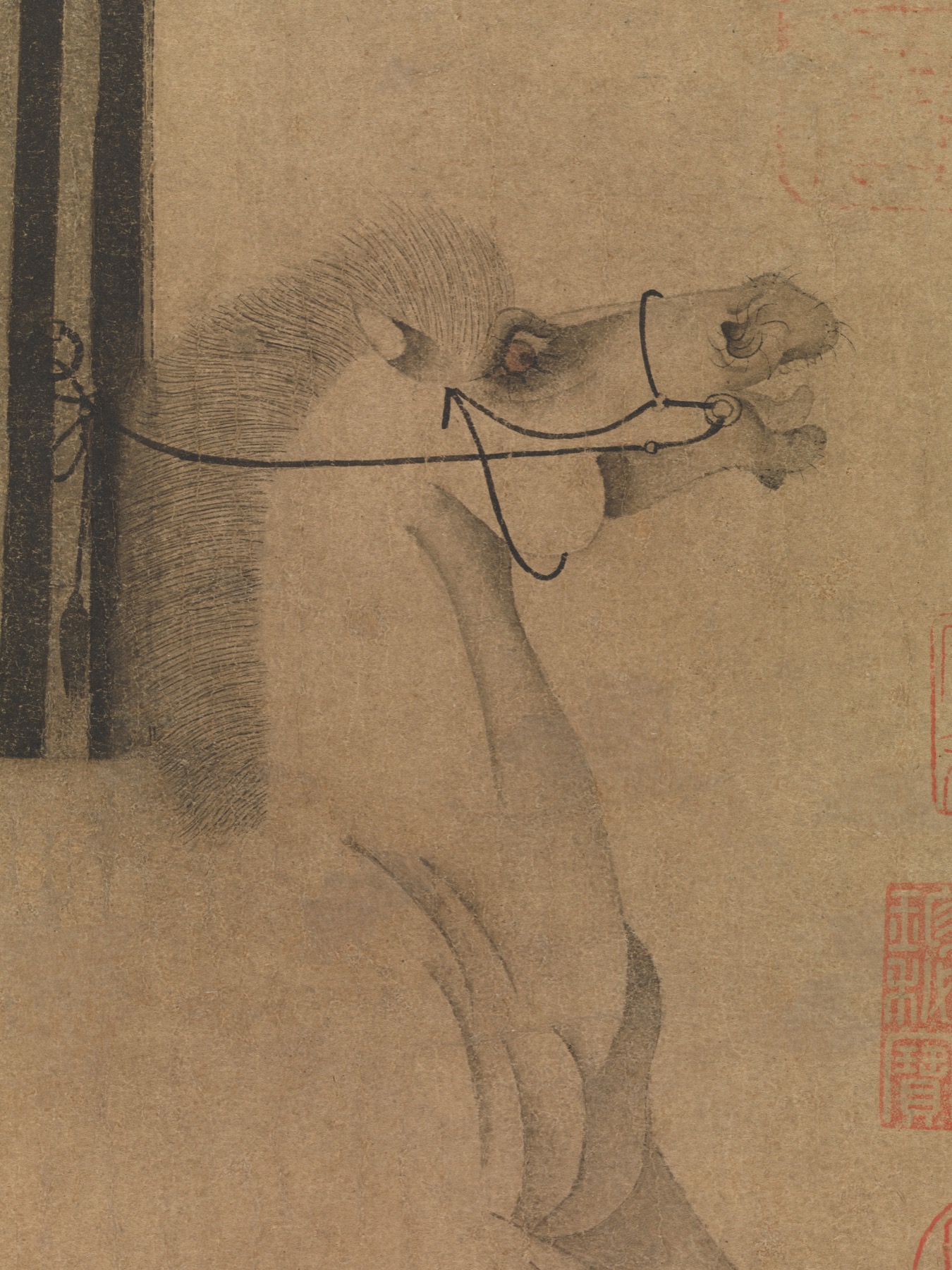
Join the conversation
What did this make you notice?
If you owned a work for decades, should your response ever become part of the object—or should every later viewer remain physically silent?