
A city needs more than good clay
Jingdezhen’s location in Jiangxi connected deposits of porcelain stone and kaolin with water transport and, historically, fuel for firing. Material advantage mattered, yet suitable clay does not automatically create an industry. It required knowledge of refining, forming, glazing, kiln construction, temperature and failure. It also required systems that could feed, house and organize many workers.
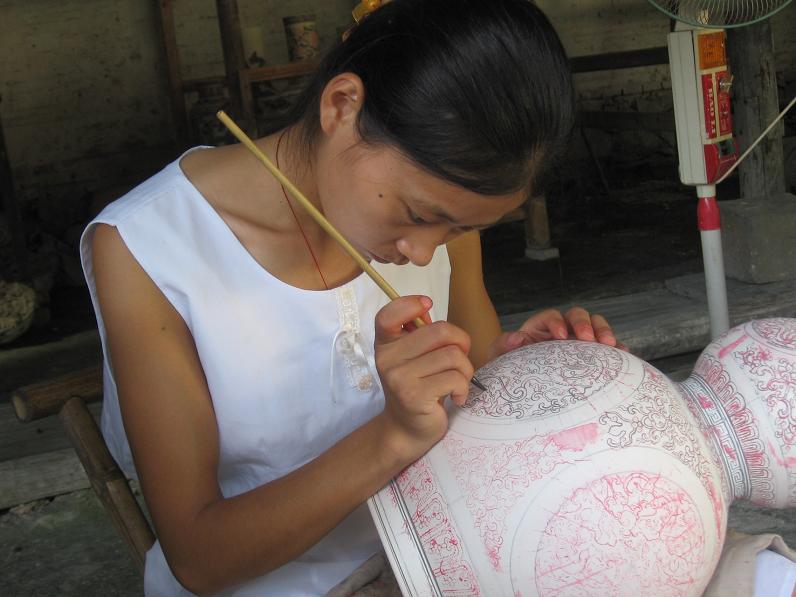
UNESCO’s account of the Handicraft Porcelain Industry Sites emphasizes the whole chain: extraction and transport of raw materials, innovation in kiln design, and the spatial and social organization of production. This wider view corrects the romantic image of a solitary potter. A refined cup may carry the labor of miners, clay processors, throwers, mold makers, painters, glaze workers, kiln teams, packers and traders.
Specialization made scale possible
In workshop production, one object could pass through many hands. Repetition developed extraordinary control: a worker responsible for one stage learned to recognize small differences in moisture, thickness or brush pressure. Division of labor allowed enormous output while supporting highly demanding commissions.
Specialization did not eliminate creativity. It located creativity across a sequence. A form designed by one person depended on another’s clay body; painting had to anticipate glaze and firing; kiln placement could change the final surface. Authorship becomes collective even when a celebrated artist or imperial mark receives the attention.
Imperial and commercial worlds overlapped
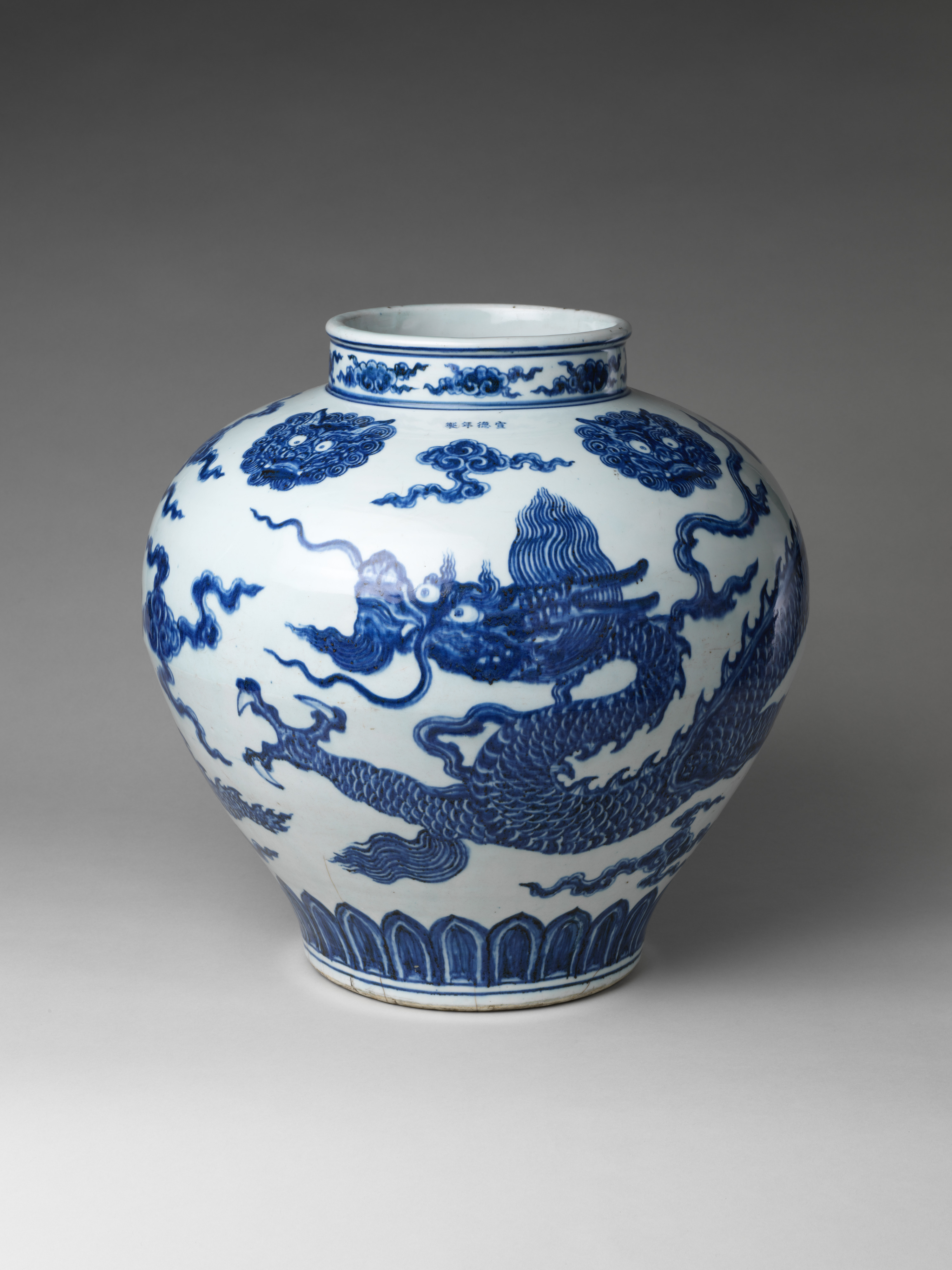
Jingdezhen became closely associated with ceramics made for the imperial court, where standards, designs and marks shaped production. But the city was never only a palace factory. Civilian kilns made goods for regional, national and overseas markets. Merchants, guilds and transport networks linked workshop decisions with distant demand.
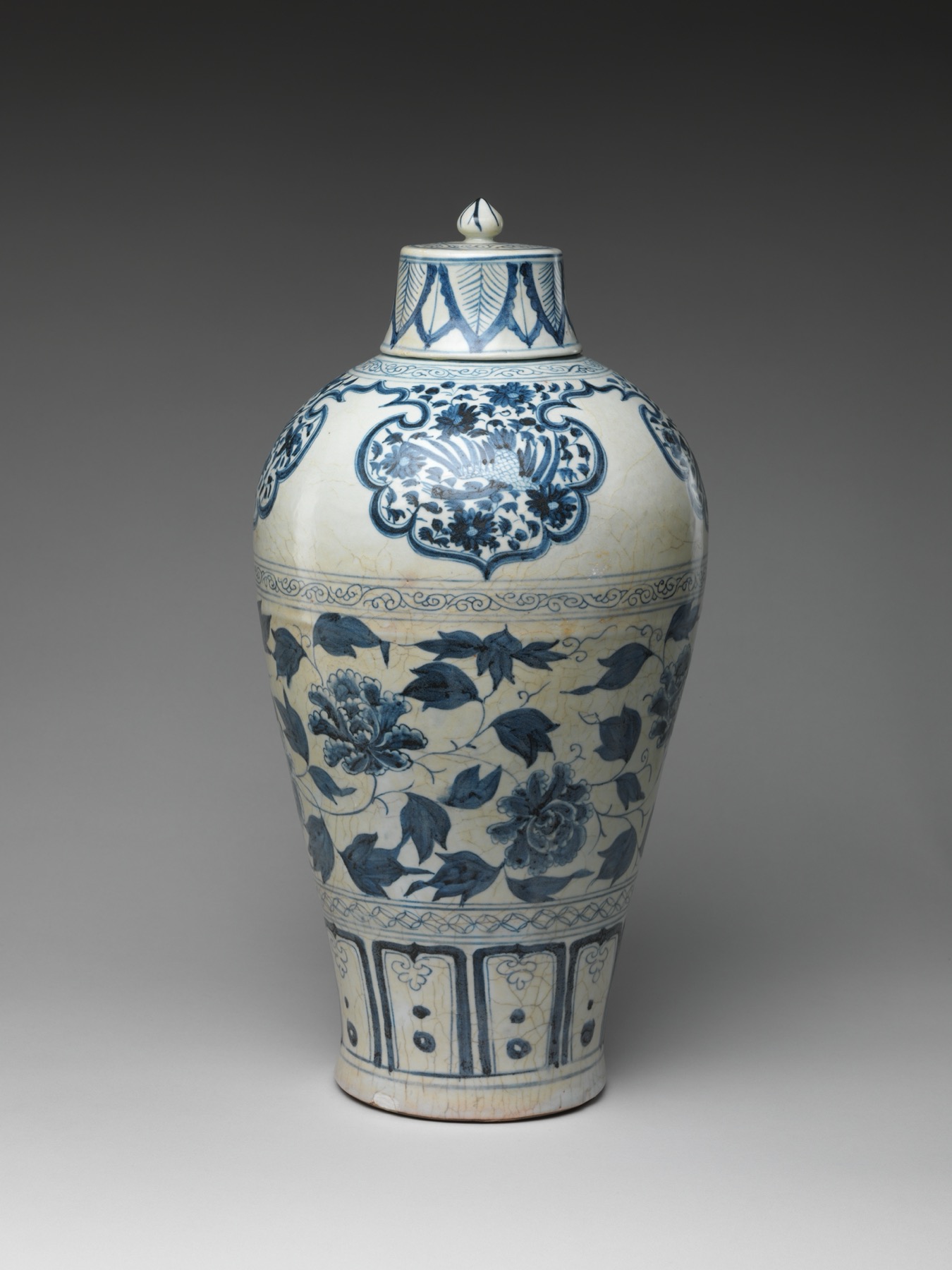
Blue-and-white porcelain is the most internationally recognizable result, but it should not stand for everything made in the city. Monochrome glazes, enamel palettes, molded wares, everyday bowls, ritual objects and export forms reveal changing technologies and audiences. Jingdezhen’s continuity came from adaptation, not repetition of one timeless style.
Fire makes every plan uncertain
Porcelain appears precise after firing, yet the kiln introduces risk. Clay shrinks; glaze moves; color changes; heat circulates unevenly. A tiny problem can warp a rim or crack a body after many hours of work. Historical kiln teams developed ways to stack, protect and position wares, but control was never absolute.
This uncertainty explains both waste and wonder. Shards are not merely failed art. Archaeological deposits record recipes, experiments, market changes and standards of rejection. A museum masterpiece shows what survived selection; a shard heap shows the scale of learning behind it.
The global object begins locally
For centuries, Jingdezhen porcelain moved by land and sea. Overseas buyers did not simply receive a fixed Chinese aesthetic. Shapes and decorations responded to foreign uses, commissions and imitations. Cobalt pigment, commercial information and design ideas also traveled. The city was local in material and labor, global in circulation.
Calling porcelain a bridge between East and West can be helpful, but the route included many regions and intermediaries. Southeast Asian, Islamic, African and European markets encountered Chinese ceramics differently. Every surviving object should be read with its destination, not only its origin.
A contemporary city of making
Jingdezhen joined UNESCO’s Creative Cities Network in 2014 in Crafts and Folk Art. Today, long-standing industrial knowledge meets art schools, independent studios, markets, residencies and visitors who come to work with clay. The city attracts makers partly because skills and services remain concentrated: materials, firing, mold production and specialist labor can be found within one ecosystem.
That revival can produce opportunity and pressure. Heritage becomes a brand; neighborhoods change; handmade language may conceal industrial processes; visiting artists benefit from knowledge built by local workers. A thoughtful account should celebrate creative exchange while asking who receives recognition and economic value.
How to visit beyond shopping
Begin with process. Watch clay preparation before painting, and kiln loading before finished shelves. Visit archaeological or museum collections to understand the historical system, then enter contemporary studios and markets. Ask makers which stage they perform and what is done elsewhere.
When buying, request specific information: material, forming method, decoration, firing and maker. “Made in Jingdezhen” can describe many levels of involvement. Precision is more respectful than demanding an easy authenticity test. The city matters because it makes relationships among skills visible.
Jingdezhen turns porcelain from a beautiful noun into a chain of verbs: quarry, wash, mix, throw, mold, trim, paint, glaze, stack, fire, sort, pack and send. Its deepest cultural lesson is that refinement is rarely the work of one hand.
Join the conversation
What did this make you notice?
When you admire a handmade object, whose invisible work would you most like to understand?