
Begin with the blue
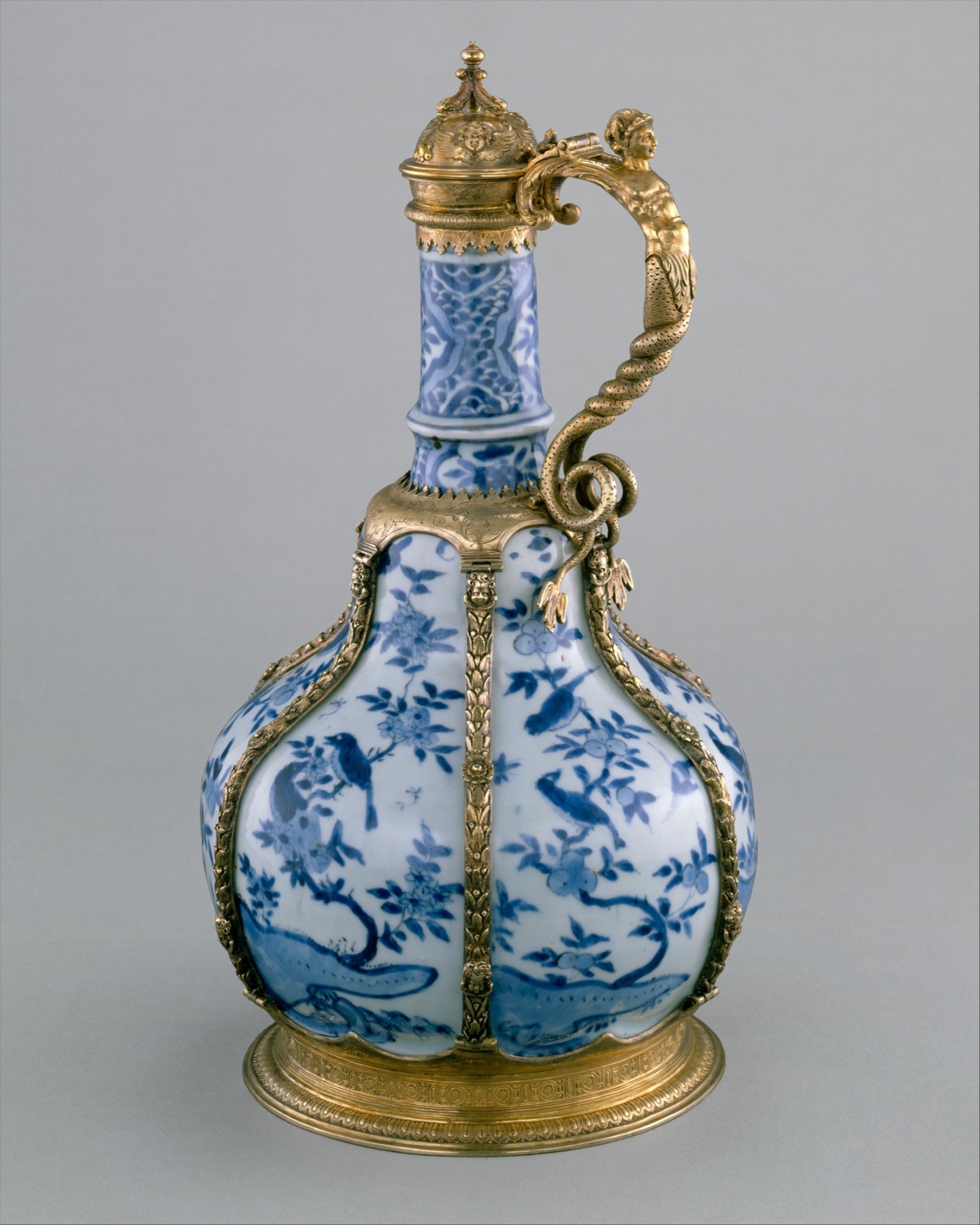
Blue-and-white porcelain feels so familiar that it can become invisible. A white vessel carries landscapes, dragons, flowers or geometric borders in cobalt blue beneath a transparent glaze. The palette looks restrained, yet producing it required exact material knowledge. The decoration had to survive firing at extremely high temperature; cobalt could blur, darken or erupt into spots depending on its composition and handling.
Jingdezhen became the great center of porcelain manufacture, drawing clay, fuel, labor and specialist skills into a complex system. No single artisan made the object alone. Throwers, molders, painters, glazers, kiln workers, merchants and packers each shaped what eventually appeared as one seamless bowl or vase.
Cobalt crossed borders before the porcelain did
The global story begins before a finished vessel leaves China. Cobalt pigments and ceramic ideas moved through networks connecting China with Central and West Asia. Scholars continue to debate precise lines of influence, but the exchange is visible: Chinese porcelain was admired across Islamic lands, while potters elsewhere responded with their own blue-and-white wares. The color combination belongs to a history of contact rather than a sealed national style.
This does not make Jingdezhen secondary. Its kilns transformed materials and motifs with extraordinary technical control. The important point is that cultural achievement and exchange are not opposites. A tradition can become distinctive precisely because makers absorb, test and recompose what travels toward them.
A porcelain made to travel
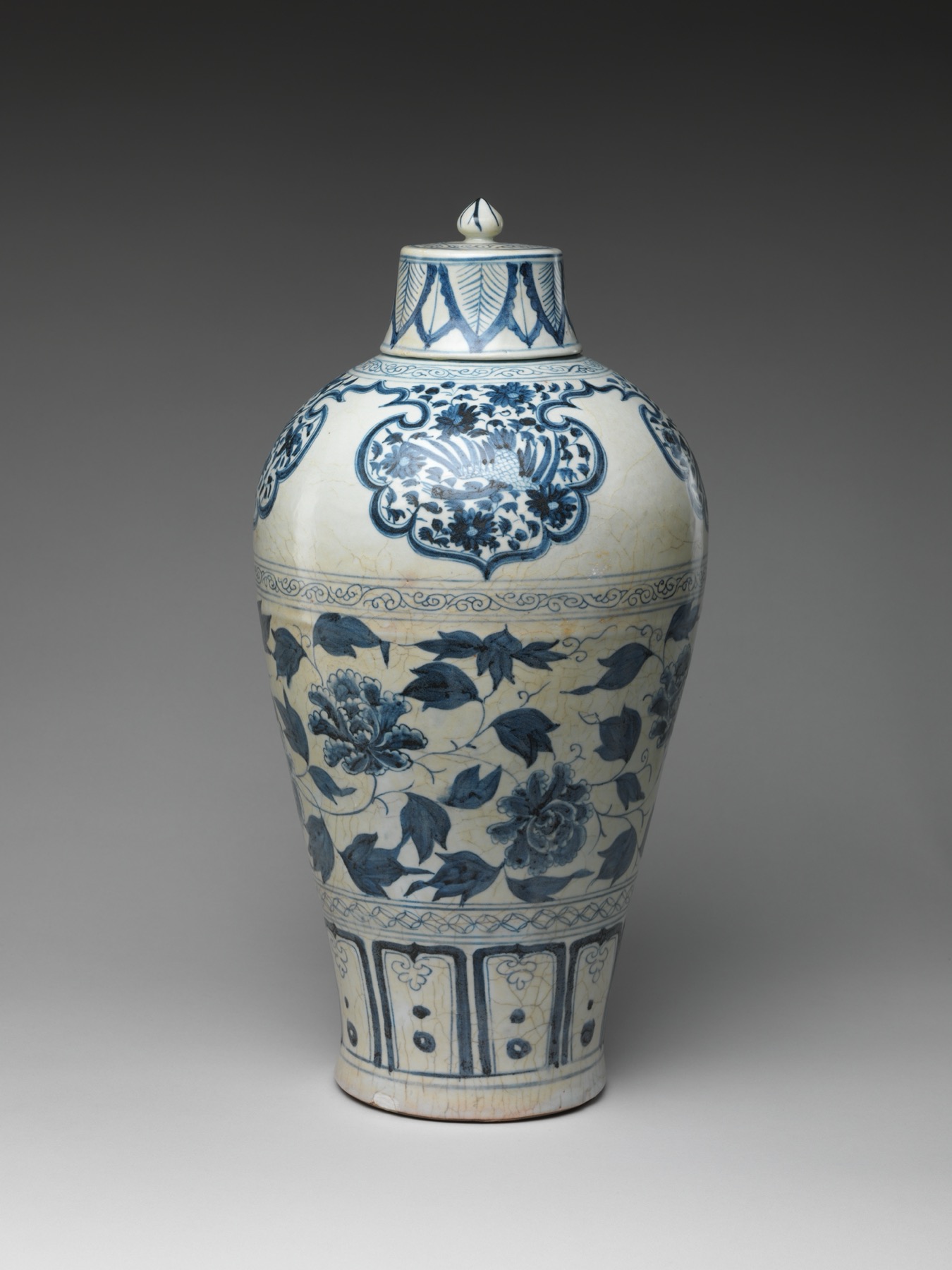
From the sixteenth century onward, European demand expanded dramatically. Porcelain travelled with tea, silk, lacquer and other goods. Durable and water resistant, it could be packed low in a ship while helping to stabilize cargo. Some vessels followed Chinese forms; others answered foreign orders. Models for mugs, ewers, candlesticks and heraldic services were sent to Chinese workshops and translated into porcelain.
Translation was never perfectly smooth. A coat of arms might be copied with an unfamiliar detail reversed, or a landscape motif rearranged to fit a European shape. These moments are not merely mistakes. They show artisans working across distance, interpreting instructions from people they would never meet.
Imitation changes the original
European potteries tried to reproduce the admired whiteness and painted blue of Chinese porcelain. Delft, Meissen and Worcester developed local answers. The English Willow pattern assembled pagodas, bridges and imagined landscapes into a design that many consumers later assumed was traditionally Chinese. Chinese workshops then painted versions for export. The copy travelled back toward its supposed source.
Blue-and-white therefore unsettles the simple choice between authentic and imitation. Forms circulate, acquire new meanings and return altered. The object in front of us may be Chinese, Japanese, Dutch, Iranian, English or something made for one place according to the desires of another. Close inspection turns a color scheme into a map.
Read the underside too
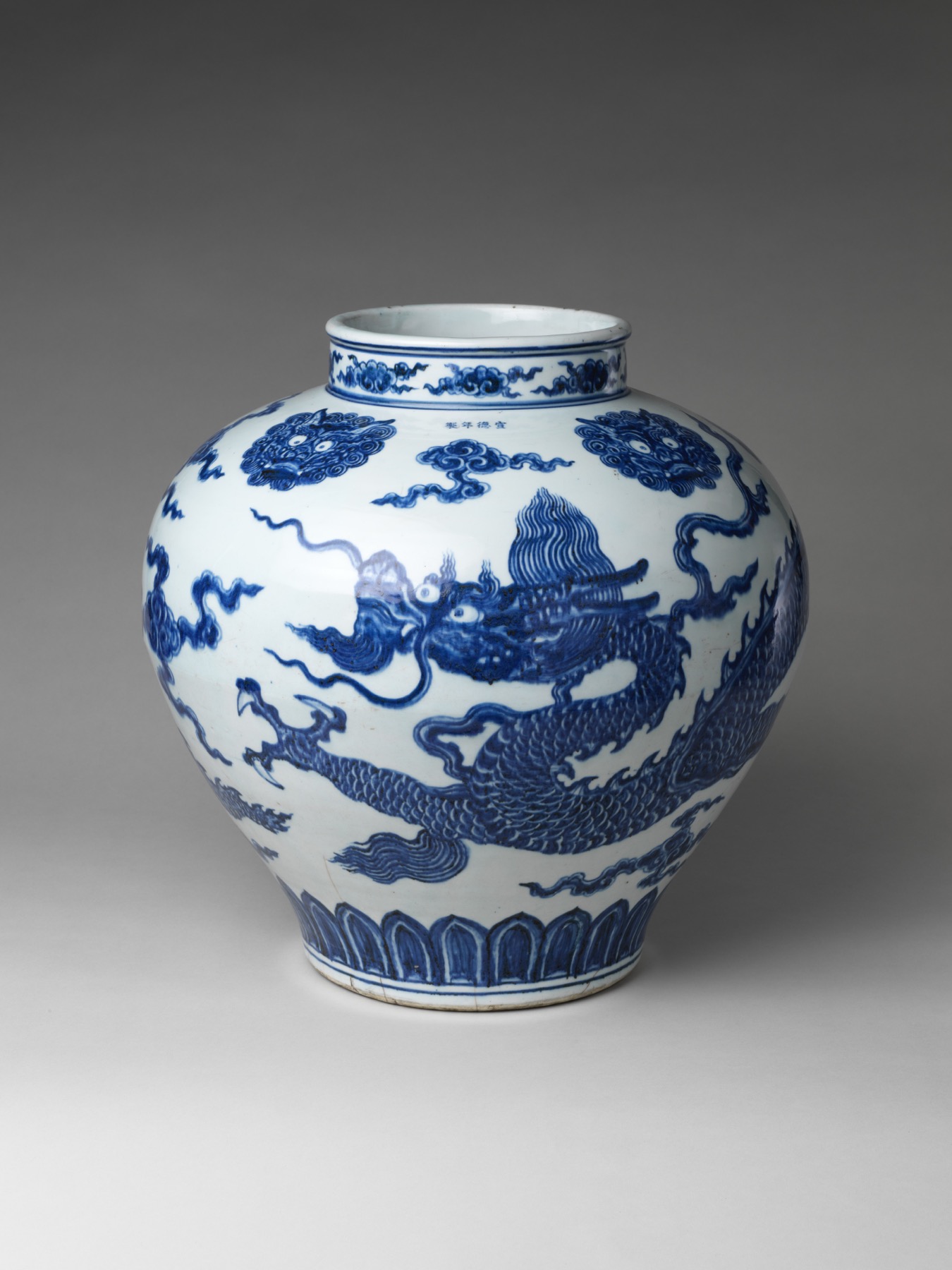
When you meet a blue-and-white object, resist beginning with value. Look at its profile, foot ring, glaze and repeated borders. Ask whether the scene wraps continuously or sits inside panels. Museum records can clarify date, kiln, market and later ownership, but even experts revise attributions as evidence changes.
The most compelling question is not “Is this really Chinese?” but “Which journeys made this object possible?” Clay and cobalt, design and desire, technique and trade all meet on the surface. Its elegance is real; so is the noisy global world behind it.
Join the conversation
What did this make you notice?
Which detail would you follow across cultures: the cobalt color, the vessel shape or the painted motif?