
Begin with what the eye can see
An unfamiliar garment invites quick labels. “Traditional,” “ancient,” and “costume” can feel helpful, but they compress many centuries, regions and social worlds into a single image. Hanfu is better approached as a broad contemporary name for clothing associated with the historical dress traditions of Han Chinese communities. It is not one fixed uniform, and a garment inspired by the Tang dynasty does not tell the same story as one based on Ming-period forms.
Look first at the construction. Notice whether the front crosses, where the garment is tied, how several layers meet, and whether the line of the sleeve is narrow, generous or dramatically extended. Then watch the hem when the wearer turns. These details transform the experience from recognizing a category to reading a design. They also make space for a more honest question: is this a careful reconstruction, a modern interpretation, or a fashion piece that freely borrows historical language?
Clothing is never only decoration
Historical dress carried information. Material, color, pattern, length and ornament could relate to season, ceremony, occupation, rank, gender or the means of a household. Surviving objects in museum collections often come from elite or ceremonial contexts precisely because fine silk and elaborate embroidery were more likely to be preserved. They are extraordinary sources, but they cannot stand in for everything people wore.
This is why one magnificent court robe should be read as a particular object rather than an illustration of “Chinese clothing” as a whole. Its fibers, motifs and workmanship can reveal a world of specialized labor and visual codes. At the same time, ordinary garments, regional practices and the clothing of different ethnic communities remind us that China has never had a single wardrobe. Variety is not a complication to remove; it is the substance of the story.
Why the revival feels contemporary
The present-day hanfu movement is not simply an attempt to step backward in time. People wear hanfu for festivals, photography, travel, ceremonies, social gatherings and ordinary afternoons. Makers combine historical research with new fabrics, practical fastenings, changing proportions and modern expectations of comfort. Online communities compare references, debate accuracy and circulate styling knowledge at remarkable speed.
That mixture of research, imagination and everyday use is part of its energy. A young wearer may be interested in textile history, personal identity, visual pleasure, community, or all of these at once. The meaning of the garment is produced not only by the dynasty it references, but also by the place where it is worn today: a subway platform, a museum courtyard, a university campus or a family celebration.
A better way to look
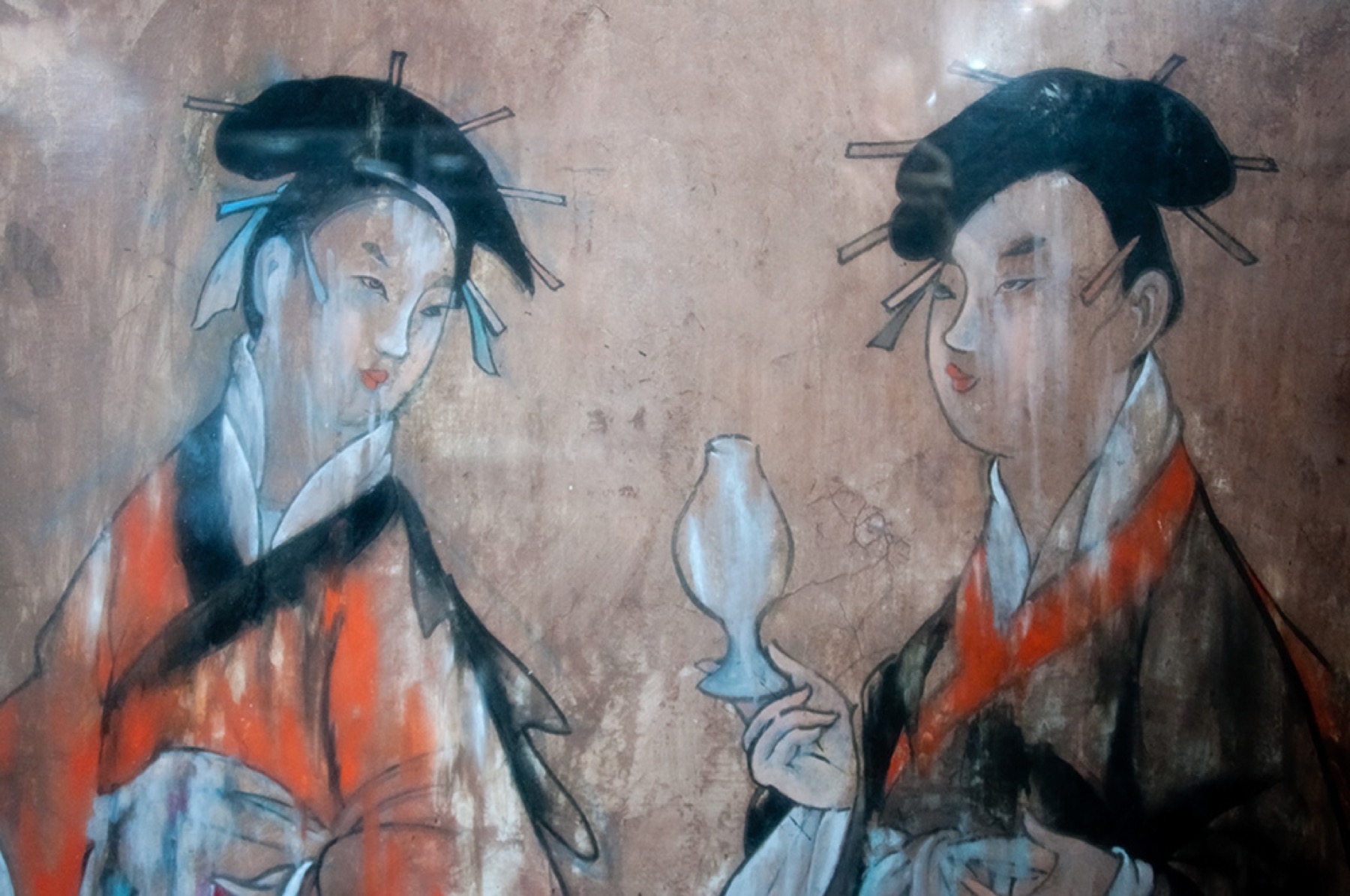
Compare the three images accompanying this story before trying to place everything on a timeline. In the Dahuting mural, the dark outlines and red surfaces make layered clothing legible with relatively few marks. Follow the boundary between one garment and another. The painted line tells us something about how a figure was represented, but it cannot tell us exactly how heavy the cloth felt or how a seam was made. A painting is evidence to interpret, not a sewing pattern waiting to be copied.
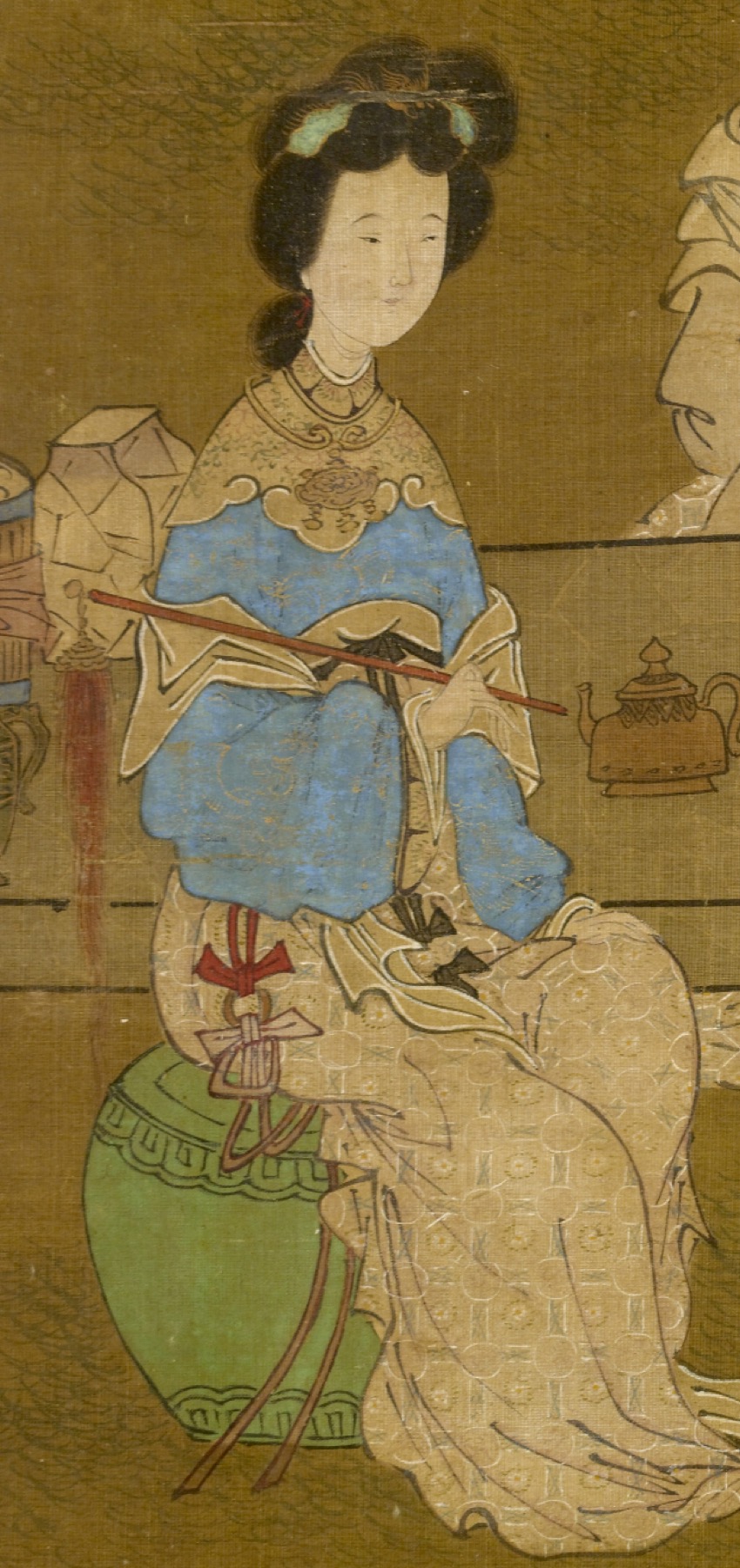
The cloud-collar detail offers a different encounter. Here the eye travels across the shoulders, pausing where an ornamental shape interrupts the larger blue surface of the robe. Notice how a relatively small area changes the balance of the whole figure. That is a useful way to approach ornament: ask where it directs attention before trying to assign a symbolic meaning. The title, date and attribution supplied by a collection are essential companions to the image, especially when a painting follows an earlier artist rather than being that artist’s own work.
The body completes the design
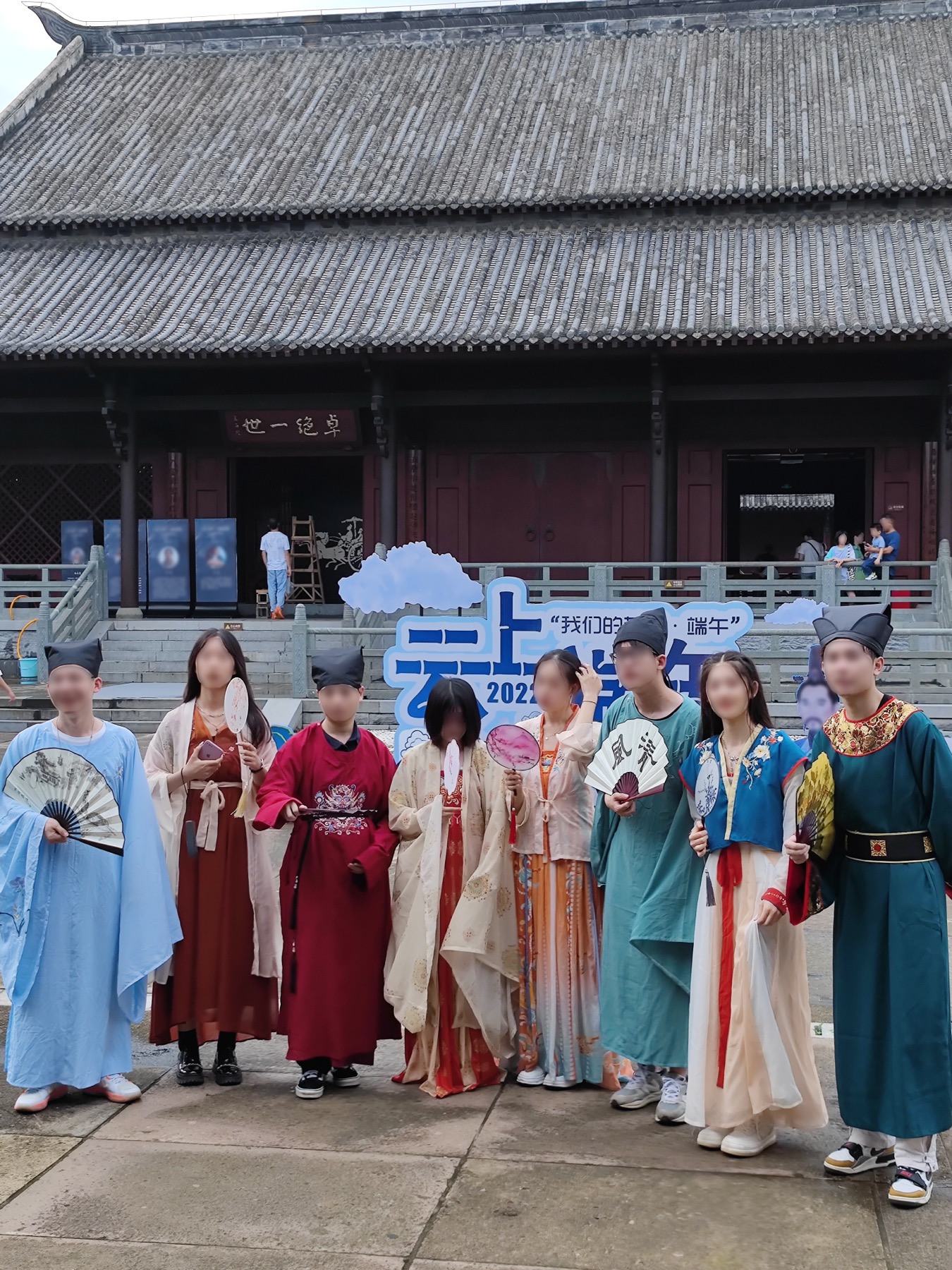
Now look at the contemporary group outside Qu Yuan Temple. Individual outfits share the frame without becoming identical. Their different lengths, colors and proportions invite comparison, while the setting gives the gathering a specific place. A photograph can document that encounter without explaining every participant’s intentions. We should resist supplying a single motivation for people whose voices we have not heard. The image opens a question about community; it does not settle the answer.
If you have an opportunity to try on a garment, let movement become part of looking. Notice what happens when you sit down, reach for something or take a short step. Does a sleeve need to be gathered? Does the fabric fall back into place or hold a crease? These are questions you can explore without claiming historical expertise. They bring design back into contact with an actual body and help explain why clothing cannot be fully understood as a beautiful outline on a screen.
Take the curiosity with you
A useful next exercise is to choose one garment in a museum collection and keep its record beside a contemporary outfit you admire. Compare only what you can actually see: the placement of the collar, the distribution of color and the relation between sleeve and body. Write down what remains uncertain. Learning to describe the difference between an observation and an assumption is a small skill with a large reward: it lets beauty lead into knowledge without turning admiration into a claim of expertise.
When hanfu first catches your attention, resist the urge to ask whether it is “authentic” as though authenticity were a simple yes-or-no label. Ask which period or object informed it, what the maker changed, and whether those changes are visible. Ask how the wearer describes the experience. Historical evidence matters, but so does clarity about contemporary interpretation.
Most of all, stay with the detail that made you pause. A collar may lead to the logic of layered construction. A cloud motif may lead to questions about symbolism. The movement of a sleeve may lead to dance, painting or etiquette. A garment becomes a cultural doorway when curiosity replaces the desire for a single definitive answer.
Join the conversation
What did this make you notice?
When you look at hanfu, which detail makes you want to know more: the silhouette, the fabric, the color, or the way it moves?