
Begin with plurality
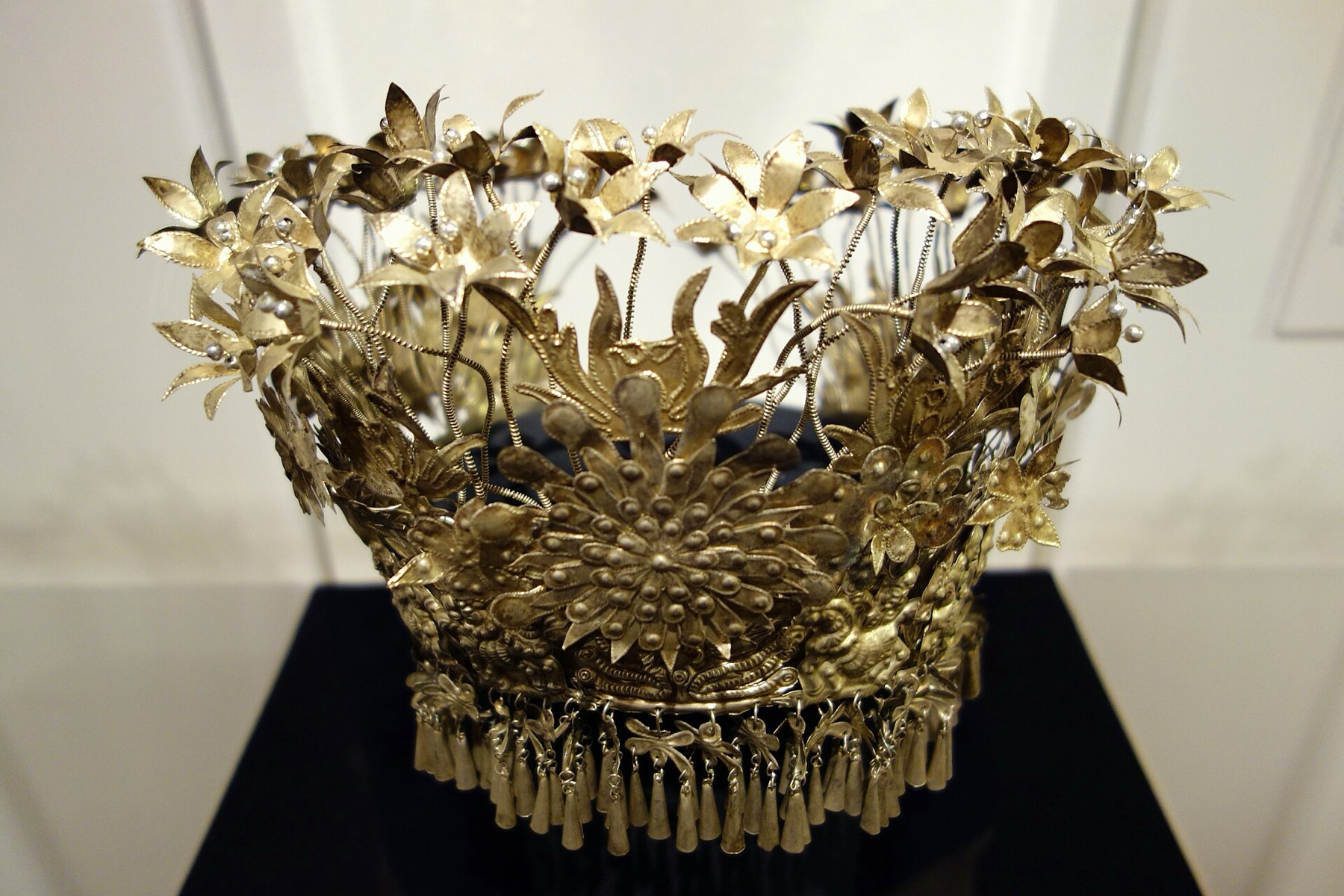
“Miao” is an official ethnic category in China encompassing communities with different languages, histories, clothing and regional identities; related Hmong communities also live beyond China. A spectacular silver headdress from one Guizhou group should never become the costume of an imagined single people.
Specific provenance matters. Ask which county, village, maker, date and occasion belong to an object. Museum labels that simply say “Miao” may reflect older collecting practices rather than complete knowledge.
Silver moves with the wearer
Miao silverwork can include towering headdresses, neck rings, chest ornaments, earrings and pendants assembled in layers. Hammering, repoussé, cutting, twisting and soldering turn metal into flowers, birds, dragons, bells and geometric forms. The complete effect depends on movement and sound as much as frontal appearance.
A museum mount freezes the object so it can be studied. Imagine how its weight shifts, how small elements catch light and how repeated pieces sound during walking or dance. The body completes the craftsmanship.
Textiles remember through technique
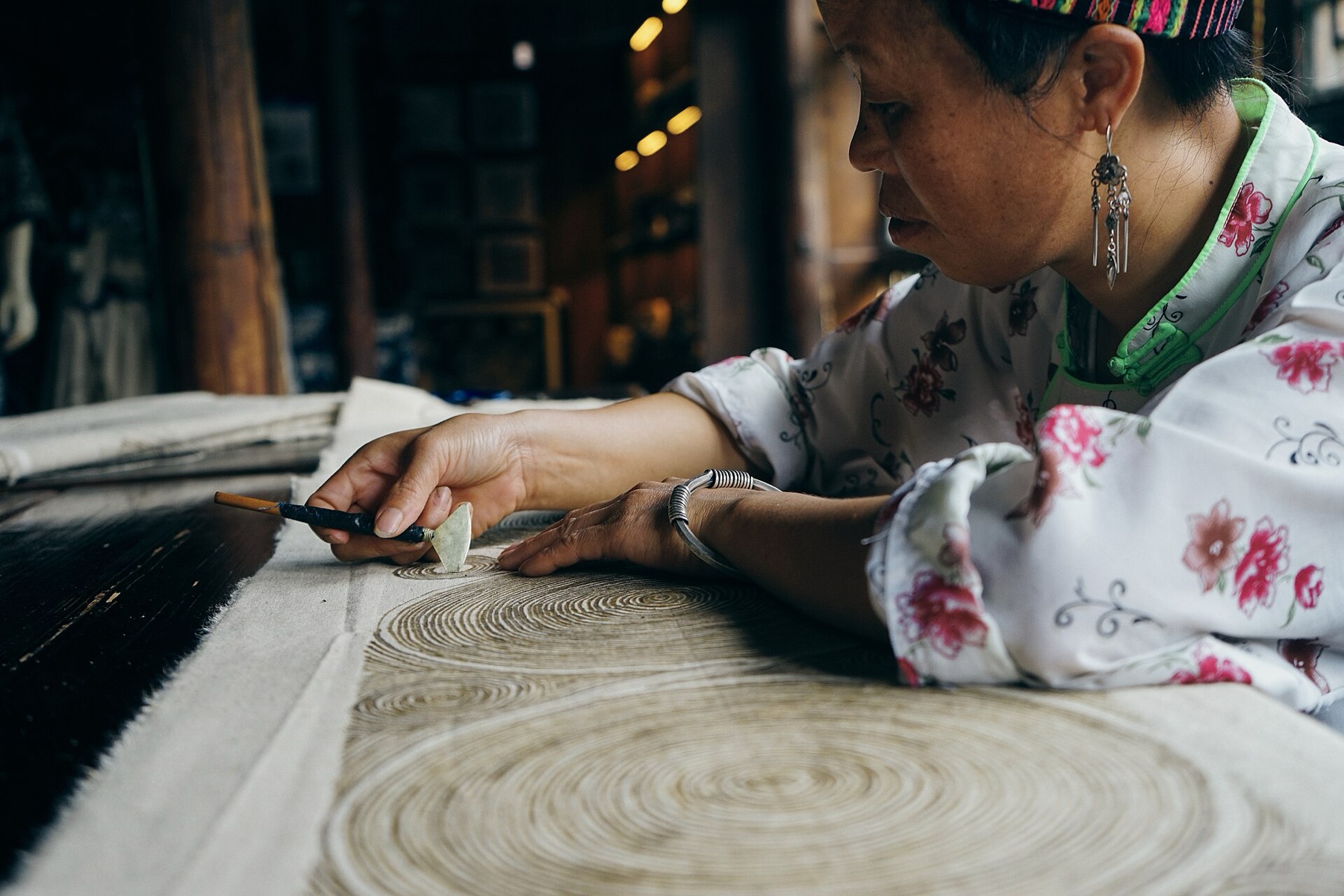
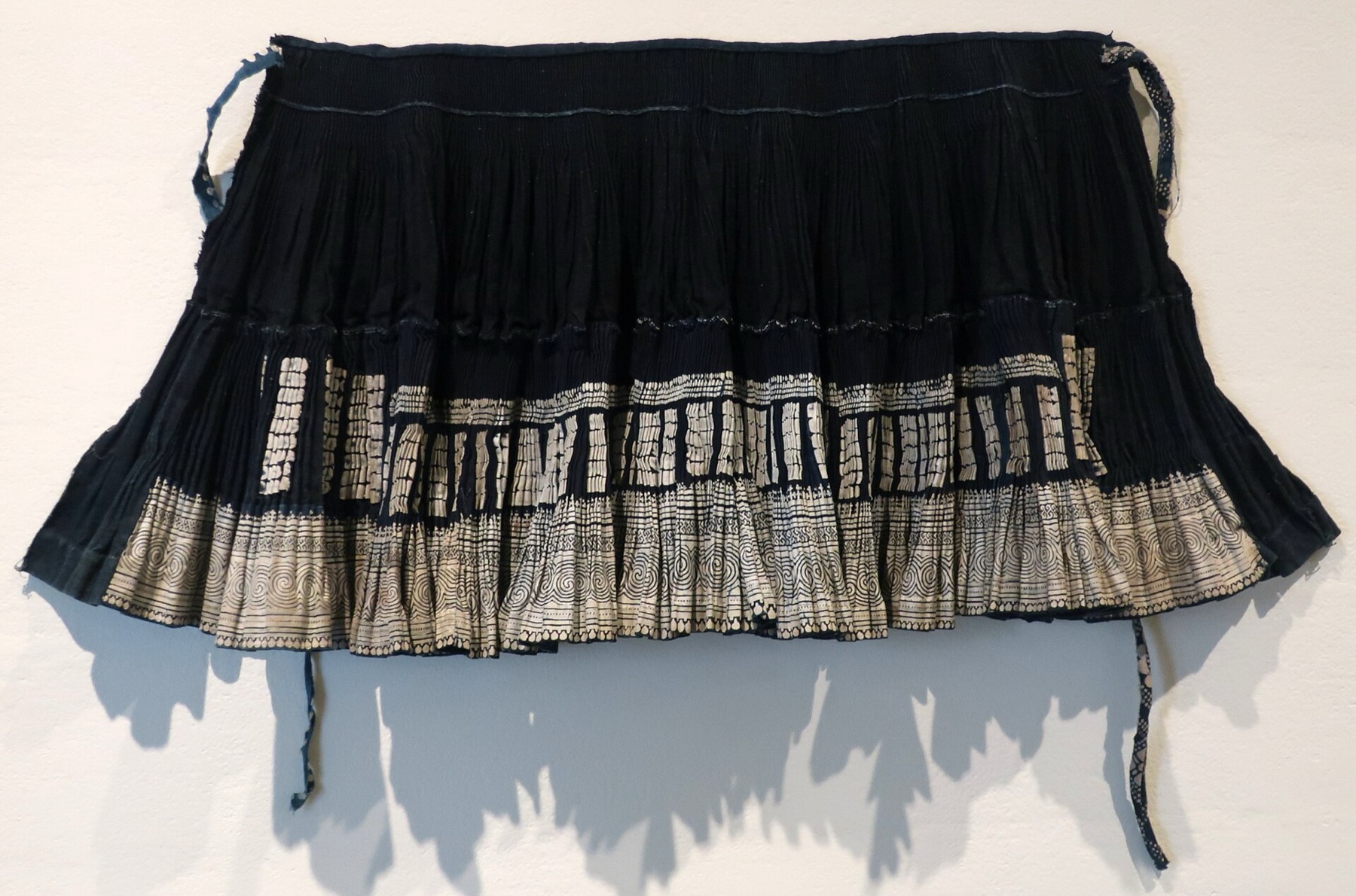
Silver belongs within an entire dressed ensemble. Indigo dyeing, wax-resist batik, weaving, appliqué and embroidery produce surfaces dense with regional knowledge. UNESCO has supported transmission projects because time-intensive costume-making faces pressure from synthetic materials, migration and changing everyday use.
Calling the work “ancient” can hide living innovation. Makers adjust scale, materials and products for festivals, museums, fashion and tourism. Continuity is not the absence of change; it is the ability to change while knowledge remains recognizable to a community.
Adornment is not a codebook
Tourist descriptions often assign one exact myth to every bird or spiral. Some motifs do carry documented local stories, status or protective associations, but meanings vary and may be personal, inherited or debated. Visual resemblance alone is not enough to decode an object.
Listen for makers’ and wearers’ accounts. When those voices are unavailable, describe what can be seen and how it was made. Uncertainty is more respectful than a beautiful invented explanation.
Buy with the maker in view
If buying silver or textile work, ask who made it, where, from which materials and how the price reaches the craftsperson. “Miao-inspired” factory goods and community-made pieces occupy different markets. Neither should be mislabeled as the other.
The most ethical admiration keeps specificity intact. Guizhou’s Miao arts are not a free visual library for brands. They are living intellectual and material work carried by particular people, families and places.
Join the conversation
What did this make you notice?
What information would you want before buying an object presented as traditional craft?