
An animal arriving through exchange
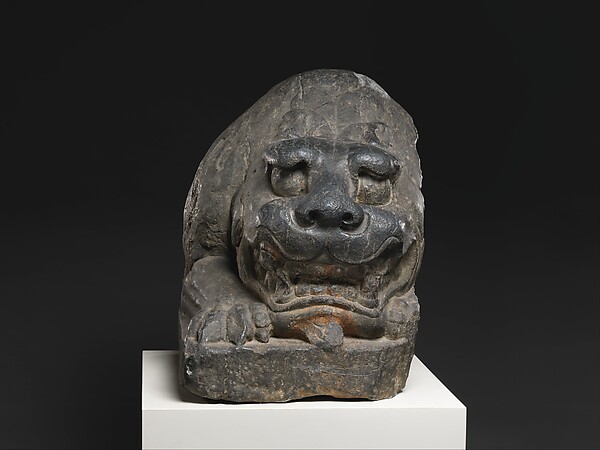
Lions were not native to most of historical China. Knowledge of them arrived through diplomacy and long-distance exchange from Central, South and West Asia. They entered court culture as rare tribute animals and entered religious visual culture with Buddhism, where the lion could evoke protection, royal power and the Buddha’s authoritative “lion’s roar.”
Artists translated unfamiliar anatomy through familiar forms. Manes became rhythmic curls. Muscles became patterned volumes. Over generations, the image no longer depended on zoological accuracy. It became an established Chinese visual type with regional, dynastic and workshop variations.
This is why judging a guardian lion by whether it looks “real” misses the point. Its body was designed to communicate presence at an architectural threshold.
Why a pair?
Chinese elite architecture often uses symmetry to establish hierarchy. A principal gate sits on an axis; flanking objects create balance and define an approach. Paired lions fit this spatial grammar. Together they mark a threshold, face outward and turn an entrance into a ceremonial statement.
Pairs of protective animals have a long history. The Metropolitan Museum notes that stone lions guarded tombs by the Han period and became especially prevalent with Buddhist cave temples in the fifth and sixth centuries. Their settings and functions changed as the form moved among funerary, religious, imperial and civic spaces.
The pair should therefore be read first architecturally: left and right, entrance and exterior, protection and display. Gendered attributes are one later layer, not the entire explanation.
Ball, cub and the limits of a rule
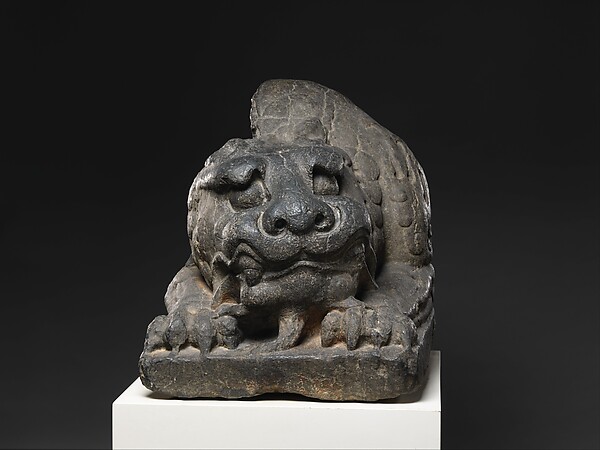
In many Ming- and Qing-period pairs, the lion conventionally read as male places a paw on an embroidered ball, while the one read as female interacts with a cub. Modern guides often say the ball represents the world or imperial power and the cub represents family continuity.
These interpretations can be useful, but actual sculptures are not always so tidy. Objects may be worn, replaced or locally reimagined. Earlier lions can lack both attributes. Orientation differs according to whether one describes the pair from the building looking out or from the visitor looking in. Even the animals’ sex may be less visually explicit than a guidebook suggests.
Good interpretation begins with the particular object: its date, site, inscription, material and documented history. Symbolism should follow evidence, not replace it.
What were they protecting?
Guardian lions did not act like literal security devices. They announced that a threshold mattered. Their scale and material displayed resources; their posture projected vigilance; their association with authority helped distinguish an important building from ordinary frontage.
At a tomb, protection related to the dead and the passage into a sacred precinct. At a Buddhist temple, lions participated in a religious landscape. At an imperial gate, they reinforced political hierarchy. At a modern hotel or diasporic business, the same form may signal cultural identity, prosperity, welcome or a consciously “Chinese” visual language.
The context changes the meaning. A lion moved from its original gate into a museum loses the architecture it once completed. A caption should acknowledge that absence.
How to read a guardian lion
First, stand where an arriving visitor would stand. Notice how the pair frames movement. Compare the two animals: paws, mouths, heads, bases and attached attributes. Look for wear where generations of hands may have touched the stone.
Then ask what kind of building lies behind them. Is the pair original to the site? Does its style match the building’s date? A recently installed lion at a commercial entrance tells a different story from a tomb guardian excavated by archaeologists.
Finally, replace the misleading “foo dog” with “Chinese guardian lion” unless discussing the history of the Western nickname itself. Naming the animal correctly is a small act of looking more carefully.
The lions endure because they do several things at once. They guard and advertise, intimidate and delight, balance architecture and invite stories. Their power lives not in one secret code, but in the relationship between two bodies, a doorway and everyone who crosses it.
Why they look different around the world
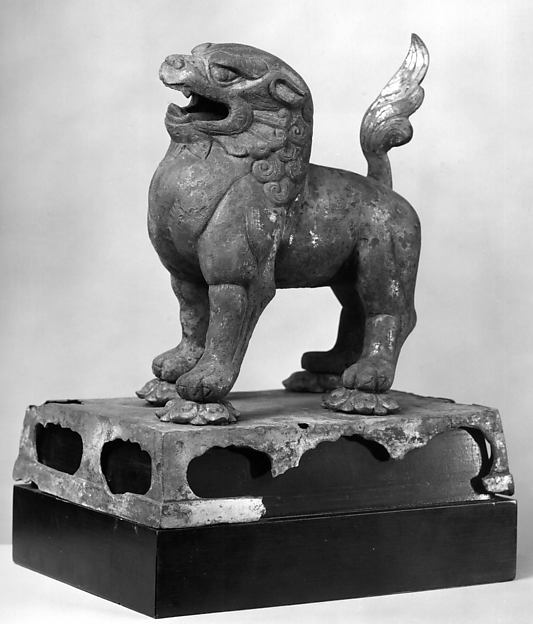
Guardian lions travelled with architecture, objects and communities. In Chinatowns and diasporic institutions, they may stand before association halls, memorial gates, restaurants or municipal gifts. Materials and proportions respond to local budgets, craftsmen and building codes. Some pairs consciously quote imperial models; others merge several visual traditions.
That variation should not be ranked as a decline from an imagined pure original. A lion installed in Lima, Madrid or San Francisco can document how a community chose to represent itself at a particular moment. At the same time, calling every lion “traditional” can hide its actual date and purpose. Look for plaques, donors and opening dates. Public sculpture often records diplomacy and civic identity as much as ancient symbolism. The pair may face outward, but it also speaks inward—to the community that selected, funded and continues to interpret it.
Join the conversation
What did this make you notice?
What object near your own front door tells visitors where private space begins—and what does it communicate?