
Forget the cave for a moment
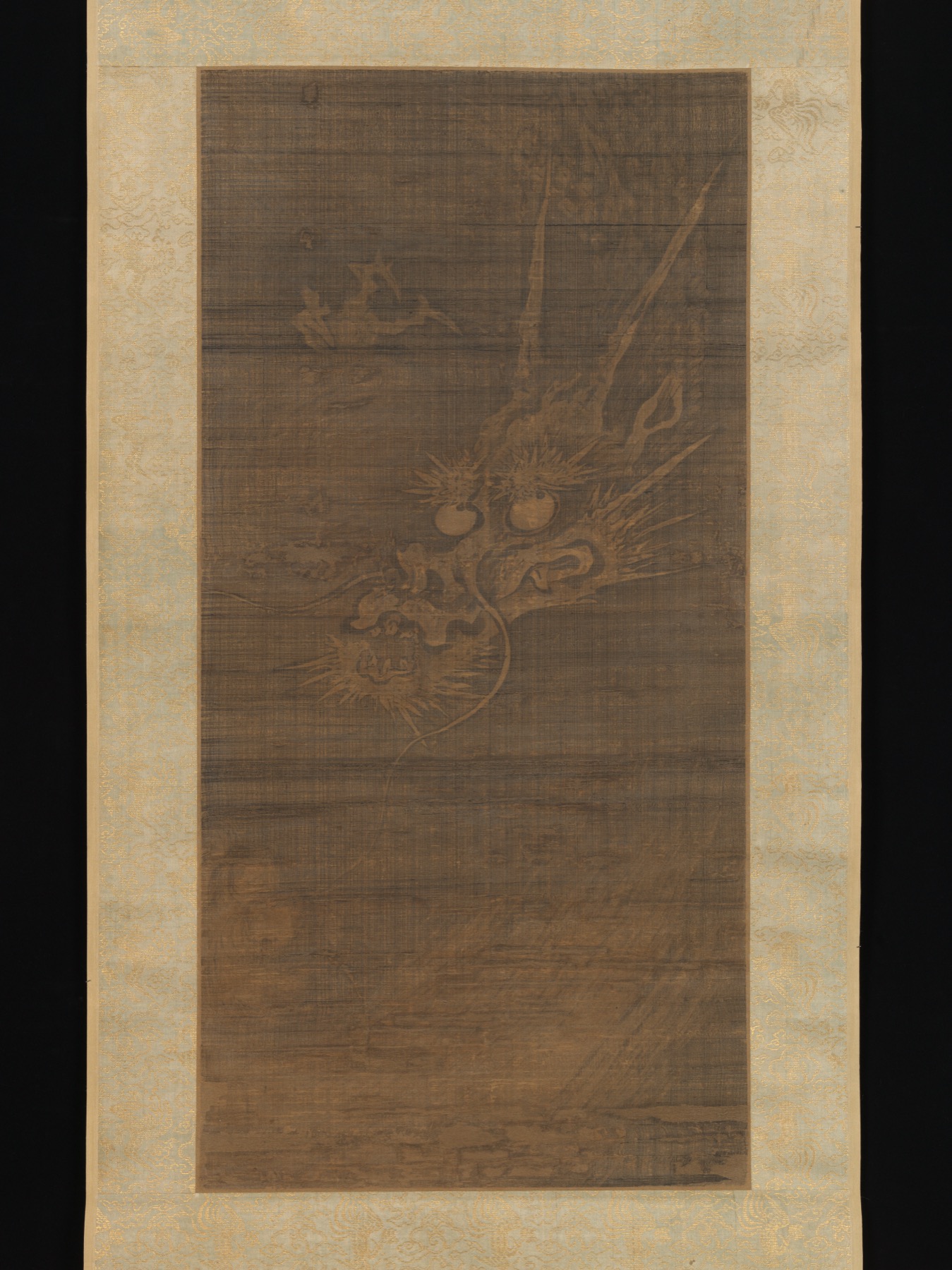
The dragon of medieval European romance guards treasure, breathes fire and often waits to be defeated. Chinese dragons developed within different stories and visual systems. They coil through clouds, rise from waves and bring the movement of water into an object. Translating both creatures with the same English word encourages a comparison, but it should not become an identity.
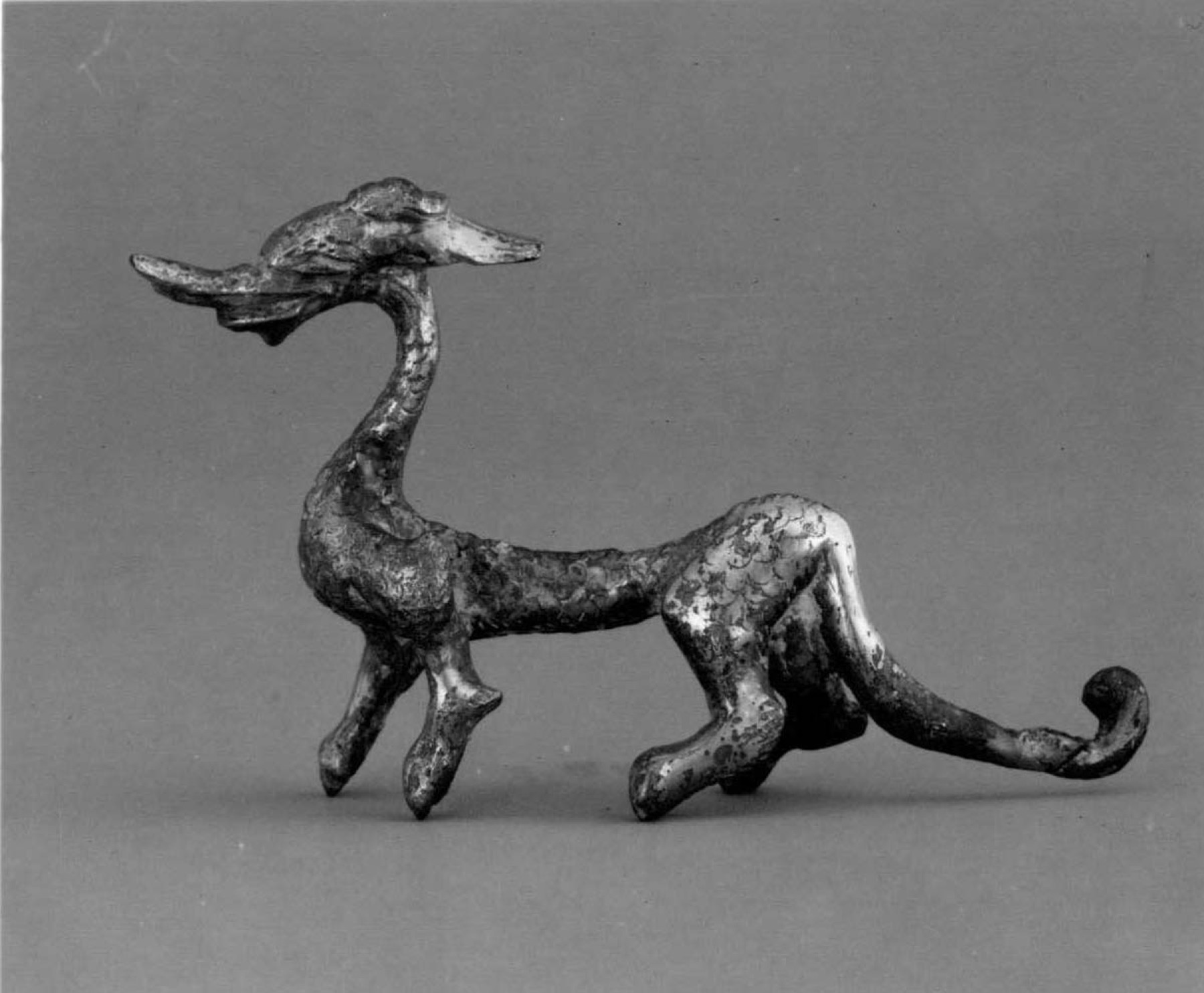
A Chinese dragon may combine horns, scales, claws and the bodies of several imagined animals. Its form changes radically across periods and media. A Neolithic jade, a bronze vessel, a court robe and a paper festival dragon do not express one fixed design.
Water before fire
In Chinese art, dragons are strongly associated with water, clouds and life-giving rain. Their bodies fit the logic of weather: they appear and disappear, gather force and curve across the sky. This helps explain why a dragon on porcelain is often surrounded by vapor and waves rather than placed on solid ground.
The creature can signal the east, protection, happiness and fertility. Meanings overlap rather than forming a one-word dictionary. The object and its context decide which association becomes most visible.
When a motif enters the court
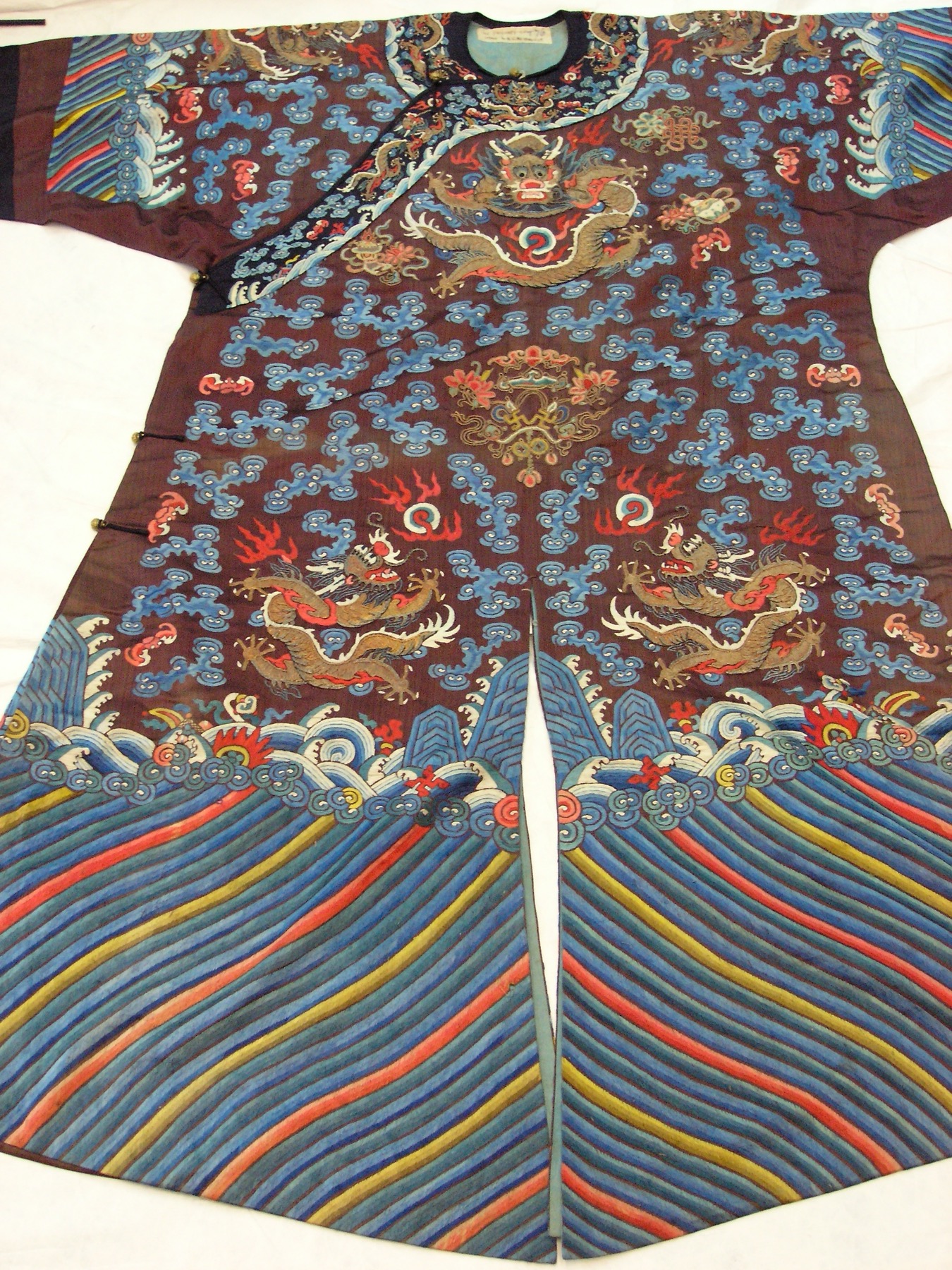
Dragons became powerful emblems of imperial authority. Claw count, placement and surrounding motifs could indicate court use, but popular summaries often make the rules appear more stable than they were. Five-clawed dragons are closely associated with the emperor, yet historical textiles also show their use beyond his body under regulated circumstances.
Look for the whole composition. A dragon meeting a flaming pearl, confronting another creature or circling a character creates a different statement. Rank was communicated through systems of color, material, workmanship and occasion—not by a single claw counted in isolation.
The dragon keeps changing
Festival dragons make a collective body from poles, fabric and coordinated people. Zodiac dragons become markers in a twelve-year cycle. Contemporary artists quote imperial objects, cartoons turn dragons into companions, and brands reduce them to fast symbols of “China.” Every reuse selects one history while leaving others behind.
The dragon is therefore not timeless in the sense of being unchanged. It is durable because it can be revised. Its recognizability creates continuity; its variation keeps the motif socially alive.
Read the creature in place
When you find a dragon, ask where its body leads your eye. Does it emerge from a handle, control the center of a robe or vanish into cloud? Then check date, medium and intended user. These questions replace vague symbolism with visual evidence.
The reward is a creature more interesting than either stereotype: neither simply benevolent nor monstrous, neither only imperial nor merely festive. The Chinese dragon is a flexible cultural form through which people have pictured weather, authority, fortune and transformation.
How to recognize the visual grammar
Start with movement. Many Chinese dragons are built along a long, flexible axis, so the eye follows the creature rather than meeting it as a heavy obstacle. Curves repeat in the spine, whiskers, flames, waves and cloud scrolls. Even when the body is densely patterned, the composition can feel airborne. This is why cropping a dragon from its surrounding weather often removes part of the idea: cloud and wave are not background decoration but partners in making the creature legible.
Next compare head, feet and tail across objects instead of searching for one correct anatomy. Horns may branch differently, claws open or close, and the snout can be compact or dramatically extended. Such variation helps with dating and attribution, but it also reveals the freedom of makers working in silk, lacquer, ceramic, metal or stone. “Chinese dragon” names a family of images, not a biological specimen with a final diagram.
What the comparison with the West can and cannot do
Contrasting a rain-associated Chinese dragon with a fire-breathing European one is a useful first correction, but it can become another simplification. European traditions contain protective and heraldic dragons as well as monsters, while Chinese stories also include dangerous, unruly or defeated dragon beings. Neither culture produced a single creature with one moral character. Comparison works best when it opens a route into specific works rather than dividing the world into a benevolent East and a violent West.
Translation carries the same risk. Long, the common Mandarin term, entered English through “dragon,” but the borrowed word arrives with expectations formed elsewhere. Keeping the Chinese term beside the translation can remind us that resemblance is partial. The goal is not to declare the creatures incomparable; it is to notice what becomes visible—and what disappears—when one familiar word is asked to hold several imaginative histories.
Join the conversation
What did this make you notice?
Where have you seen a dragon whose meaning changed once you understood its setting?